
The Greater Buenos Aires area in the second year of the pandemic
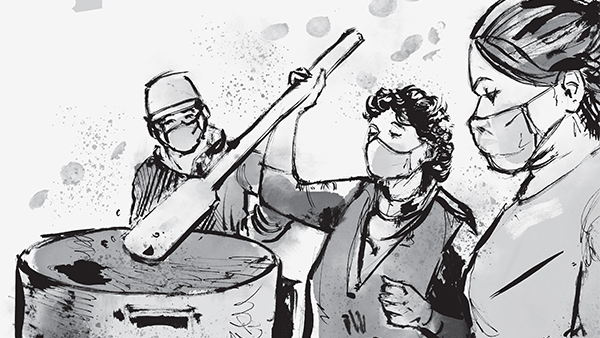
The report “The Greater Buenos Aires area in the second year of the pandemic. Fourth survey of leaders of popular neighborhoods in the context of COVID-19” communicates the result of the collaborative survey carried out in the popular neighborhoods of Greater Buenos Aires between June 14 and July 8, 2021, aimed at describing the conditions of these neighborhoods in the second wave of the COVID-19 pandemic.
This information was compiled from a survey of 108 short interviews with local leaders. The instrument used was a very concise guide of questions, most of which were open-ended. All interviews were conducted remotely, either through recorded and transcribed phone calls or via WhatsApp audio messages.
This report is the fourth produced by the Institute of the Greater Buenos Aires Metropolitan Area at the National University of General Sarmiento in Argentina since the implementation of mandatory preventive social isolation and distancing measures. The previous reports compiled 80, 129, and 136 short interviews with local leaders and were conducted in March, April, and July of 2020.
In this fourth operation, the specific focus was on describing the current situation one year after our previous assessment, following the unfolding of the pandemic, the impact of specific policies implemented in these territories, and the strategies developed by households and the community. Approximately half of the key figures interviewed in this operation had been interviewed a year prior, while the other half represented a renewal of the panel, through informants not previously contacted.
The study investigates a set of interconnected topics already addressed in our previous surveys: i) perceptions of the main problems that arose or worsened in neighborhoods during the pandemic; ii) employment status and income; iii) family and community strategies for coping with the economic and social impact of the pandemic; iv) evaluation of income transfer policies from the perspective of the stakeholders; and v) the conditions under which food distribution and assistance are being provided. Finally, it focuses on three relevant issues in the neighborhoods within this context: vi) COVID-19 care; perceptions of the disease and expectations regarding the vaccination campaign; vii) domestic gender-based violence, strategies, and evaluation of specific policies and resources related to this issue; and xi) relations with law enforcement.
This report was prepared by Verónica Maceira and Alejandra Beccaria with the collaboration of Sergio Rottenschweiller (budget analysis), Nicolás Caloni (cartography preparation) and Mailén Chávez (georeferencing).
If you would like to receive more information about CLACSO's training programs:
[widget id=”custom_html-57″]
to our email lists.

