
Contagion, cure, and the future
Nicholas Lynch1
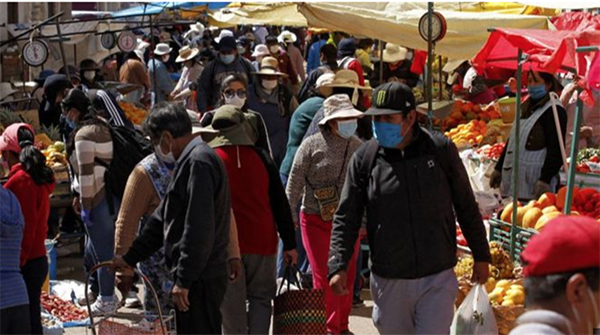
We live in times of fear and uncertainty. A time I personally never thought I would live through. The first surprise, though those around me wonder why it's a surprise, is being considered a "senior citizen," with the immense disadvantage that my children and some friends worry about my daily life, causing them and me concern, and the advantage, however trivial they tell me, of not having to wait in line at the supermarket. Having suspected the system since my early youth somehow made me immune to the initial fear. I've seen so many figures manipulated and so many power struggles, both large and small, hidden away, that it's hard to convince me anything is frightening. The media, almost without exception, fails when they try to penetrate my decades-long hardening with their self-serving lies. But it has been the ordinary people of everyday life—the woman at the market, and again, family and friends—who have convinced me that there is something to be afraid of.
But what are we afraid of? Contagion. Suddenly, interaction with others has become the source of all our ills. If we get close to someone, or worse, if we touch them, they can infect us with a disease that could lead to death. Suddenly, the foundation of social life, interaction between people, especially face-to-face encounters, has become a threat. We are facing a fundamental contradiction: social life, which makes us human, can also destroy us. This matrix of fear produces profound uncertainty in the face of the unknown. We could almost say that the fear of contagion paralyzes us and makes us feel powerless in the face of a situation that we assume, almost automatically, we cannot control. But optimists tell me that isolation, with the understanding of the scientific explanation, is also a mechanism of solidarity. I don't know. Perhaps for those of us on payroll with food on the table, but I don't want to think about the majority of this city and this country, who live hand to mouth, have no voice or vote, no lawyer to represent them, in the daily decision-making at the highest level. However, I'm told that the threat of contagion can lead us down two paths—surely there are more, though we don't yet know if they are opposites or parallel: surrendering to forces we consider superior, hoping they will return us to normal, or gradually taking a more active role, allowing us to begin thinking about something different from the normal that brought us to this chaotic present. I'm told that in the tangle of fear and solidarity, an awareness of the danger can emerge, and that from there, conditions can be created so that the future isn't a plague. This plague or another plague. I hope so.
Thinking from a place of fear of contagion is difficult. Thinking about solidarity—both the present solidarity in the face of the pandemic and the future solidarity needed to envision a better world—is even more difficult. But that is the challenge; that is why we are here and now. From this fear of contagion, then, we must think about the cure. What is it?
In the immediate future, the media bombards us daily with the essential measures against the pandemic: first quarantine, then the vaccine. Without the former, we face a catastrophe; without the latter, the virus will be circulating indefinitely. There is reasonable hope that both will work; there have been pandemics before, and both have occurred and fulfilled their purpose. However, what is different now?
Neoliberal globalization controls the planet. A globalization that, just as it lined the pockets of the world's elite over the last forty years, will now lead us to a recession, both national and global, the only question being whether it will be in the single or double digits. This globalization has had two substantial effects that we can clearly see today: the destruction of nature prioritizing profit and the deepening of social inequality. In both cases, our country, Peru, is unfortunately a global example. This destructive globalization is what multiplies the likelihood of zoonotic outbreaks, that is, the jump of pathogens from the animal world to humans, as seems to have been the case with the coronavirus and several other contemporary pandemics. But at the same time, it allows for the almost instantaneous global spread of the virus among a largely defenseless humanity. If we add to this the acute inequality it has produced, the reinforced center-periphery divide between regions of the world, countries, social classes, genders, peoples, and cultures; We have to understand that this is not, as some would have us believe, a democratic pandemic, but rather one that affects everyone according to their resources and possibilities.
The cure, then, has an initial phase with containing the virus through quarantine and vaccination, but necessarily a second phase that signifies the future and which we cannot confuse with a return to normality. We can only understand this future as the construction of a new will, the implementation of an alternative path to neoliberal globalization—a path that is certainly progressive and reformist, but no less intense and clear for that—to change the predatory relationship with nature and the acute inequality produced in human relations. A primary issue in this regard is the assertion of the public sphere against the private. Who, with all their problems, has come to the defense of their citizens? The nation-states we know, as the primary manifestation of the public sphere, with their sovereignty devastated in many cases, yet they remain, if only in name. I would have liked to see a global solution to this undeniably global problem. But precisely the type of globalization promoted by and for the wealthiest prevents this, because it is not solidarity but greed that is in control.
Of course, the state response has varied. The United States, in an imperialistic, abusive, and ultimately ineffective manner, has seized shipments of medical supplies destined for other countries to send them to its own territory. Old Europe, with its long-established nation-states, also shows limitations, but has fared better than its Atlantic ally. Without such omnipotence, but with much greater effectiveness, though we don't know how democratically it operates, is the People's Republic of China. And with a serious weakness that calls their very legitimacy into question, are the states of the Global South, fearful that the pandemic will spiral out of control and they will be unable to contain it. But nation-states—imperial, weak, or still forming—persist. Within this context, there is an urgent need to reclaim the public sphere, that which belongs to everyone, the home of solidarity. It is upon these pillars of defending the common good that we can build democratic societies.
The public sphere, however, is not an abstraction; it is expressed in rights that translate into services. In this situation, three of these have come to the forefront: health, education, and pensions. The first line of defense against the virus has been the public health systems, which have been under attack by privatization in recent decades, but what remains of them is what has faced the pandemic. In the case of Peru, with a meager budget, lagging behind the rest of Latin America, but making a virtue of necessity. Education hasn't fared any better; a school year has been falsely launched, perpetuating the institutionalized deception of the educational community. Regarding pensions, the virtual absence of a system that cares for the elderly is once again evident, and its privatized sector reveals, once again, that it prioritizes the profits of the AFP (private pension fund) owners over the well-being of contributors. Can anyone even remotely interested in social welfare continue to believe that these services should remain businesses?
So how do we move from the need to address the immediate and distressing problems of the majority, primarily the poor, to the demand not only for immediate public services but also for strategic public services? In political terms, this is the crux of the matter for a different country and a different world after the coronavirus. In the immediate term, people face the issue of survival. We have an economy, a product of the neoliberal economic model, that generates a majority—almost 80% of the economically active population—in the informal sector. This majority needs to go out every day to earn a living; otherwise, they go hungry. The State must provide them with a sufficient subsidy for this stage of the quarantine, since the amount disbursed is inadequate. This is especially concerning given the increased freedom to dismiss workers that has been approved and the distribution of the subsidy proposed by the Vizcarra government, which would give more than 90% to companies and only a very small portion to individuals and healthcare services. Added to this is the disregard for family farming, which is what produces food, as initiatives are geared towards agribusiness and export agriculture, neglecting the quality of our food. This approach to resource distribution reflects how the country has been run in recent decades, and given today's urgent situation, we can conclude that this cannot be repeated. However, such a simple fact shows us that if we leave the economic model that creates this situation untouched, it will continue. This "normality," this comfort zone for the wealthy, is something we must not return to.
The importance of the State, of the public good over the private good, of social rights, of an economy for the people, of solidarity over greed—ultimately, these are the elements we need for a different program that will set us on a new course. It's about connecting the immediate experience, which is being etched into our memories because it was acquired under conditions of fear of contagion, with the need to build a democracy that responds to the demands of society and not to the demands of the market. All of this is exacerbated by the sharp recession that is coming and whose duration we don't know. It is within the context of these very serious difficulties that we must recognize that the only solution is to establish this relationship so that a collective will is created that differs from the existing options for returning to normality.
We are, however, at a time when no relationship is necessary, because the anguish of survival, whether from coronavirus or hunger, can also lead us to paralysis and ultimately to complacency. We must, therefore, through an effort of will, make this relationship necessary, and hopefully indispensable for the overwhelming majority.
However, despite the forcefulness of the pandemic and the arguments, the positions of power held by those few who have them are so strong and their justifying gospels so insistent, that our small/great feat would be to move towards the cure of truth, towards the strategic public sphere.
1- National University of San Marcos, Peru
If you would like to receive more information about CLACSO's training programs:
[widget id=”custom_html-57″]
to our email lists.

