
"Anti-communism does not need actual communism to exist."
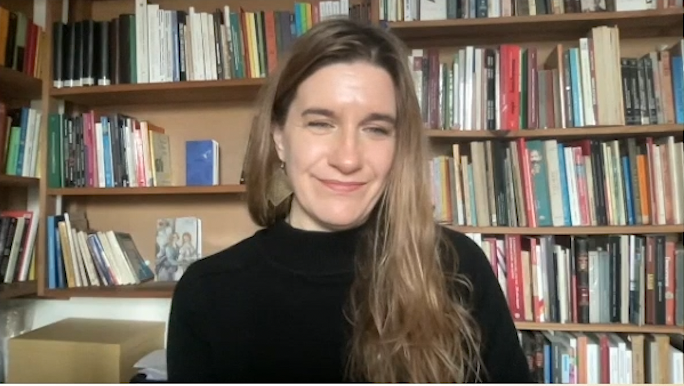
The Uruguayan historian and writer Magdalena Broquetas San Martín He presented his latest book, “Winning the War: Culture, Society and Politics in Authoritarian Uruguay, 1967-1973”.
In dialogue with CLACSO.tvHe referred to the period from the 60s to the coups in Uruguay and the Southern Cone, noting that "we had a view of that period of civilian authoritarianism that was more from above, from the institutional perspective, from partisan politics," whereas "this book presents another view of that period of civilian authoritarianism. I like to say that it presents a view from below and from the margins."
Regarding the work condensed in the book, she added: “The entire educational landscape, and fundamentally secondary and technical education, occupies a good part of the research. What I found—and I must say I was surprised myself, because I had some inklings, but before the research I wasn't so clear on the depth of the phenomenon and its extent over time—is something I like to call civil anti-communism.”
Expanding on this concept, he explained that “parent, neighbor, and even teacher organizations were formed, calling themselves democratic organizations, which began to pressure teachers, monitor the textbooks used, and occupy school buildings (…). These groups were there until the very end, until the moment of the coup. They went through different phases, some more hopeful, others more disillusioned, but they were convinced that the teaching staff had to be purged,” he asserted.
Interviewed by Gustavo Lema.
If you would like to receive more information about CLACSO's training programs:
[widget id=”custom_html-57″]
to our email lists.

