
September 11 in a rebellious Chile
Isabel Piper Shafir1
To commemorate is to remember together. It is to immerse oneself in a collective experience that is both political and emotional. It is to act out in the public sphere what we think and feel about the past. When we ask ourselves what is happening in our society today, we look to the past, constructing a narrative that allows us to explain our current social and political reality.
We don't commemorate just anything, but rather those events that give meaning to who we are and that usually coincide with what society identifies as originating from itself.
This is what we establish as the beginning in the story we build about ourselves, and it says as much about our past as about our present, because Memory is not made from what happened before, but from what matters to us now.
Every September 11th we remember the military coup of 1973, not only because it is a terrible event, but because we hope that it will allow us to understand how we came to live in this social system that oppresses us.
For decades we have been recounting the coup and the dictatorship that followed, over and over again, in public and in private, with images and words, with sadness and anger, building those narratives that we call Collective Memory.
We have almost always focused on the horror of the repressive violence exercised by the military, police and civilians under the protection of the State, which sought to punish the audacity of having tried to transform our society, and then to forcibly install the economic and social model that we now call neoliberalism.
Through constant repetition and as another resource of the pacification apparatus that was the "transition to democracy", the memory of the defeat became hegemonic, convincing us that excessive politicization and radicalization of left-wing political objectives is doomed to end with a new coup d'état.
The hegemonic narratives of the coup and the dictatorship are reenacted year after year, reinforcing the conviction circulating in our society that it was a decisive and foundational day.
What we commemorate is the end of a society that wanted to be different and the founding of another that says of itself that it cannot change.
Through the ritual repetition of acts of memory, such as deeds, images, use of space, symbols, and discourses, certain memories are fixed, often to the point of separating them from the power practices that produce them, while simultaneously promoting ideologies, affects, behaviors, and subjects. Commemoration thus becomes a reference point of truth that legitimizes the present based on the past.
However, commemorations also have the potential to transform the conditions that will (or will not) make possible new processes of remembering, qualities that give them their power of subversion and their ability to break the limits established by hegemonic versions of the past.
The subversive nature of collective memory processes lies not only in the act of remembering what official versions of history deny, nor in the normative effect of recounting and pointing out what should not happen again, but in allowing us to understand the present and imagine other possible futures.
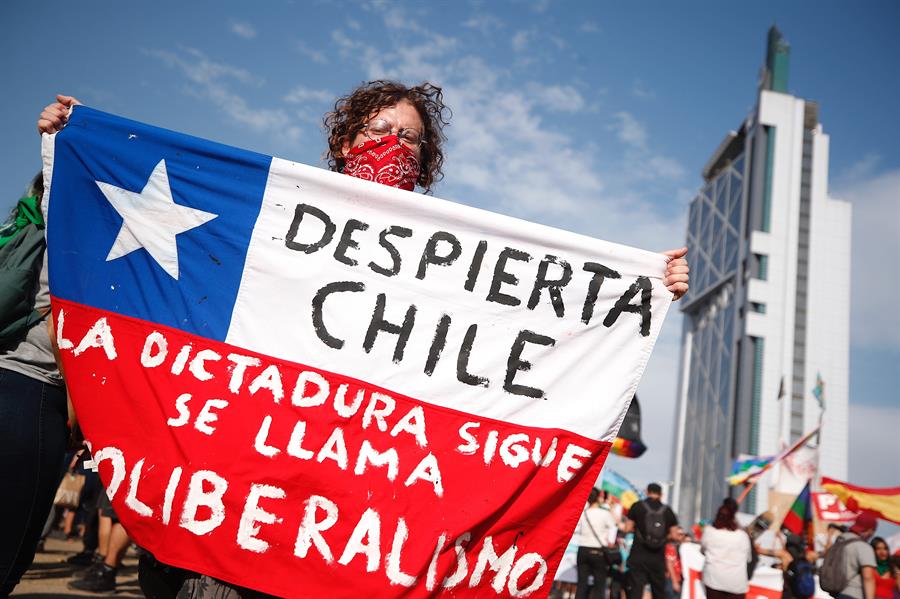
This September of 2020 will be very different from previous ones, partly because we are under lockdown and a state of emergency due to the pandemic. But above all, because it will be commemorated by a society that rebelled against the economic, social, and cultural model established by the dictatorship and consolidated by the transition.
The 11th will take place in a constituent Chile, which decided to stop being condemned to Pinochet's Constitution and, despite the limitations established for the process and the distrust in the political class that agreed to it, has been actively reflecting for months on the Constitution it desires and the participatory mechanisms to build it.
Therefore, these September 11 commemorations will be very different, as they will be led by a society that has ceased to be obedient to a past of violence and repression that punished its dreams of being different.
What we remember now is a society that has shown for almost a year the political will to transform the society in which it lives and that knows itself to have the power to do so.
This creates the conditions to make that day an event that challenges the hegemonic memories of our recent past, weakening their power effects.
We have created the conditions to go beyond the memory of horrors and pain and commemorate the practices of collective resistance, the courage, the transformative struggles, the utopias and the hopes.
We are building a new foundational moment, a new beginning that, unlike the negotiated transition of the 90s, responds to the sovereign will.
We are facing the opportunity to redefine the memories of defeat and to think again that history is ours, and we make it as a people.
1- Member of the CLACSO Steering Committee. Department of Psychology, University of Chile. Article published in «Opinión Cooperativa»
If you would like to receive more information about CLACSO's training programs:
[widget id=”custom_html-57″]
to our email lists.

