
Popular education and critical pedagogies
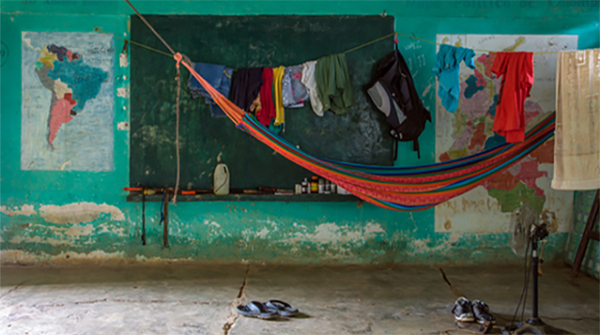
As researchers committed to our historical moment, from the CLACSO Working Group on Popular Education and Critical Pedagogies We believe that Latin America is currently facing enormous challenges and major crossroads.
In the specific field of education, we are witnessing a renewed attack on public education from a neoliberal perspective (commodification, privatization, subordination to the demands of accumulation), as well as the reduction of the meaning of education to the acquisition of skills and competencies functional to the capitalist system. However, education can also play a role in challenging the production of consent to the neoliberal and neoconservative shift that is articulated through the media, certain sectors of the churches, and government policies. In various places (geographic and social) across the continent, resistance is emerging around the creation and development of educational initiatives. On the one hand, we find alternative educational proposals, such as Indigenous education, pedagogies of the land, decolonial pedagogies, and feminist pedagogies, generally linked to vigorous social movements. Likewise, from the already consolidated currents of popular education and critical pedagogies, transformations occur in their scenarios, fields and forms of action and pedagogical reflection.
Education has once again become a battleground between the hegemonic societal project imposed by globalized capitalism and other visions of the future and alternative societal projects. The Working Group on Popular Education and Critical Pedagogies aims to address two main areas of reflection. First, to rethink the contributions of Popular Education to the struggles to defend or radicalize Public Education in Latin America and to contribute to the effective guarantee of the right to education. Second, to investigate the contributions of Popular Education and Critical Pedagogies to political formation, considering the processes of constructing critical subjectivities that unfold within them. Today—more than ever—spaces for the formation of subjectivities, both within and outside of public education, are essential for organizing initiatives that foster encounters, dialogue, and the construction of social projects oriented in a direction distinct from the advance of neoliberalism and neoconservatism.
coordinate
Jorge Fabián Cabaluz Ducasse
Department of Research and Postgraduate Studies
University of Christian Humanism
Chile
María Mercedes Palumbo
Secretariat of Research and Graduate Studies
Faculty of Philosophy and Letters
University of Buenos Aires
Argentina
Mónica Salazar Castilla
Center for Advanced Studies in Childhood and Youth Alliance
social Sciences
University of Manizales
Colombia
Queries: [email protected]
Facebook

Images belong to the serie "Silences" by photographer Juan Manuel Echavarría
If you would like to receive more information about CLACSO's training programs:
[widget id=”custom_html-57″]
to our email lists.

