
Ecuador, pandemic and crisis: contributions of criticism and formulation of reform and revolution as interdependent elements of anti-neoliberal struggle
Luis Herrera Montero[1]
This text brings together critical reflections on the predominance of neoliberalism as the cause of the current civilizational crisis, even during a pandemic. This assertion is, in a way, stating the obvious. Much has already been written on this topic. The level of devastation produced by neoliberalism could be worse than European fascism and the events of World War II. The COVID-19 pandemic is just one more phenomenon that should serve as a warning; the forest fires in the Amazon and Australia did so before. Despite these warnings, initiatives for change are still insufficient, if not extremely limited.
In the specific context of Ecuador, there is a strong emphasis on political analysis that prioritizes unity among progressives and leftists; this is also a long-standing need and point of discussion in Ecuador, Latin America, and the world. While this is unfortunate, it is urgent to clarify its necessity; otherwise, we will find it very difficult to address post-pandemic processes from the necessary positions of civilizational change. This is especially true now that no anti-capitalist revolutionary process has achieved such a goal. To this end, it is necessary to remember the disastrous consequences of the lack of an alliance between social democrats and communists in preventing Nazism from seizing political power in Germany. Will the lack of agreements in Ecuador push us even further into the disastrous continuation of neoliberal authoritarianism?
The text begins with a personal account of the pandemic crisis and the difficult times we have endured so far, due to the indifference of oligarchic sectors, with the complicity of the government and its inability to address not only the health emergency but also the socioeconomic crisis. Secondly, it reflects on possible solutions through essential processes of political alliance among anti-neoliberal forces, through a broad front uniting diverse sectors.
Finally, the origins of transition processes are explained as a necessity for civilizational change. To this end, it is proposed to activate the interdependence between reform and revolution in order to connect the consciousness and desires of the politically organized population with the consciousness and desires of those who are not organized and are vulnerable to the hegemonic practices of capital.
Brief overview of the problems caused by the pandemic in Ecuador
In our culture, death is an intensely emotional event; agonizing suffering when life's cycles force us to say goodbye to those who will no longer be part of our daily lives. Abruptly, in 2020, death overwhelmed our emotions. During the months of March, April, and May of this year, we learned of thousands of deaths due to a global pandemic with surprising and rapid consequences: the death toll has already surpassed half a million worldwide. COVID-19 emerged like an unstoppable cascade.
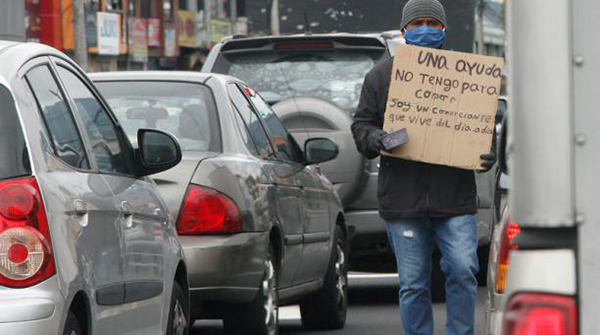
Specifically, in Ecuador, it was tragic to see corpses dumped on the sidewalks of Guayaquil. A kind of fatal attack against ceremonial traditions honoring the deceased. Most of these bodies came from contexts of poverty and extreme poverty. Obviously, members of the country's oligarchic classes would never place their dead in the street, inside miserable body bags, as was happening. Many accounts spoke of inconsolable grief, frustration, and helplessness; they were abandoning their loved ones because their money was spent on the difficult conditions of survival, which the pandemic exacerbated, and they didn't have enough to buy a decent coffin; moreover, because funeral homes had already collapsed; and because the danger of contagion was becoming something sadly unavoidable. These people not only lost their loved ones, but the circumstances also forced them to bag them as if they were garbage. There was no other way; keeping them in their homes would have been a fatal decision. Exposing social inequalities so starkly was like a crash landing. It meant confronting a reality that prevented fellow citizens from saying goodbye to their loved ones in accordance with religious tradition and custom.
Another heartbreaking scenario unfolded in public hospitals. Thousands were battling the disease, thanks to the tireless efforts of healthcare professionals who also had to denounce the precarious state of the country's public health system, dismantled once again in just three years of government. This situation created a dire health emergency. These professionals were forced to work with an insufficient number of beds and without basic protective equipment, facing an overwhelming influx of COVID-19 patients. Exposing themselves to the risk of infection jeopardized the functioning of public hospitals. President Moreno's regime showed no compassion for this situation; instead of activating and allocating resources with the necessary speed, it chose to issue a series of misguided pronouncements against doctors and nurses who were sharing their anguish and helplessness. They were attacked with accusations, reprimands, and even high-handed threats of dismissal, further exacerbating the acute and uncontrolled hospital and healthcare crisis.
The media was also out of step with the daily anxieties of the people, evident in the streets of Guayaquil. We received news primarily through alternative channels, mainly from certain sectors of social media in the virtual world—and I say "certain" because these popular social networks can also serve a system in clear decline. The distressing reality forced a few television channels to broadcast information late and very sparsely. To make matters worse, in terms of the official stance on the pandemic, President Moreno delegated two of his officials to explain the situation to an international media outlet. In a clear act of fear, the Ecuadorian president avoided invitations to interviews with Fernando del Rincón of CNN. This interviewer thoroughly deflected the presidential delegates, revealing an image of poor data handling and a lack of the necessary strategies to address an emergency of this magnitude. In conclusion, the government came across as an entity out of touch and without even minimally clear plans, especially in the context of the city of Guayaquil.
This entire situation demonstrated not only the indifference of the authorities, but also an undeniable inability to plan and act in times of extreme emergency. Justice was out of the question; that concept is foreign to their codes of interpretation and action. Once again, the high level of social marginalization was evident, due to the unacceptable existence of privileges for wealthy sectors and the shameless government complicity with sectors that also profit from undue state favors. Thus, the decision to pay $324 million in debt bonds was never properly evaluated, despite World Bank recommendations to prioritize investment in the socio-health emergency, especially in economic contexts of poverty, such as Ecuador's.
The downward spiral didn't end with this lamentable indifference. Ecuador's lucrative oligarchic businesses received an undeniable boost through the "Humanitarian Support Law" and the "Law for the Regulation of Public Finances." These laws placed social gains and labor rights at the mercy of negotiations advantageous to the business sector; thus, investment for the common good, mandated by the 2008 Constitution, was also severely affected. As a consequence of these deplorable government decisions, the State of Emergency decrees became the sole means to contain popular discontent and amplify the mobilizations of October 2019. Following this path, in a highly contradictory manner, processes were enacted to definitively end the total lockdown, and the State of Emergency was extended until August 13, 2020.
Obviously, Ecuador is part of a globalization process, and it's unreasonable to assume that what was happening in Guayaquil was an event outside the capitalist system and its acute civilizational crisis. Several authors have addressed this issue. In some cases, they see it as an opportunity to change the world system and re-establish a redefined communism as a civilizational alternative (Žižek, 2020). Chul Han's position (2020), on the other hand, highlighted the excessive romanticism surrounding the overcoming of capitalism. This system reproduces itself and remains in force. In an interview conducted on June 7, the Korean philosopher emphasized the need to maintain a degree of skepticism; a particularly relevant aspect of this interview is his consideration of breaking rituals as significant events for life and the sense of community cohesion. His argument highlights that teleworking has reinforced individualization in workdays and settings, and even in family communication; the author observes that watching a soap opera was once a family ritual, but today each person watches programs independently. This condition of individuality was highlighted a few decades earlier by Guattari. This author argued that processes of capitalist subjectivation or extreme individualization predominate in contemporary socialization processes.
For her part, Butler (2020) argues that discrimination, racism, violence against women and the LGBTQ+ community, among other manifestations, intensify in pandemic contexts. In this regard, the death of George Floyd, an African American citizen of the United States, brutally murdered by a police officer who knelt on his neck until he suffocated, was a clear demonstration of Butler's assertion, made a few months prior to this fatal event. Additionally, Butler also posits that neoliberal market logic governs all processes, including vaccine production. As evidence, she considers President Trump's pronouncements regarding his intention to monopolize the purchase of vaccine rights. In Butler's view, we are facing a serious social realization: the right to health for some, belonging to the dominant classes, will entail the denial of that same right to others.
Within the perverse logic of the capitalist system, the virus has been placed in a position of enmity, as if it were a being to be confronted with warlike strategies. Capitalism profited from both World Wars; moreover, military industries became exponential drivers of scientific and technological production. This is how a microorganism that has abruptly redefined borders is being interpreted. Expecting the capitalist system to dismantle its own functioning is an unfounded illusion. Therefore, we can affirm that the society of capitalist subjectivities (Deleuze and Guattari, 2007) has produced wars through technological processes generated in laboratories, where all kinds of matter are imprisoned, whether atoms and molecules or living substances. It is not claimed that the virus was produced in a laboratory, but rather that life enters into the logic of capital and labor, which has laboratories as its primary means of production and abstract labor (Negri and Cocco, 2004) as its exclusive and exclusionary axis of operation. Today, the COVID-19 virus is the enemy to be destroyed in processes entirely dominated by the logic of capitalist accumulation in laboratories and under neoliberal markets.
Globally, and clearly in Ecuador, until the production of medicines and vaccines is mass-produced, the risk of a dangerous resurgence of the pandemic looms, and efforts to overcome mandatory isolation could be seriously thwarted. The WHO has already issued this worrying warning. The pandemic thus appears as an uncontrollable enemy. Insisting on a war-like approach is the least appropriate course of action. It is urgent to overcome neoliberalism; the problem does not lie in the existence of a virus, since these microorganisms are part of nature, predating the emergence of humankind as a species. This war-like mentality only fosters fear of contact with fellow citizens, as they are perceived as potential vectors for the spread of a deadly enemy. Within this context, solidarity and mutual affection will hardly be the path to overcoming this crisis, which is not only pandemic but also civilizational.
Based on the aforementioned logic, it is worth remembering that countries like Ecuador will simply be buyers of products manufactured in these laboratories, undoubtedly controlled by large transnational corporations. Under the current political and economic circumstances, we will be negatively impacted as buyers under a state administration that does not prioritize social investment in health. It is already being asserted, according to an article published in Sputnik, that Latin America will face serious socioeconomic difficulties in accessing the anticipated vaccine, which will be subject to policies by which the United States, Europe, China, and Russia will attempt to recoup their investments and, obviously, profit from these discoveries (Barrios, 2020). In this context, mass distribution of medicines and/or vaccines will constitute a lucrative business and a marked exclusion of large segments of Ecuadorians and people from other regions who live in poverty and extreme poverty.
In the immediate future, experiences similar to those in Guayaquil are already being seen in various cities across Ecuador. The situation in Quito is already out of control. According to data from July 11, 2020, the province of Pichincha has 10673 cases. Neoliberal business associations, driven by a lack of awareness, have constantly pressured the mayor's office of this Metropolitan District to implement a "traffic light" system aimed at normalizing economic activity throughout the district, neglecting the still-vulnerable context regarding the spread of COVID-19. Statistics are already revealing data showing a worrying upward trend in the pandemic's growth curve. Both the Quito municipality and the Pichincha provincial government have denounced the insufficient number of hospital beds. In other words, the heartbreaking experience of abandoning loved ones in the streets is now an overwhelming reality.
What can be said of other provinces, whose infrastructure is far less extensive and of lower quality than that of Ecuador's capital, Pichincha province? This situation is evident in the following data: Manabí province with 5110 cases, Los Ríos with 2598, Santo Domingo de los Tsáchilas with 2554, Esmeraldas with 2523, and El Oro with 2354. Meanwhile, Guayas maintains a total of 16480.[2]The stagnation in the data raises a certain level of suspicion. The spread in the aforementioned provinces is clearly spiraling out of control; in percentage terms, the coastal region is home to the majority of the country's population. The government's response has been limited to the aforementioned "traffic light" system, delegating the corresponding decisions for lifting the lockdown to local governments. The reality is that these "traffic light" systems are contributing to the aforementioned pandemic surge.
Within this worrying situation, there is also no information about binational action plans regarding the pandemic. Colombia has already surpassed 145000 cases of infection, while Peru has exceeded 319000. A significant sector of our country's economy operated in border territories. Official and private media outlets have reported nothing on this matter. As we have demonstrated, the lack of efficient planning for this socio-health emergency has been the defining characteristic. In border territories, state planning has been virtually nonexistent throughout almost all of our colonial and republican history. The government's decision, as far as we know, only involves closing the border. Many of us are wondering whether this vast and complex territory is being adequately monitored and controlled. Obviously, monitoring and control are not the whole story. In the face of a crisis like the one we are experiencing, the economic reactivation of populations that have survived through trade with neighboring countries is a complete unknown; the measures being implemented in this regard are unclear.
Since 1999, neoliberal globalization has fostered regional free trade agreements, highly detrimental to small economies and extremely lucrative for large global oligopolies. Within this context of evident injustice, advertising promoted the disappearance of borders and open trade beyond national territories. The emergence of COVID-19 reproduced a similar dynamic of spread across borders, but paradoxically, the resulting effects have been the complete closure of borders and extreme isolation in each home, with severe restrictions on movement and states of emergency used as a coercive exercise of social control. The supposed integrationist logic of global inequalities and inequity that characterizes neoliberalism persists, but now with radical border closures.
The overwhelming presence and spread of a pandemic has led to widespread measures that excessively individualize everyday social life. Contact, therefore, is an imminent danger for contagion and transmission. All face-to-face contact necessarily becomes a mass risk. The implementation of preventive measures should not have disrupted sociocultural contact, but rather redefined it with health strategies properly planned and differentiated according to context. In this way, distancing would not necessarily imply a lack of communication, but rather protected communication; it would not mean an absence of labor cooperation, but rather cooperation under strict measures of mutual protection; it would not produce precariousness in people's livelihoods, but rather the application or reconstruction of solidarity economies; it would not isolate nations in the emergency response, but rather lead to the design of international co-management plans to resolve the socio-health crisis.
Equating the current crisis with a perceived decline in progressivism in Latin America would be a mistake. It would be tantamount to equating the proposals of neoliberal economists with those of Stiglitz, an author who can in no way be categorized as a socialist. In a text co-authored with François Houtart (2018), we agreed that progressive governments failed to implement post-capitalist projects; indeed, many proposals, such as the solidarity economy and family farming, lost relevance, despite being constitutional requirements in Ecuador and Bolivia, to name a few examples. Economic and social organization was characterized more by capitalist modernization processes, undoubtedly more rational than neoliberalism. If we compare the current regime's emergency response processes in Ecuador with those of its predecessor, we find marked differences.
Since the return to democracy in 1979, it is important to remember that the governments of Jaime Roldós Aguilera (1979-1981), Rodrigo Borja (1988-1992), and Rafael Correa (2007-2017) did not break with capitalism as the predominant system in the world, but they did not cause crises like those of a neoliberal bent. For example, the Hurtado administration (1981-1984) had the external debt in dollars, contracted by the private sector, assumed by the State in a discretionary manner, significantly harming national interests. Similarly, the Jamil Mahuad administration (1998-200) implemented a bank holiday and illegally seized the bank savings of all citizens, enriching oligarchic sectors through dollar speculation and impoverishing the majority. Currently, the Moreno government (2017-2021) made a complete turn towards neoliberalism, dismantling public investment and marking an unacceptable strengthening of the social crisis during the pandemic.
This context is also clearly evident in South America; neoliberal regimes have shown not only incompetence, but also incapacity and indifference regarding the pandemic and its spread. Undeniably, they are directly responsible for placing the region among the countries with the highest rates of infection; only the United States has higher numbers. The data reflects this: Brazil 1.839.850 cases and 76.469 deaths; Peru 319.646 cases and 11.500 deaths; Chile 312.029 cases and 6.881 deaths; Colombia 145.362 cases and 5.119 deaths; and Ecuador 67.209 cases and 5.031 deaths. The total number of infections worldwide is 12.507.849, and the combined total for these five countries reaches 2.683.796, representing 21,45% of global cases. In terms of deaths, 100% of deaths due to the pandemic is 560.460; while deaths for the same reason, in the countries mentioned, total 105.000 or 18,73% of the total.[3].
Within the context described, Ecuador urgently needs to overcome this social crisis, which has worsened with the pandemic, but this health emergency is by no means its cause. Undoubtedly, the implementation of neoliberal measures has caused the government's popularity to decline critically year after year. According to the CEDATOS polling firm, the government began with a 63% approval rating, which fell to 42,3% in May 2018 and to 23,1% in June 2019. According to the same polling firm, Moreno's approval rating as of May 2020 was 18,7%. In short, the crisis is evident and existed long before the COVID-19 emergency. In October of last year, the protests already demonstrated widespread rejection of the IMF-imposed economic package. Under these circumstances, it is very likely that the neoliberal right will back Otto Sonnenholzner, who recently resigned as Vice President of Ecuador. Between 1997 and 2005, three presidents fell. During Moreno's administration, there have been the same number of vice presidents, and a fourth will be appointed soon; a significant fact that suggests political crisis has returned to the Ecuadorian state.
The interdependence between reform and revolution
A crisis of the current magnitude requires a variety of alliances and unified processes to overcome it. The widespread division among nations has greatly complicated strategies. Conflicts arise over who is to blame for the emergence of the virus, and there is competition to find a vaccine or medications. Paths to regional, and even worse, global, cooperation are not being opened, because that is not the spirit of neoliberalism. So far, a dangerous resurgence is developing rather than an exit from the pandemic. Hence the importance of insisting on other possible worlds, always within pluralistic frameworks and cosmopolitan agreement. Now that we must first emerge from the emergency, this is a priority that cannot be ignored. We must not neglect the urgent need to overcome neoliberalism, since this system is significantly complicating the overcoming of the crisis, and its maintenance places the world in prolonged intensive care, to use clinical terms. It is not the virus that provokes the crisis, but the civilizational structure. Today the pretext is COVID-19; tomorrow the justifications will be different. Neoliberal globalization is in crisis; insisting on its permanence is an oligarchic imposition leading to planetary catastrophe.
The neoliberal crisis is a reality. However, civilizational change requires time. It is not feasible to predict such events and revolutions on a global scale. Therefore, addressing the emergency situation is paramount; that is, it is not possible to design projects and agendas for civilizational change without first addressing these situations of social catastrophe caused by neoliberalism in diverse pandemic contexts. It is therefore urgent to prioritize the creation of anti-neoliberal fronts, which will first allow for agreements on overcoming the crisis. Clearly, the establishment of a new social order is not feasible in the immediate future, because the current balance of power does not yet allow for broad popular consensus that would offer perspectives opposed to capitalist ideologies and hegemonies. Conversely, proposals for civilizational change are notoriously in the minority and extremely fragmented: the only unifying force is the World Social Forum, whose influence is small compared to the hegemonic power of capitalism, which even today prevails in systems formerly called socialist. This problem has also had to be addressed by progressive Latin American governments, which envisioned important breeding grounds for epochal change, but these have been diluted in complex processes of capitalist negotiation. That is to say, overcoming neoliberalism does not mean overcoming capitalism.
It is extremely repetitive to call for unity. The divide between supporters and opponents of Correa is a serious problem, as it is not fracturing neoliberal sectors. Faced with this rivalry, critical reflection becomes essential. The structural change that sectors of the traditional Ecuadorian left have called for decades will not materialize without addressing situations of extreme emergency. Furthermore, their ability to connect with diverse populations across the country in the electoral arena has consistently been a minority position over the last four decades. On the other hand, critical stances are also necessary, since during Rafael Correa's last term, developmental capitalism was positioned as the paradigm of social reality. The difference between the 2009-2013 National Development Plan (Plan del Buen Vivir) and the 2013-2017 National Development Plan (Plan del Buen Vivir) is very clear; a review of their texts reveals the modernist-capitalist shift and the consequent subordination of the objectives of civilizational change.
Since the imposition of neoliberalism, phenomena that exacerbate the crisis have become more frequent than those that project even minimal states of social stability. It is urgent to reach agreements to confront the neoliberal crisis, but without relinquishing the legitimate need to make civilizational transformations a reality. This may require us to reinstate the debate surrounding transitional positions. In this regard, Marx and Engels (1974) proposed that the revolution toward communism would require a prior stage: socialism. Let us remember that the Marxist proposal was never the perpetuation of socialism, as was mistakenly believed in the Soviet, Chinese, Vietnamese, and Cuban regimes, among others. For Marx and Engels, it was always a transitional stage. The debate between Lenin and Kautsky regarding the revolutionary process in Russia was also illustrative; Lenin argued for modifying social relations to establish socialism; The second, on the other hand, emphasized the need to first develop the capitalist productive forces, as a prelude to preparing the foundations for the transformation towards socialism (Lenin, 1981).
A similar difference was observed between Bernstein and Luxembourg, but evidently at a higher level of conflict.[4]In the full development of this debate, from Rosa Luxemburg's perspective (2002), it was necessary to clarify the difference between processes characterized by reform and those characterized by revolution. It is essential to understand that Luxemburg's distinction is crucial, since Bernstein attempted to deny the need for processes of social transformation and to present gradual reform measures as a path to the same objective—an aspect that Luxemburg sufficiently exposed. Subsequently, in dogmatic socialist currents, these concepts were assumed to be in opposition, even though they do not carry such connotations. Therefore, it is advisable to maintain positions that affirm both reform and revolution, so as not to treat these concepts as antonyms.
Currently, from the perspective of Latin American progressive thought, Atilio Boron (2020), perhaps its most significant representative, also criticizes Žižek's pronouncements regarding the pandemic crisis and the opportunity it presents to overcome capitalism through a reinvented communism. In Boron's opinion, Žižek's perspective, despite his admiration for the author, is overly optimistic and, in a way, not sufficiently grounded in the possibilities offered by the context, given that capitalism has been able to recover from various crises. Thus, Boron also argues that it is possible to implement processes of new socialisms, capable of becoming widespread as an alternative to the civilizational crisis. This author's position aligns with the sustainability of Latin American progressive governments, which he considers valid counter-hegemonic experiences against neoliberalism.
From the perspective of contemporary Latin American progressivism, as understood by its own governments, being progressive is tantamount to being revolutionary. Consequently, it could be argued that revolution has become synonymous with reform, and vice versa. It is crucial to emphasize the importance of not contrasting revolution with reform, but neither should they be equated. These remain the difficulties in forging alliances. Ultimately, political practice lacks a clear conceptualization of these processes. The reform processes, extensively undertaken by progressive governments, should not be undervalued; it would be most unjust to do so. Achieving reforms that dismantle neoliberalism is urgent, but such applications are insufficient because reforming does not equate to revolutionizing. This remains one of the crux of the discussion and of seemingly definitive disagreements, when in reality reform and revolution can constitute necessary and complementary parts of projects of emancipation and civilizational change. It is necessary to recognize the interdependence of these processes in order to advance agreements for political struggle. The failure to understand this interdependence reveals a profound immaturity that has remained virtually unchanged for over a century. Therefore, critical and self-critical processes on this topic are urgently needed if we truly wish to overcome the neoliberal crisis, firstly, and the capitalist crisis, secondly.
To achieve this, it is also necessary to recognize that the dominant capitalist hegemony has seriously hindered the construction of new consciousness and desires among the majority of the population. Its dominance has not been limited to generating massive processes of alienating ideological adherence, as understood in Marxism, but also capitalist subjectivities, as Deleuzian post-structuralism argues. Exclusively rationalist proposals, which aim to modify everything based on class-conscious, environmentalist, and feminist perspectives, and which have been embraced by legitimately organized minority sectors of the population, unfortunately neglect masses engaged in even addictive consumption patterns. These majorities seek survival; therefore, their objectives are predominantly immediate. Those from these sectors who engage in organic political struggle are exceptional. These mass populations can be addressed through reforms that can be implemented in the short term. In contrast, transformations based on other consciousnesses and desires require concrete actions projected into more complex developments, which are undeniably revolutionary in nature, with medium and long-term timeframes.
Is it possible to truly connect with the ongoing suffering endured by the majority of populations living in poverty and extreme poverty, as they bear the brunt of a civilizational crisis—whether in economic, political, or public health terms, ultimately impacting their most vital rights? If our response is to avoid developing viable strategies and practices to dismantle a system that has demonstrated high levels of erosion and decay, then obviously it will not be possible. Similarly, we will not achieve significant change without addressing the conditions of awareness and the expression of the majority's desires. This is why the interdependent and proactive perspective of reform-revolution brings us closer to those who have consistently supported and continue to support capitalist hegemony. Undoubtedly, they are the majority, and their social learning has not yet reached the complexity of making revolutions, but they can begin to grasp this learning through reforms that gradually allow them to learn how to revolutionize, which involves unlearning and relearning.
Bibliography
Boron, A. (April 3, 2020). The pandemic and the end of the neoliberal era. CLACSO. https://www.clacso.org/la-pandemia-y-el-fin-de-la-era-neoliberal/
Butler, J. (March 27, 2020). Capitalism has its limits.Lavaca.org. https://www.lavaca.org/notas/el-capitalismo-tiene-sus-limites-la-mirada-de-judith-butler-sobre-el-coronavirus/
Chul-Han.B. (June 7, 2020). The disappearance of rituals is suffocating us. TheManifesto.com. https://elmanifiesto.com/cultura/726891239/Byung-Chul-Han-la-desaparicion-de-los-rituales-nos-ahoga.html
Deleuze, G u Guattari, F. (2007) A Thousand Plateaus. Capitalism and SchizophreniaValencia: PRE-TEXTS.
Lenin, V. (1981). The State and Revolution. Moscow: Progress Publishers.
Luxembourg, R. (2007). Reformation or revolutionMadrid: Federico Engels Foundation.
Marx, C. and Engels, F. (1974). Manifesto of the Communist Party. Moscow: Progress Publishers.
Negri, T and Cocco, G (2006). Global: Biopower and struggles in a globalized Latin AmericaBuenos Aires: Paidós.
Zizek, S. (February 29, 2020). The coronavirus is a 'Kill Bill'-style blow to capitalism that could reinvent communism. Russia Today. https://actualidad.rt.com/actualidad/344511-slavoj-zizek-coronavirus-golpe-capitalismo-kill-bill-reinventar-comunismo
[1]∙ Anthropologist (Salesian Polytechnic University). Master in New Technologies Applied to Education (Autonomous University of Barcelona) PhD, in Arts and Humanities (University of Jaén-Spain). Member of the CLACSO Working Group on Sensibilities, Subjectivities and Poverty.
[2] Information retrieved on July 11, 2020 from: https://www.salud.gob.ec/el-ministerio-de-salud-publica-del-ecuador-msp-informa-situacion-coronavirus/#
[3] Information retrieved from: https://news.google.com/covid19/map?hl=es-419&gl=US&ceid=US:es-419
[4] Without a doubt, Rosa Luxemburg was a victim of an authoritarian exercise of social democracy, of which she was a militant, and faced with these unacceptable contradictions, she ended up becoming radicalized.
If you would like to receive more information about CLACSO's training programs:
[widget id=”custom_html-57″]
to our email lists.

