
Intersectoral Dialogues: Recognition of the Rights of Workers in Commerce in Public Spaces
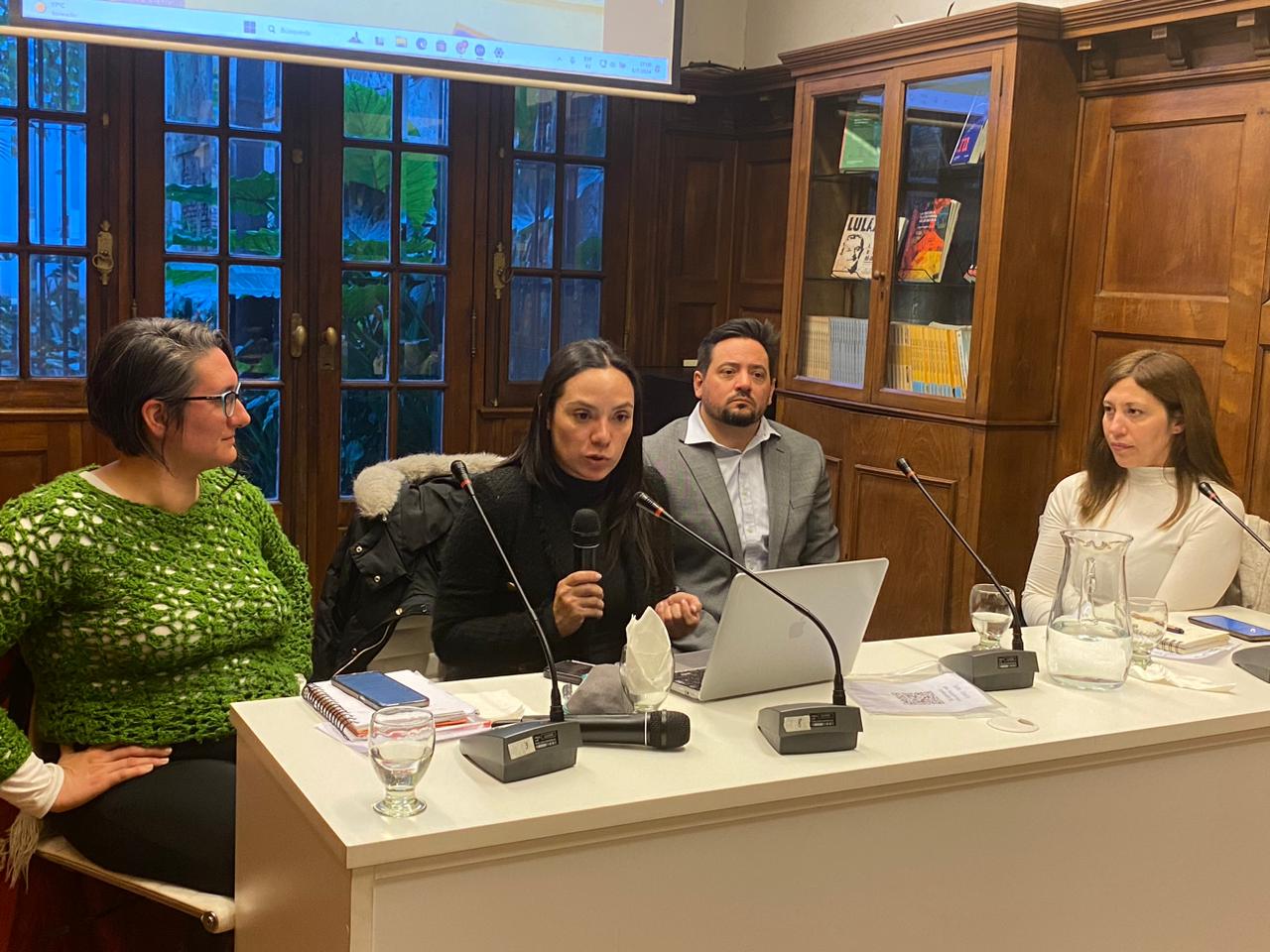
On July 1st, the discussion took place at the CLACSO headquarters. Intersectoral Dialogues: Recognition of rights for workers in commerce in public spaces.

The meeting was organized by the CLACSO Working Group: What work for what future?The Institute of Social Studies in Contexts of Inequalities (IESCODE-UNPAZ), the Institute of Justice and Human Rights (IJDH-UNLA), the organization Women in Informal Employment Globalizing and Organizing (WIEGO), and the Union of Workers of the Popular Economy (UTEP) also participated, with the outstanding participation of Tania Espinosa (Coordinator of the Latin American legal program in Women in Informal Employment: Globalizing and Organizing), Javier Palummo (Special Rapporteur on Economic, Social, Cultural and Environmental Rights of the Inter-American Commission on Human Rights), and workers and union and social leaders from organizations representing public space workers (affiliated with FTEP-UTEP) and researchers specializing in the topic. The meeting was moderated by Dr. Johanna Maldovan Bonelli (CONICET-IESCODE/UNPAZ) and Dr. Berenice Timpanaro (UNLA).


The activity was designed to create a space for dialogue between representatives of social, labor, and non-governmental organizations, as well as academics, to collaboratively develop diagnoses and proposals aimed at improving the working and living conditions of those engaged in this activity. The following key areas were addressed during the meeting:
- Working conditions in the activity and their relationship with rights, particularly with the use of public space.
- The role of unionization: scope and obstacles of the union figure for the sector.
- Possible policies, proposals and future projections.
Throughout the various presentations, the role of street vending was highlighted as one of the main employment strategies for a significant portion of the working class in the face of the crisis in the formal labor market that has affected the region—and Argentina in particular—since the mid-70s. In turn, the workers and community leaders explained how, in the Metropolitan Area, this activity has some specific characteristics, which emerge primarily from: the region's geographical, political, and economic position in the country; the network of actors involved in its practice; the conflicts of interest surrounding the development of commerce and the use of public space; and the particular evolution of the local regulatory framework.
Street vending is, in the words of some vendors, “the second oldest profession in the world,” an activity that exists “all over the world,” since being a vendor is “part of a culture.” However, neither the antiquity of the profession, nor its existence as a global income-generating strategy, seems to be sufficient for its full recognition as work—at least as a desirable and legitimate job—nor to limit the repressive government practices that often characterize various state interventions, both in Argentina and in other countries around the world, with the exception of some cases in which established regulations prioritize the right to work of those engaged in this activity.
Currently, street vendors lack formal recognition as workers and operate in highly precarious conditions. The lack of regulations regarding the use of public space, the tendency to criminalize their work, exposure to various risks associated with street vending, and existing gaps in access to rights and protections are some of the central problems that must be addressed. In response to this situation, several organized groups have emerged within the sector in recent years, a substantial portion of which are part of the Union of Workers of the Popular Economy. By promoting unionization, these groups aim to fight for rights and resources to improve the working and living conditions of street vendors.

