
International Mother Earth Day
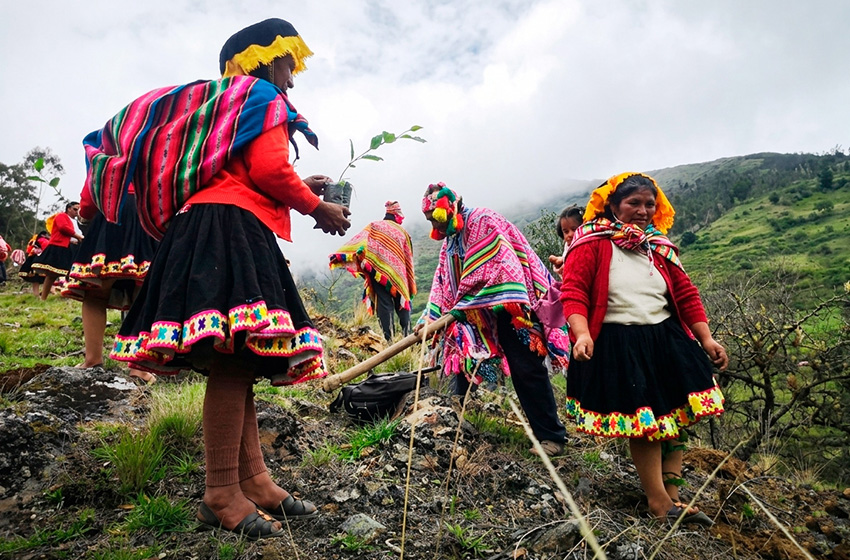
On April 22, the International Mother Earth DayPachamama, an opportunity to (re)think what is happening to our planet and promote public policies on good living, food sovereignty, territorial rights, human life and family farming.
From the perspective of critical social sciences in Latin America and the Caribbean, Pachamama Day transcends its ancestral celebration to become a space for reflection on the current civilizational crisis. CLACSO once again warns about the destruction of nature, forest fires, water pollution, and global warming, all of which are raising alarms about global climate change.
This date underscores three fundamental pillars:
-Sovereignty and Territory: The defense of Mother Earth against the advance of the extractive frontier, megamining and agribusiness.
-Good Living: The proposal of an alternative paradigm to capitalist development, based on harmony, reciprocity and complementarity between human beings and the ecosystem.
-Decolonization of thought: The recognition of indigenous knowledge as valid knowledge to face climate change and environmental degradation.
Since its founding, the Latin American Council of Social Sciences has not been unaware of this problem, and expresses it in studies, publications, interventions and courses.
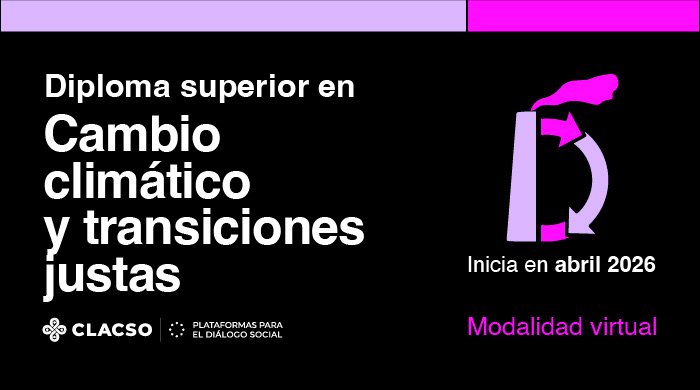
Advanced Diploma in Climate Change and Just Transitions
The Diploma program aims to foster reflection on the challenges facing Latin America and the Caribbean in relation to climate change, environmental justice, and the need for diverse, locally rooted, and socio-environmentally just transitions. Its design covers various thematic areas and geographic regions, providing theoretical and methodological tools for analysis and decision-making. This comprehensive approach seeks to promote a critical and well-informed understanding of the current situation.
Coordination: Maritza Islas Vargas (National Autonomous University of Mexico), Antonio De Lisio (Central University of Venezuela) and Urphy Vásquez Baca (Pontifical Catholic University of Peru)
Start: April 30, 2026 – Modality: Virtual – Registration open with discount.
InfoCLACSO
New CLACSO Working Groups 2026-2028
Political agroecologyAstrid Ximena Cortés Lozano (Colombia), María Inés Gazzano Santos (Uruguay) and Narciso Barrera Bassols (Mexico)
Political ecologies from the South/Abya Yala: Felipe Milanez (Brazil), Martín Medina (Argentina) and Raquel Neyra Soupplet (Ecuador)
Open access books
-Socio-environmental conflicts and just transitions in the 21st century

