
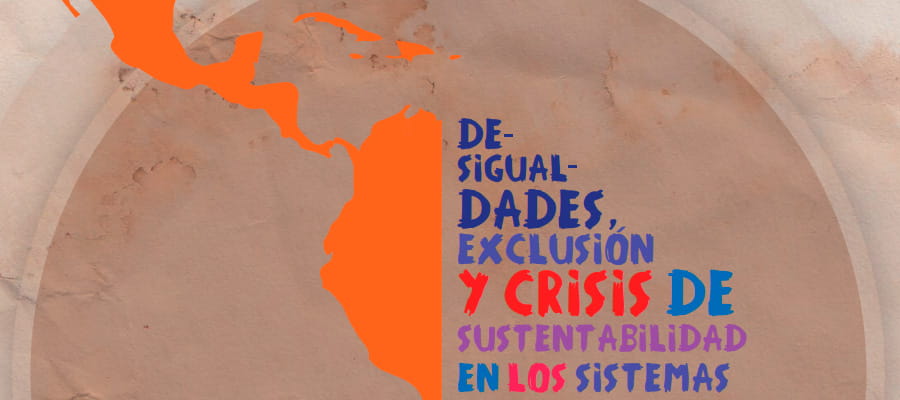
Inequalities, exclusion and sustainability crisis in pension systems in Latin America and the Caribbean
CLACSO – CLATE SCHOLARSHIPS
Topic:
Inequalities, exclusion and sustainability crisis
This call seeks to deepen knowledge about pension systems in Latin America and the Caribbean, their general characteristics, the elements that maintain or exacerbate inequality among their beneficiaries, the factors that exclude large sectors of the population from the right to social security, and to understand the causes that explain the sustainability crisis that many of them are experiencing.
The objective is to construct an analytical framework that allows us to understand how the design, structure, financing, and administration of a pension system relate to the possibility of guaranteeing the right to social security. In this sense, the purpose is for the projects to explore explanations for the sustainability crisis affecting many systems in the region and to develop proposals that allow us to confront and overcome these crises from the perspective of a public, state-run, and solidarity-based system.
The right to social security, understood as the guarantee of social protection and well-being for all workers in old age or in situations of disability, enjoys constitutional recognition in most Latin American and Caribbean countries. It also has international recognition, for example, through Convention 102 of the International Labour Organization (ILO). However, legal recognition is often insufficient when there are no mechanisms that truly and effectively guarantee the enjoyment of retirement benefits that allow for a state of well-being.
We understand well-being to be that which transcends the mere satisfaction of basic needs and allows workers to achieve full inclusion in the economic, social, and cultural life of their lives, as well as maintain the position they attained during their working lives. In this sense, the variables of exclusion and inequality should be related to the possibility of achieving this well-being and not simply to the perception of pensions that serve as "poverty relief" for the elderly and/or disabled.
Pension systems, on the other hand, are not immune to the realities faced by working men and women, where unemployment, underemployment, and informal employment, as well as the uncertainty surrounding the future of work brought about by automation and the incorporation of artificial intelligence, are variables that impact both their financing options and their ability to meet the requirements for accessing benefits. These and other variables, such as increased longevity rates, necessitate a rethinking of the design of pension systems to ensure their long-term sustainability.
However, whenever a pension system is analyzed from the perspective of its beneficiaries, the primary objective must be to guarantee their well-being, not to use pension funds as a means of financial accumulation. In this sense, the challenge is to develop alternatives that overcome the crisis facing current systems within a public, state-run, and solidarity-based framework. This requires considering financing methods that involve not only contributions from workers and employers but also from the state itself.
Reports:
[email protected]
REGISTRATION DEADLINE: 14 OF AUGUST OF 2017

