
“From Central America we want to contribute to a more inclusive Latin America”
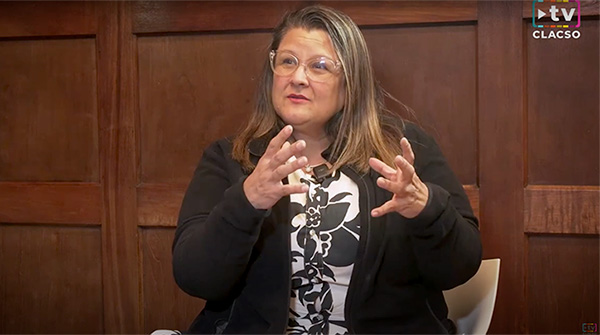
The Costa Rican teacher and researcher Zarelly Sibaja Trejos, who directs the Institute of Gender Studies at UNED, coordinates the Academic Accessibility Network and actively participates in national and international inclusive education networks, such as the National Observatory for Inclusive Education and the International Network of Inclusive Higher Education (RIESI) of the Central American Higher University Council of the Central American Integration System (CSUCA-SICA), newly elected member of the CLACSO Steering Committee for Central America at the XXVIII Assembly of the Latin American Council of Social Sciences in Bogotá, Colombia, on June 8, 2025, held a dialogue with the Executive Director of CLACSO, Pablo VommaroDuring the course of which he made a diagnosis of the situation in his country and the region, particularly the situation facing public universities.
He analyzed that "andIn Central America, there are many political difficulties because the attempts to silence dissenting voices, to silence the press, to silence people, are intensifying every day. There are significant cuts to social welfare projects and low voter turnout. At least in Costa Rica, while we are experiencing many of these things, there isn't yet as much fear of participating. But in other Central American countries, the suppression of the ability to say what needs improvement, what is wrong, is severe. People have to leave their countries, people have been politically persecuted, arrested, simply for opposing the government. So, it's truly sad not being able to say what we think, what we feel, and not being able to achieve a more equitable society every day.
Furthermore, he emphasized that in the region “Opportunities are being cut and rights are being taken away. At least in Costa Rica, some programs have been closed, and the education budget has been reduced in the last two years. Right now, for example, public universities are fighting for next year's budget, and it's a difficult negotiation at the political level because they don't want to allocate what is due to education. So we know that as these cuts continue, we will experience a significant setback. This has happened in other Central American countries, and it's happening to us now in Costa Rica. The situation is volatile, and we can't take for granted that even though we've already gained many rights, they will always be there. The fight must continue because there are many threats that could arise.”
Finally, Zarelly Sibaja Trejos considered that “The process that the CLACSO network is going through is important, it is important that we can make it grow, and our commitment in the Steering Committee for these three years is to be able to contribute to that growth of CLACSO in order to achieve a more inclusive, more understanding and more humane Central America and Latin America.”
If you would like to receive more information about CLACSO's training programs:
[widget id=”custom_html-57″]
to our email lists.

