
Cuba: Transforming Care Work for the Elderly During the Pandemic*
Rosa Campoalegre Septien[1]
Felicitas López Sotolongo[2]
Odalys González Collazo[3]
Yanel Manreza Paret[4]
Yudelsy Barriel Díaz[5]
Ernesto Chávez Negrín[6]
Starting points
The Cuban experience demonstrates that one of the key lessons learned in confronting the COVID-19 pandemic is the increased collaboration between the social sciences and communities, based on solidarity. In this context, the "Acompáñame" (Accompany Me) service was launched on April 13th of this year, in honor of the day dedicated to Cuban psychology professionals. "Acompáñame" is part of the Care Work Support Program (PATC), designed by the Family Studies Group of the Center for Psychological and Sociological Research (CIPS), and is integrated into the research project entitled: "Transforming the care work of older adults receiving long-term care from a family perspective" (Campoalegre; López; González, Manresa, Barriel, Chávez, and Samón, 2020).
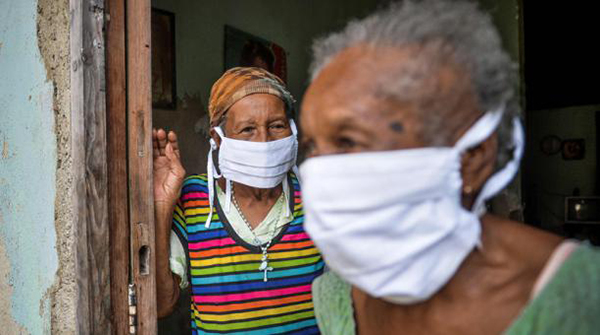
This service began as a request from the "Celia Sánchez Manduley" nursing home.[7], located in the People's Council "El Carmelo", which was officially declared to be in interpersonal physical isolation[8] The situation was exacerbated by the pandemic. This led to the closure of the institution, causing a significant change in the activities of the elderly residents. This situation contributed to the emergence of psychosocial distress.
“El Carmelo” is the council with the highest concentration of elderly people in Plaza de la Revolución, the second most aged municipality in the country with 28% of its population over 60 years old (ONEI, 2019). Subsequently, it extended to the “Vedado-Malecón” People's Council.
This article aims to evaluate this unique care experience, from its conception and implementation, and reports on some of its main results. It represents a research advance, given that it is a new service, implemented under unprecedented conditions, and currently in full operation.
Service description
“Acompáñame” is a preventive, informational, and psychological support social service. It is based on solidarity and is implemented through personalized alternative telecare, developed through community networks (Campoalegre; López; González, Manresa, Barriel, and Chávez, 2020b). Due to the health emergency, the team of professionals cannot access community councils, so they rely on community members.[9] for the provision of resources and the resolution of problems faced by older people.
This service is based on two fundamental theoretical and methodological principles. First, it considers care as both work and a universal right (Batthyány, 2015). Second, it adopts a multi-actor co-responsibility approach that integrates the participation of older adults as proactive agents of change in their own lives, in conjunction with community actors, the state, families, civil society, and the market.
It is a feminist project, coordinated and implemented mostly by female professionals. The "Accompany Me" project is a co-responsible feminist bridge of love and collaborative support (Campoalegre, cited by Gordillo, 2020). It should be noted that the majority of those receiving the service are also women. While it is a social service intended for older adults, regardless of gender, it is a trend that women are the ones requesting and/or being willing to receive the service.
The service is intended to provide support to: people over 65 years of age who live alone, with their spouses of the same age, or who, for various reasons, remain practically alone in their homes; people over 60 years of age who receive long-term care and caregivers who provide long-term care to elderly people.
The objectives of this service are as follows:
- To provide emotional support to elderly people who require the service.
- Channeling the main concerns, opinions, worries or problems of a social nature to the competent institutions.
- To carry out primary actions of psychological guidance to the people served who require it.
- To properly promote the official information provided by the Cuban State regarding the epidemiological situation the country is experiencing.
- To foster a space for the promotion and maintenance of physical and psychological health based on a culture of care and self-care.
- Stimulate community support networks for older people.
Note that these objectives align with the principles of the PATC and transcend the health-focused, deficiency-based, dependency-driven, and therefore predominantly welfare-oriented approach that predominates in Cuban public policy, and in this case, in care work. From its inception, it promotes the new paradigm of care as social work, with a focus on co-responsibility, gender, and rights that extend beyond basic needs.
Service Implementation
The service provides remote support to seniors who request it, either through their own efforts or at the request of civil society organizations in the area and the government. Initially, it focused on residents of the "Celia Sánchez Manduley" senior center, but it has since expanded to include other seniors from the "El Carmelo" and "Vedado-Malecón" neighborhoods who are not affiliated with social institutions and who, in some cases, care for family members.
The service's main tool is dialogue, support for specific everyday problems, and psychological guidance. It takes place via telephone or WhatsApp, means that allow communication without leaving home, addressing the current situation of physical isolation. While having these devices is currently a requirement to benefit from the service, the aim is to expand it once the "new normal" is reached.[10]to other modalities that go beyond telecare.
It is organized into three areas: Introductory, Social, and Psychological Counseling. Specific protocols are established for each area. The Introductory area welcomes individuals to the service and initially places them in one of the other two areas. The Social area addresses issues such as support for daily living, legal guidance, informational support, the promotion of positive family strategies in response to COVID-19, the prevention of domestic violence, and the promotion of community support networks for the service. Psychological Counseling focuses on promoting and maintaining the physical and psychological health of older adults, supporting and recognizing their own resources, strength, and capacity to cope with their problems, alleviating their anxieties, and promoting self-care and care for others.
Initial contact with service users takes place once a week between 4 and 6 p.m. During this first meeting, it is agreed whether the person wishes to extend the frequency to more than once a week. Their needs and expectations regarding the service and a convenient schedule are also explored. Subsequent contacts will depend on the individual circumstances and the relationship established between the researcher/companion and the older adult, always keeping in mind the service's fundamental objectives.
Initially, the service was developed only with the researchers of the Family Studies Group of CIPS, but given the growing demand, collaborators were incorporated until reaching 6 institutions[11] and 15 participating professionals.
One of the challenges the participating professionals have faced during the service has been its implementation via telehealth. This involves a form of communication that is initially impersonal and requires working and interacting with people remotely, without ever meeting them face-to-face. This has led to the adaptation of new ways of working where commitment and responsibility are paramount. The fundamental limitation for the implementation of the service lies in the insufficient effectiveness of working relationships and coordination with the Basic Social Work Unit, which hinders the resolution of certain identified problems. However,
The journey through implementing the service has been very rewarding for the team, most notably the gratitude expressed by the beneficiaries of "Acompáñame" and the reassurance that these individuals are not alone and can count on the team's support and companionship. Another key aspect is that it has influenced and enhanced the work. Community support networks have been established that will endure over time as one of the service's lasting impacts, along with the innovative capacity that has transformed the research team's own strategies and perspectives.
Characterization of the people benefiting from the Service
Currently, 100 people are being cared for, of which 10 are in the introductory area and the remaining 90 are: 16 caregivers; 18 people receiving long-term care; and 56 elderly people who live alone, with their spouses of the same age, or who for various reasons remain practically alone in their homes.
The sociodemographic profile of these individuals shows a predominance of white women, with an average age of 78, particularly those between 60 and 79 years old. These individuals tend to reside in homes with good living conditions, influenced by the characteristics of the surrounding area.[12] and the weight of family remittances[13].
It is important to highlight that the entire population benefiting from and simultaneously the primary focus of the service is at epidemiological risk. Among the main personal medical histories, chronic non-communicable diseases such as hypertension, diabetes mellitus, bronchial asthma, ischemic heart disease, underlying psychiatric disorders, cognitive impairment, dementia, and osteoarthritis, among others, stand out. In individuals receiving long-term care, senile dementia, cerebrovascular diseases, physical-motor disorders, and visual impairments are prevalent.
An examination of the characteristics of those performing care work reveals that all but one are women, with an average age of 71, which is relatively lower than the average age of the population served by the program. This confirms the prevailing trend toward the feminization of caregiving, concentrated among older adults. This situation highlights an area that should be prioritized in public policy, as one of the most complex forms of care—long-term care—is provided by individuals from groups vulnerable to COVID-19 and who require significant care. It is worth noting that five of the caregivers are in the so-called fourth age, being over 75 years old.
The educational level of the caregivers and their previous employment status are noteworthy. It was found that the majority (13) are retired and have a university degree (8) or upper secondary education (3). Their marital status is diverse, with married women (7) and divorced women (4) being the most prevalent. These caregivers primarily provide care for family members, especially spouses (7) and mothers (5). Two caregivers are responsible for providing care to two people in the household, which increases their workload of domestic and caregiving tasks. The care work they perform is unpaid; only one is self-employed.[14] Consequently, they lack financial support, and their contribution to family well-being and society as a whole is rendered invisible. This puts care as a universal right under strain.
The characteristics of the people benefiting from the service reveal the heterogeneity of the group and, in turn, the predominant trends that distinguish them. During the interaction with these individuals, they have not only been supported, but they have also contributed to the success. This process deconstructs the focus on lack and strengthens the thesis of self-reliance, training, and the sharing of skills.
Despite the limitations identified in the implementation of this service, its consolidation has been confirmed to date. The results achieved are significant, such as:
- High demand, with the number of people coming and going doubling from 50 to 100. Rapport and empathy have been established, despite physical distancing.
- Expansion of the inter-institutional and multidisciplinary nature of the service, taking into account the composition of the team and the protocols used.
- High and sustained level of satisfaction among service beneficiaries. Stability in the relationships between beneficiaries and the group providing the service.
- Trend towards favorable evolution of cases requiring psychological guidance.
- Formation and expansion of community support networks.
- Dissemination of research advances (national and international publications).
- Intense work of self-improvement, academic exchange and organization of the professionals who develop this service.
Notes for a summary for future reference
The social impacts of the COVID-19 pandemic have led to a reconfiguration of caregiving (Campoalegre, 2020). In this context, the "Acompáñame" (Accompany Me) project was developed as a result of: women's leadership in the neighborhood, the collaboration between social sciences and communities, and state political will. The implementation of this service demonstrates the project's capacity to strengthen community-level networks focused on older adults. It marks a shift in the paradigm of care for these individuals, promoting intergenerational dialogue and community networks that support subjective well-being. The way in which work schedules and methods have been restructured has been seen as an opportunity to overcome imposed obstacles, gain flexibility, and innovate toward new ways of working and thinking within the social sciences.
Acompáñame was born during the pandemic and has become a paradigm in the care and support of older adults and their caregivers. It aims to endure, expand to other regions, and update its protocols in response to future changes, becoming a fixture on the public and family agenda.
Referências bibliográficas
Batthyány, Karina (2015). Policies and care in Latin America. A look at regional experiences. Montevideo: ECLAC.
Campoalegre, Rosa; López, Felicitas; González, Odalys; Manresa, Yanel; Barriel, Yudelsy and Chávez, Ernesto. (2020). Join me: Reconfiguring care in the face of COVID-19. Magazine Sociocultural Studies, 13 (26), July-September.
Campoalegre, Rosa López, Felicitas; Gonzales, Odalys; Manresa, Yanel; Barriel, Yudelsy; Chávez, Ernesto and Samón, Milagro. (2020). Transforming the work of caring for older people with long-term care from a family perspective. Havana: CIPS.
Campoalegre, Rosa. (2020). Who provides care and how? Questions in Cuba. Retrieved from http://www.facebook.com/pages/IPS-Cuba/193678270660817
Gordillo. Lirians, (2020). Getting to know each other face to face after the pandemic. Interview with Rosa Campoalegre. Women's MagazinePublication of Cuban women at <http://www.mujeres.co.cu/art.php?MTMwMDE=>
National Office of Statistics and Information, Center for Population and Development Studies. (2019). Demographic Yearbook of Cuba 2018. Havana: ONEI.
* It refers to people over 60 years of age. This term is more inclusive from a gender perspective and has been recommended in the Cuban context by the Ibero-American Center for the Elderly (CITED).
[1] PhD in Sociological Sciences. Professor and Senior Researcher. CIPS. Coordinator of the CLACSO Working Group on Afro-descendants and Counter-Hegemonic Proposals.
[2] Doctor of Juridical Sciences. Specialist in Science and Technology. CIPS.
[3] Master's degree in "Prevention of Drug Abuse." Associate Researcher. CIPS.
[4] Master's degree in Gender, Sexual Education and Reproductive Health. Associate Researcher. CIPS.
[5] Master's degree in social development. Researcher. CIPS.
[6] Bachelor of Geography. Assistant Researcher. CIPS.
[7] It is one of the alternatives that the Cuban Government provides for comprehensive care (on a daytime basis) to elderly people in the community who are able-bodied but lack filial or family support who cannot care for them.
[8] The term “interpersonal physical isolation” or “physical isolation” is used instead of “social isolation” because even in this emergency stage, people, as social beings, maintain links with others.
[9] Community actors include FMC officials, the family doctor and nurse, social workers, neighbors, and other community members who can help elderly people in need.
[10] The “new normal” refers to the stage of recovery and gradual return to daily life that the pandemic suddenly interrupted.
[11] CIPS, University of Havana, National Center for Sexual Education [CENESEX], Association of Collective Law Firms, Institute of Anthropology and Finlay Institute of Vaccines. The professions of the participants are: Psychology (9), Sociology (1), Law (3), Geography (1) and Anthropology.
[12] These are urban territories, centrally located with high economic and sociocultural activity, and a tendency towards good condition of the housing stock.
[13] For having at least one child who resides abroad.
[14] In other words, their employment corresponds to one of the activities authorized to be carried out in the non-state sector of the economy.
If you would like to receive more information about CLACSO's training programs:
[widget id=”custom_html-57″]
to our email lists.

