
Cuba against two pandemics
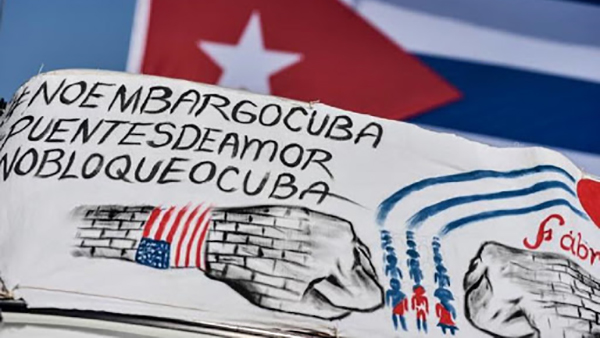
Fifteen months after the arrival of the Covid-19 pandemic in the Americas, the more than six-decade-long blockade against Cuba is now targeting the heart of the health of the people of the Caribbean island, preventing the arrival of essential supplies to prevent and combat the spread of the Sars CoV 2 virus.
The news agency France Presse compiled a list of some donations from around the world that the American shock troops and their partners are preventing from reaching the largest of the Antilles islands:
A donation of face masks, professional respirators, and diagnostic kits from the Jack Ma Foundation in China never reached Cuba because, at the last minute, its carrier, a U.S. shipping company, declined to provide the service, citing embargo regulations. For the same reason, the purchase of ventilators from California-based Vyaire Medical Inc. was also unsuccessful. The Swiss companies IMT Medical and Acutronic Medical—world leaders in the development and manufacture of medical equipment and long-time suppliers to the island—also withdrew their orders because, upon being acquired by Vyaire Medical, they were obligated to suspend all commercial relations with Cuba.
Several Swiss banks—UBS, Banque Cler, and the Cantonal Bank of Basel—refused to transfer donations made by the Swiss solidarity organizations MediCuba-Switzerland and the Swiss-Cuban Association. These donations were intended for the purchase of reagents needed for diagnostic tests and personal protective equipment used in the fight against COVID-19.
The Spanish company Unfamed, a regular reseller of blood bags produced by the Japanese firm Terumo BCT, reported that Terumo's bank account had been blocked, with the company claiming that selling products to Cuba that are not manufactured in the United States requires an additional license. This new situation has led to shortages.
The Indian bank DBS joined the blockade by refusing to accept shipping documents from suppliers Serum Institute of India Limited, Apex Drug, and RHR Medicare because they lacked the OFAC license to operate with Cuba (OFAC is an authorization granted by the U.S. Treasury Department). This situation affected the supply of BCG and MMR vaccines, which are part of the Immunization Program for Cuban children against four diseases: tuberculosis, mumps, rubella, and measles.
The Mexican shipping agency reported that, due to the blockade, it no longer has ships available to call at Cuban ports. This situation has affected the delivery of the medications Dipyrone and Glibenclamide (used in the treatment of Type 2 diabetes).
The Colombian airline Avianca also does not accept products with final destination Cuba, which caused a delay in the delivery of Valproate (a medication used in patients with bipolar disorder), causing delays in treatments and leading to the use of alternative solutions, with expenses higher than the contracted values.
The MediCuba Medical Products Importing and Exporting Company contacted the seven companies in its supplier portfolio, requesting that they update their documentation to ensure the continuation of business relationships. Only Lilly Laboratories responded, announcing its withdrawal as a MediCuba supplier.
More than 70 U.S. companies were contacted by MediCuba to inquire about the possibility of importing medicines, equipment, and other supplies needed for the National Health System. Almost all did not respond, and three stated that, due to the embargo, they could not establish commercial ties with Cuban entities. Each complied with the instructions issued by the White House.
The following podcast includes an analysis of the current situation by María Isabel Domínguez, a member of the Center for Psychological and Sociological Research (CIPS) of Cuba and a member of the Board of Directors of CLACSO, and reports from Prensa Latina and Telesur on the origin and consequences of the United States blockade.
(Presentation: Gustavo Lema – Production: Eric Domergue)
Meanwhile, Casa de las Américas issued a statement in anticipation of the request that the Cuban government will present on June 23 before the United Nations General Assembly for the United States to end its blockade against the island.
“ If we want to find an example of an absurd, obsolete, illegal and morally unsustainable policy; if we ask ourselves what is the most unjust, severe and prolonged system of unilateral sanctions that has been applied against any country; if we want to point to an act of unilateral aggression that is a permanent threat against the stability of Cuba, its possibilities of development and the well-being of its people, there is only one answer: it is the blockade.
In the midst of the COVID-19 pandemic, the political, legal, and administrative framework that underpins the blockade remains intact, exacerbated by the more than 240 measures taken during the Trump administration, which have not been repealed by the new occupants of the White House. Alongside all of this, the media campaign against Cuba has intensified, based, as always, on lies and defamation.
The economic, commercial, and financial blockade imposed by the U.S. government against Cuba, amidst the COVID-19 pandemic and despite the efforts of the Cuban public health system and pharmaceutical industry, constitutes a macabre obstacle to efforts aimed at curbing the spread of the virus, saving lives, and cooperating with other countries against the disease. What kind of cooperation could be undertaken from Cuba, which has already sent medical brigades around the world and is developing five vaccine candidates, if the blockade were lifted? Isn't the extraterritorial application of the blockade, which affects the interests of all states on the planet, violates international law, and severely damages multilateralism, a way of extending the dominion of death and punishing the solidarity so necessary in the midst of a pandemic?
According to the report prepared annually by Cuba, pursuant to United Nations General Assembly Resolution 74/7 entitled "Necessity of ending the economic, commercial and financial embargo imposed by the United States of America against Cuba," the accumulated damages during the six decades of this inhumane policy amount to US$144,413.4 million. From April 2019 to March 2020, the country suffered losses of US$5,570.3 million, an amount that exceeds the previous period by US$1,226 million and marks the first time a figure of more than five billion dollars has been recorded, evidence of the intensification of the embargo in recent times.
Faced with the walls erected by this cruel policy, the mission of Casa de las Américas has been to open doors through culture. They have sought to sever ties between Cuba and the rest of the world, but Casa has managed to build bridges, not only in Latin America and the Caribbean, but even with the American people.
This coming June 23, Cuba will present its annual resolution to the United Nations General Assembly calling for an end to the United States' blockade against the island. This resolution had to be postponed in 2020 due to the pandemic. We ask for the support of our friends, the friends of Casa de las Américas, through all available means during the days and weeks leading up to the vote, to amplify Cuba's voice at the UN.
The blockade has not and will not achieve its purpose of breaking the patriotic resolve of the Cuban people to preserve their sovereignty and independence, and it will always receive our strongest condemnation and the rejection of all good men and women in the Caribbean, our America, and the world.”
If you would like to receive more information about CLACSO's training programs:
[widget id=”custom_html-57″]
to our email lists.

