
Cuba: Facing a new provocation
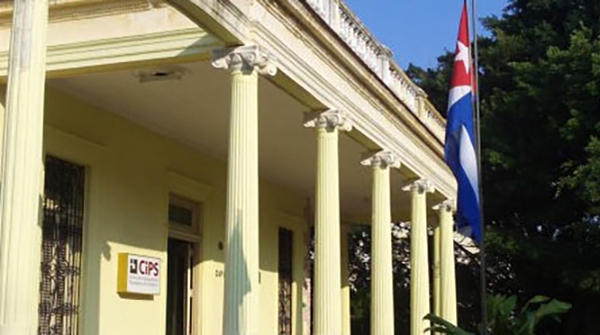
The scientific community of the Center for Psychological and Sociological Research, with a history of public service and development of social research from critical thinking for almost four decades, understands its duty to speak out against the recent provocations that occurred in front of the Ministry of Culture.
We denounce the attempt to construct an international narrative that justifies the systematic aggression and blockade against the country. Models of action already used in other contexts to destabilize political systems not approved by Washington are being replicated here.
It turns out that those who advocate for dialogue on camera simultaneously refuse to participate and boycott exchange proposals.
They are unaware of any dialogue agreed upon and implemented between the Ministry of Culture and the artists. It is obvious that there is no genuine interest in dialogue, but rather in creating situations of tension, confusion, and destabilization.
In every instance, representatives from the US embassy suspiciously appear to express their concern. This is a hypocritical act by the empire, which, even in the midst of a pandemic, persists in preventing humanitarian aid from reaching the Cuban people.
The role of so-called independent media is significant. Cuba has denounced who they are and what their sources of funding are. It is necessary to unmask media mercenary groups, producers of fake news, and purveyors of distorted virtual reality. Let us examine their silence regarding genocidal blockades and all forms of aggression against nations.
Of course, there are artists interested in engaging in dialogue with institutions, with many grievances, but also with intelligent and creative proposals that deserve greater consideration. Demanding attention from institutions is a legitimate act and a citizen's right. Accessing this dialogue is an inescapable duty of public institutions. This should be a principle of the emancipatory project, an expression of the diverse ways in which citizens exercise power, and of the public service vocation of state institutions. Certainly, there is still much to be done on this path, and it is part of the current national debate.
The CIPS scientific community is not satisfied with simply issuing this statement. It aspires to join the dialogue and contribute to addressing the challenges this new situation presents. It considers it its duty to contribute its expertise and critical thinking, supported by a scientific output sustained for almost four decades.
It was precisely in one of the dialogues promoted by UNEAC between the Ministry of Culture and artists—following the events of November 27—that a renowned Cuban musician advocated for greater participation of the social sciences in cultural policies and the country's social development. CIPS, as part of the scientific community and an organic intellectual class committed to the process of decolonization and social emancipation at the national, regional, and global levels, is prepared to maintain an active stance through conceptual reflection on rights, democracy, participation, public policies, and practical expertise in intergenerational dialogue, consensus-building, and conflict mediation.
If you would like to receive more information about CLACSO's training programs:
[widget id=”custom_html-57″]
to our email lists.

