
Covid-19, new frontiers and the deepening of the biomedicalization of migration
Antonio Hernández Reyes[1]
"I hit the others and my fear
with more cruelty than a child,
as if from the beginning of time
would have received it unintentionally
the dreadful task of avenging God.”
(Roque Dalton. Fragment from the poem Dead)
Cyclical pandemics
The civilizational crisis the world is experiencing is deepening to an unprecedented degree. The continued extraction of natural resources, exorbitant consumerism, the overexploitation of the working class, the acceleration of capital accumulation, and the financialization of economies are just symptoms that we are facing a worsening civilizational crisis. Within this context, the Coronavirus or Covid-19, like other epidemics of the last two centuries, has emerged cyclically from the increasingly toxic and deteriorating relationship between nature, society, and society. Gonzalo Basile (2020) states:
"The origin of the disease is a clear transfer from nature to society, what we simply call zoonotic diseases. But it can also be interpreted as a metabolic exchange between nature and society, allowing us to recognize the interdependence of humankind with nature.” (p.10)
Due to the disproportionate way in which the civilizational crisis is shaping societies' way of life, the intensity of these cyclical pandemics will only increase. The chaos, despair, and mortality will become increasingly evident, with ever more catastrophic consequences, overwhelming governments, healthcare systems, and emergency and humanitarian response systems.
The Pandemic Crisis and Migration
The impact of the pandemic might be perceived as having resulted in an economic crisis that capitalism, in its latest stage, has accelerated. The Central American Bank for Economic Integration (CABEI) (2020) states that virus containment measures have had a collateral impact on the global economy, causing a halt in global production, disrupting supply chains, affecting market demand and business operations, and disrupting financial markets. However, according to Zibechi (2020), the global economy was already entering a decline with a strong tendency toward recession before the pandemic; therefore, the post-pandemic scenario will be faced as a systemic crisis rather than merely an economic one.
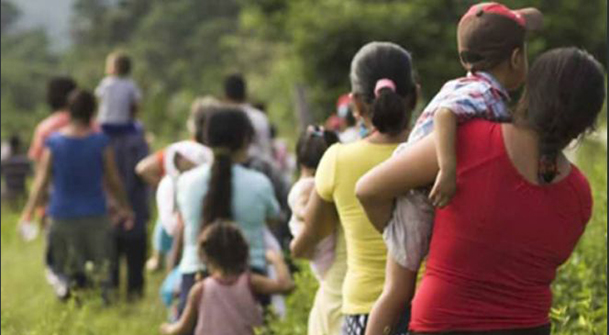
The migration phenomenon has not escaped the impact of the pandemic. After countries kept their airports closed or imposed restrictions on passenger transit across their borders, Central American migration to the United States has recently been readjusted. At the very beginning of the epidemic in North America, the U.S. Department of Homeland Security implemented more than a dozen changes to immigration procedures, ranging from postponing immigration hearings to pausing deportation flights to certain countries and suspending refugee admissions (Álvarez, 2020). These adjustments to the system are being made progressively as the pandemic spreads, and migration flows are already characterized by excessive securitization and media manipulation (Permuy, 2015), posing a double threat: one to security and another to health.
This fear of the “other,” present in our colonial societies, has been exacerbated by the pandemic, turning migrants into the perfect scapegoat who embodies some of our insecurities and who, therefore, must be rejected and combated. Similarly, the State and its sovereign “nationalist” interventions are legitimized insofar as they defend the national society against a grave threat. To put it in Foucault’s terms, this pandemic has radicalized the biopolitical measures applied to those considered “foreigners” (the other, the different one) within the country and at its borders.
Increasingly, a narrative of fear has been constructed that has facilitated acts of exclusion against others and instilled racist and xenophobic ideas. For example, Donald Trump's labeling of Covid-19 as "the Chinese virus" in the US, echoed by the media, generated stigma and discrimination against Asians, not only in that country but also in many others in Latin America and the Caribbean.
Further evidence that societies have re-emerged with xenophobia is the deepening of racial violence, exemplified by the murder of African American George Floyd in Minneapolis at the hands of white police officer Derek Chauvin in May of this year. This act fueled the Black Lives Matter movement, leading to a series of protests across the United States against racial discrimination. The pandemic has brought racist practices to the forefront as a symptom of a deep-seated systemic problem, a key component of the power matrix that governs the modern/colonial world-system (Latin American Council of Social Sciences [CLACSO], 2020).
Everything we have reflected on for decades regarding human mobility and the human right to migrate in dignified and just conditions finds in this pandemic the platform for reproducing punitive, surveillance-based logics, medical policing, and social control applied and sustained by diverse political and ideological currents in each country, associating the worst of the biomedicalization Regarding social and human relations: that the mobility of human beings is a danger to national security, that migrants "carry" pathogens—be they bacteria, parasites, viruses, or fungi—and that countries should return to the approach of reinforcing military and police control of their borders to prevent diseases carried by migrants. In other words, we are facing the worst of the worst imaginable in a statement that quickly became a global consensus on "exceptional" public policy to criminalize, rationalize, and blame migrants. And most dangerous of all: that it is justified and implemented even by certain social medical thinkers within medical, health, and hospital institutions, ministries, and other entities.
For some, perhaps with good intentions regarding public health, the three central theses that have been circulating within the governance of migration and health are forgotten:
- The appropriation of migration by the “Security” agenda. This implies increased militarization, criminalization, and access and administrative barriers not only to human mobility, but also to the care and protection of migrants' health, the normalization of violence against migrant women, the lack of access to maternal health care, etc.
- The ethnic and racial segregation inherent in migratory colonialism is rapidly escalating, creating a classification of individuals deemed worthy of entering countries (imagine the new administrative barriers in post-pandemic Europe and the United States) versus those deemed undeserving. Now, they also carry the burden of disease.
- The significant difficulties, limitations, and conceptual and methodological shortcomings of public health/pathology in understanding migration, cross-border cooperation in collective health, and the tendency to view human mobility as simply the mobility of diseases are evident. The ideologies consciously or unconsciously reproduced by everyone during the Covid-19 crisis imply this radical consolidation of... biomedicalization of human mobility. Just tell us: “be careful.” This will not be without consequences for the post-pandemic process and migration, for human mobility.
Dynamics of social Darwinism also emerged (Lukács & Roces, 1972, as cited in Basile, 2020), where survival was granted to “the strongest” as a kind of natural selection in which the elderly, the weak, and the sick were destined to die. These decisions seemed to resonate in the discourses of leaders who, along with healthcare systems, bear the great responsibility of guaranteeing the right to life and health of their citizens. Unfortunately, as two Afro-Brazilian activists stated: “The coronavirus doesn’t choose who it will kill, but states choose who can die” (CLACSO, 2020), thus setting the tone for a racist and xenophobic necropolitics in much of the Americas.
A shift in common sense and new frontiers
One of the defining characteristics of the pandemic has been the hyper-politicization of its management, which has been the subject of grotesque and surreal debates among politicians, ranging from those who compare it to a “little flu” to those who interpret it as divine punishment, or those who simply invoke fear, individual control, and the securitization of health and life (Basile, 2020). According to Esposito (2020), the last three centuries have seen a medicalization of politics, with politicians increasingly assuming the responsibility of “curing” their citizens. Therefore, it is not surprising that presidents, legislators, and other politicians (not doctors) are issuing epidemiological reports, directing health strategies, or suggesting new treatments for COVID-19.
Conversely, medicine has become politicized, with virologists, epidemiologists, and public health experts establishing economic measures, coordinating public transportation, and offering opinions on public policy and public safety, among other things. This divergence of objectives, both in the political and health spheres, reflects a shift in the common understanding of what constitutes a pandemic, with these professionals assuming roles foreign to the nature of public service and management, and especially reflecting a kind of primacy of everyday empiricism in decision-making and a loss of critical and self-critical capacity.
Today, as the world prepares to return to the “new normal,” a new border has been established. This border no longer lies between countries but within our own homes, where strict quarantines have been imposed, families and groups separated, and new centers of social production (teleworking) have been set up without having to leave. Isolated, producing, and seeing in others an imminent danger that we must control, denounce, and eliminate.
As the post-pandemic era arrives and until a vaccine is available, the face mask will be the new frontier of the body, although that will not prevent us from continuing to dispute a new common sense and the construction of an international health system for the emancipation of our peoples.
References
- Álvarez, Priscila. (March 18, 2020). 12 changes in the US immigration system during the coronavirus pandemic. CNN Español. Recovered from: https://cnnespanol.cnn.com/2020/03/19/12-cambios-en-el-sistema-de-inmigracion-de-ee-uu-durante-la-pandemia-de-coronavirus/
- Central American Bank for Economic Integration. (2020). Economic Impact of Covid-19. An Analysis for Central America, Argentina, Colombia and Mexico. Retrieved from: https://www.sica.int/documentos/bcie-informe-impacto-economico-del-covid-19-un-analisis-para-centroamerica-argentina-colombia-y-mexico_1_121869.html
- Basile, Gonzalo. (2020). Coronavirus in Latin America and the Caribbean: Between the shock therapy of public health and the collective health/South-South international health response. IV Dossier on South-South International Health. Retrieved from: https://www.clacso.org/wp-content/uploads/2020/04/IV-DOSSIER-SISS-CLACSO-CORONAVIRUS-ALyC-Marzo2020-1.pdf
- Latin American Council of Social Sciences. (May 29, 2020). “Declaration of the Working Group on Civilizational Crisis, Reconfigurations of Racism, and Afro-Latin American Social Movements.” Retrieved from: https://www.clacso.org/declaracion-del-grupo-de-trabajo-crisis-civilizatoria-reconfiguraciones-de-racismo-movimientos-sociales-afrolatinoamericanos/
- Esposito, Roberto. (February 18, 2020). Curati on purpose. Antinomy. Recovered from: https://antinomie.it/index.php/2020/02/28/curati-a-oltranza/
- Permuy, Eva. (2015). Foucault's technologies of power and the control of migration (Postgraduate Thesis). University of Barcelona, Spain.
- Zibechi, Raúl. (March 4, 2020). Coronavirus as a cover-up for a systemic crisis. Sputnik. Recovered from: https://mundo.sputniknews.com/firmas/202003041090677600-el-coronavirus-como-tapadera-de-la-crisis-sistemica/
[1] Coordinating Team of the ALAMES Health Systems and Policies Network. Researcher of the CLACSO Working Group on International Health and Health Sovereignty. Salvador Allende Movement/ALAMES El Salvador.
If you would like to receive more information about CLACSO's training programs:
[widget id=”custom_html-57″]
to our email lists.

