
Covid-19 and global pharmaceutical industry
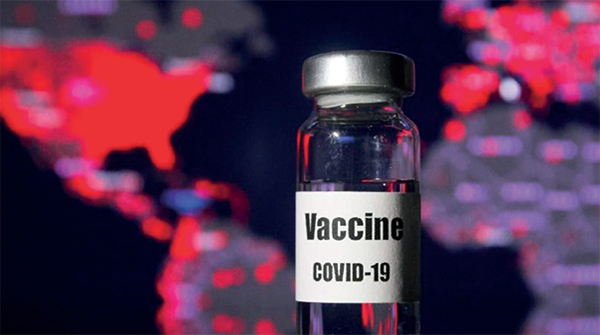
The pharmaceutical sector is inextricably linked to financial capitalism and, moreover, is one of its paradigmatic emblems. Since the early 1980s, when the Reagan-Thatcher axis propelled the neoconservative shift, a small group of multinational pharmaceutical companies began to expand, centralize, and concentrate increasing segments of the market, appropriating not only exorbitant profits globally but also controlling access to knowledge—produced mostly with public funds—through ironclad strategies of appropriation and protection. In the global ecosystem that enabled and sustains this distortion, global governance bodies are another strategic actor for large corporations and the central states where their headquarters are located: in the health and pharmaceutical sector, the World Trade Organization (WTO) and the World Health Organization (WHO) are crucial. The former consolidates the “rules of the game” that normalize barriers to market entry, with the power to sanction those who deviate from the legal framework. The second does not legislate on international trade, but advises on health policy guidelines that usually do not question the "logic" of oligopolistic players.
With this quote from Diego Hurtado, from OCIPEx, Agustina Sánchez Beck and Federico Sciorra Mei present this special report where they elaborate on the proposal for this space for the public production of medicines in Argentina.

Contributions to the public production of medicines in Argentina
Introduction: Diego Hurtado – Lautaro Zubeldía
Report prepared by: Agustina Sánchez Beck – Federico Sciorra Mei
Collaboration: Manuel Valenti Randi
Edited by: Nicolás Bursi
Design: Telma Maserati – Carolina Casagni Welsch
The Observatory of International Affairs and Foreign Policy (OCIPEx), a network associated with CLACSO, is a collective committed to the study and monitoring of Argentine foreign policy. Its mission is to provide a critical perspective on how Argentina integrates into the international system, with a view to building an autonomous and inclusive development model.
In this sense, it seeks to delve into dimensions little explored by the mainstream, but fundamental for situating the analysis within the local, regional, and global context: the accumulation regime, the role of elites, hegemonic conflict, and the institutional anchoring of domestic reforms will be some of these key elements. Furthermore, it aims to be a proactive and active space for planning public and social policies that enable the establishment of a productive and scientific-technological development model, one that generates decent employment for all Argentinians, is sustainable, and is independent of global power centers.
If you would like to receive more information about CLACSO's training programs:
[widget id=”custom_html-57″]
to our email lists.

