
Coronavirus and monoculturalism: pandemics for Indigenous Peoples
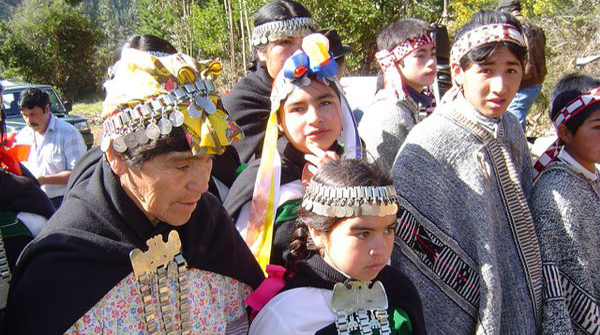
Ta iñXemotuam [1]
Introduction
Through this document, we aim to propose a critical reflection on the current global impact of the Coronavirus or Covid-19 pandemic and its relationship with indigenous life and territories. This situation has highlighted a series of issues that, when it comes to defending human life, exacerbate inequality and inequity among populations within a civilizational framework that promotes them.
The position from which this reflection arises is the Mapuche organization/institution that we form and whose main purpose is to address issues related to the health-disease process of indigenous peoples with a broad sense of social determination through analysis and proposals with a historical perspective that promotes the development and well-being of indigenous peoples from our territory, culture and evolution.
In Chile, the existence of Indigenous peoples is not politically relevant; the ruling elite, in successive governments, has not recognized them as collective subjects of rights and has shown no intention of making significant efforts to generate public policies that effectively transform the situation of exclusion they have faced since the Chilean state established itself in their territories some 140 years ago. On the contrary, we have witnessed a continuous plundering of material and immaterial resources that has accelerated in recent decades under the neoliberal capitalist model. This civilizational framework, based on a colonial, monocultural logic—now in the name of the “common good” and “development”—has been devastating the ecosystems that sustain us materially, spiritually, and culturally, where relationships with non-human otherness are recreated. This Western monoculturalism has expressed itself as a dominant cultural framework from which actions are taken against the “other” and disregards culturally distinct ways of being and existing.
This way of thinking has permeated all spheres of social life: the educational system, economics, science, art, and, of course, the imposition of a hegemonic healthcare system based on clinicalized European biomedical rationality. This practice has ignored all other ways of understanding the body and the vital processes of health, illness, and care, as well as birth and death. Today, in the face of the Coronavirus pandemic, this invisibility has become evident in the information and preventative actions regarding the same phenomenon directed toward Indigenous populations, given the disregard for the existence of peoples with their own forms of sociability and connection to vital processes. In the case of the Mapuche, emphasis is placed on sharing affection through food, ceremonies, visits, and collective work; on joint disaster response; on daily health prevention; on the daily care of therapeutic resources; and on family and community diagnoses, among other forms of interaction.
In times of pandemic, neither the mainstream media nor government actions and programs offer prevention strategies that take into account the Indigenous relationships and ways of life that should be considered so that messages and strategies resonate with the practices of individuals and families. Although health policies and programs for Indigenous peoples—those with local representation—have been developed in our countries since the 90s, we now observe these organizations failing to respond promptly or develop strategies specifically for the Mapuche community, in the face of one of the most evident health crises in contemporary history.
This disconnect between discourse and concrete health practice is even more serious within local health systems and primary care in indigenous communities, particularly when a community family health model with a bio-psycho-social approach is assumed, which has shown its inability to address the issue territorially and with cultural relevance one month after the pandemic was established in our territories.
How to think about the prevention of the Coronavirus from perspectives that overcome monoculturalism
All cultures have developed communication codes to make themselves understood. These can refer to colors, shapes, numbers, symbols, or rituals. Language is one of them. In these terms, monoculturalism is the inability to understand, accept, and interact with other cultures and their codes.
Societies—and particularly Latin American states—have been ethnophagically incorporating these codes while safeguarding Western rationality, fostering the belief that Indigenous peoples are represented in a national imaginary established by Creole elites. State action is thus reduced, among others, to political, economic, and social functions; and it is through the latter that policies, social programs, and national security are implemented. All of these colonize the excluded through state monologue, which disciplines not only through its rationality and know-how, but also through seemingly innocuous aspects of repurposed Indigenous content that reinforce a more effective and “relevant” domination in various national and public spheres. One such sphere is the field of public health in nation-states and their multilateral expressions, which are intensified in pandemic contexts (WHO, PAHO). Here, the standardized language they employ is expressed, and this language is subsequently adopted by the media to report on the pandemic, its effects, care, and implications from a biomedical perspective and within the framework of Western life.
During the pandemic, as we write this text, we as an organization have not seen any communication channels, messages or prevention materials designed for the Mapuche population and their current way of life; nor for the other eight peoples recognized in the Indigenous Law 19.253 in force since 1993.
In such complex collective morbid phenomena as pandemics, one can observe the concrete practices of the State expressed in its health policy, in which indigenous peoples are not included as populations to be informed, collaborated with, or acted upon directly or specifically regarding this catastrophe, thus avoiding over-morbidity and mortality or stigmatizations that may result from an inequitable and impertinent approach.
In the case of COVID-19, a month after the quarantine and state of emergency were declared, rural Mapuche families did not fully grasp the scope of the pandemic. For the State, prevention methods and the potential link between rural and urban areas in the spread of the virus were unknown and neglected. Similarly, the consequences for the lives and health of communities with aging populations and numerous underlying health conditions were also unknown. These current circumstances are compounded by pre-existing epidemics in the communities, such as respiratory and musculoskeletal diseases, hypertension, type 2 diabetes, alcoholism, suicide, and tuberculosis in the coastal areas of Gülumapu (southern Chile). This, along with low levels of education, makes our populations highly vulnerable.
In the daily life of contemporary Mapuche people, a relationality is essential for the constitution of the person in the broadest sense of the term—that is, the che (person) as such. The che, in its broadest sense, is the one who revitalizes relationships with their neighbors and surrounding community (lof), with the family who is attentive to what happens in their lof and to the health of its members; it is the one who relies on others and can live in community. This is why it is not surprising that, even during the height of the declared pandemic in different territories, family cultural celebrations, games, and mass rituals continued as if there were no danger involved, given that the warnings and messages regarding prevention and the practical implications of the spread of the contagion and disease were still unknown. Indeed, in these spaces, our sociability, our relationality, and our affections are recreated in all their expression through food, drink, and conversation.
The poyewün (the act of showing affection and respect to others through food) is central to Mapuche daily life and formality; therefore, prevention messages must include this aspect. Prevention strategies must also be developed at different levels. While the personal and family levels are essential, so too is the organizational level, whether traditional or functional, and its leadership styles. Many Indigenous practices are organized in this format, allowing health teams to implement vaccination strategies, establish preventive messages, identify everyday communication channels, and more. These are the spaces, structures, and agents that can lead to real prevention and containment if they are provided with effective and truly relevant information.
Today, all the information circulating in the Chilean national context and in Indigenous territories is framed from a non-Chilean (Wigka) perspective and fails to consider the sociocultural differences that exist in the region and the country. The few initiatives that have emerged have been individual efforts by Mapuche people and organizations working in health who have managed to grasp the implications of this disease for our people by considering concrete social practices—something that state policy, in its superficial and folkloric multicultural approach, does not take into account.
In Mapuche communities, there are different socio-cultural dynamics that connect the Mapuche world with the wigka world of the city; there are young people, professionals, merchants, producers, livestock farmers, agricultural workers, and laborers; also agents who energize the internal culture such as the gütamchefe (traumatologists), bawehtuchefe (medical agents), gijatufe (people who lead rituals), logko (traditional leaders), werken (messengers), machi (main medicinal agent), gehpiñ (spiritual leaders), palife (palin players), kalku (sorcerers); in addition to elders, elderly women, and adults who are in large numbers speakers of Mapuzugun par excellence, who respond to a social and cultural dynamic from a rationality of Mapuche rakizuam (Mapuche thought).
How can we reach this population as we do others? Will it be with the same monologic, homogenizing, assimilationist, integrative message? Or do we actually need to generate messages using different codes?
Internally, and in the face of this pandemic, we are committed to generating information and relational messages using the rich tapestry of Mapuche culture that resonate with the population and have an impact rooted in ancestral wisdom; from our own voices, as well as those of others that coexist but are ignored by the system. We celebrate the unique methods of Indigenous peoples, recognizing their own ways of encoding and decoding messages. We also understand that other codes persist among young people who are recovering and disseminating Mapuzugun , as well as the distinct styles maintained by rural, peasant, and urban communities.
Perception of the disease
From the deepest perspective of the Mapuche people, this pandemic can be understood as a major civilizational crisis foretold through various aspects of Indigenous spirituality. Illness, death, and social transformation have been both foreseen and envisioned from the spiritual dimension, as our various spiritual agents have shared with us. For example, our machis, in their küymin states (altered states of consciousness, commonly called "trance"), have foretold times of disease and famine that will devastate the mapu (lands, territories). This, along with signs from the ecosystem, such as the flowering of the colihue or rügi in Mapuzugun ( chusquea quila ), foretells a cycle of conflict and hardship, including plagues (mice). Therefore, many families have taken steps to sow and cultivate enough crops to ensure a supply of grains for these times.
These catastrophic cycles include illnesses, or kuxan , which currently present themselves as epidemics affecting both Mapuche and non-Mapuche people. The fact that the COVID-19 pandemic is part of a broader catastrophic cycle is key to understanding this collective phenomenon. The Mapuche people, located in Gülumapu (southern Chile), have been affected by artificial epidemics since the arrival of the conquistadors until the establishment of the state in their territories. A month after the pandemic began, monocultural communication about COVID-19 was viewed from a Mapuche perspective as a phenomenon of the non-Mapuche world , affecting the city and people living within capitalist forms of urban social reproduction. Communications from health policy focused on a collective affliction residing in the city, among travelers and non-Indigenous people, and, of course, reduced to a biological process.
In fact, illness, or kuxan, among Indigenous peoples, particularly the Mapuche, is not a purely biological phenomenon, but rather the ultimate consequence of a series of events that trigger and explain it. In a collective sense, the COVID-19 pandemic would be symptomatic of a broader catastrophic cycle and civilizational crisis. Therefore, at the very least, responses and methods of care and prevention should consider different dimensions that are incorporated into Mapuche rakizuam (internal thought).
From the Mapuche perspective, kuxan (illnesses) are imbalances that affect the different dimensions of the che (person). They can affect the püjü (spiritual aspect), generating various effects. At other times, the rakizuam (thought) can be affected , as well as the ragichegen (social dimension), or directly the kalül (body). Understood in this way, kuxan can originate from within the che themselves , from their relationships with other lives, or as a result of a historical situation of the group from which they come, or as a consequence of a larger process in which the kuxan is generated by third parties.
That said, it is impossible to address COVID-19 solely in its biological or kalül dimension, ignoring the pandemic's place within a broader, aggressive, and civilizational context. In the Indigenous world, this context is linked to famines, plagues, and social conflicts that extend beyond the virus's development in the host on whom government action is focused. Therefore, understanding, prevention, and action must address these dimensions and how the collective morbid phenomenon is understood and comprehended within spirituality, the communal and contextual relationships experienced by Mapuche people, the individual's thoughts and rationalities in society, and the body and its complexity. Since the system is unaware of these codes and logics, it must at least complement its work with the participation of the peoples who possess these domains. Ignoring them, as has been the trend today, only paves the way for the "health" disaster we are discussing.
In conclusion, it is urgent to overcome monoculturalism in healthcare.
The issue we raise is not trivial, nor is it arbitrary; it is to highlight the impertinence of the Chilean health system and its negligence in addressing a problem categorized as biological, but whose multidimensional understanding and scope are ignored in relation to the Indigenous world. A system that, in practice, ignores the phenomena associated with the health/illness/care process linked to the pandemic in the current Mapuche world—such as drought, zoonoses, chronic non-communicable diseases, alcoholism, tuberculosis, violence, low levels of education, isolation, and communication problems—only contributes to the excess mortality of the Mapuche population compared to the non-Indigenous population in Chile. If we add to this the temporary loss of the individual dimension that total confinement implies for the Mapuche world, we are faced with a blatant act of ethnocide.
The pandemic once again reveals an established policy of denial and invisibility of pre-existing socio-cultural differences in the country; a kind of hegemonic arrogance of the official culture, the accepted culture, championed and taught from epistemic and ethical violence in official medical and public health training schools.
Not only does the COVID-19 pandemic kill, but so does the monoculturalism expressed in the confinement and sociocultural isolation that is misunderstood by rural Mapuche families; the biomedical standardization of an illness rooted in broader dimensions also kills; as does the interpretation of a cycle of aggression against health that removes it from the bio-psycho-social framework, reducing the phenomenon to a virus and its hospital-centric treatment. There are many forms of death, not only biological, but also social and cultural death, the kind that states perpetually inflict upon Indigenous Peoples every time they render them invisible, deny their existence, and conceal it.
It is time to confront monoculturalism and expose its arrogance and ignorance, which it uses to justify its constant subjugation of "others" within the state apparatus. May this pandemic contribute to exposing the sociocultural precarity that cloaks the hegemonic society. The rights established and won with such sacrifice cannot remain merely rhetorical in international forums such as the ILO, UN, OAS, and WHO/PAHO. This is why we will continue to demand that the State, and the responsible institutions, fulfill their obligation to advance effective, relational, participatory, and evidence-based health policies; policies that are developed from both medical pluralism and the diverse realities present in the territories occupied by nation-states.
Let us once again prevent, as we have so many times before, the deaths of countless people: the elderly, young people, and Indigenous children. Many of those who die will not even know exactly what happened, how they contracted the virus, or how the illness they suffered developed. Nor will they understand the confinement, which renders Indigenous life unworthy of being lived. Is this not another form of genocide?
[1] Center for training and development of the health of the Mapuche people. Article submitted by the CLACSO Working Group on Indigenous Peoples and Extractive Projects. Email: [email protected].
If you would like to receive more information about CLACSO's training programs:
[widget id=”custom_html-57″]
to our email lists.

