
Coronavirus, social sciences and politics
Jose Mauricio Domingues[1]
The novel coronavirus crisis is turning everything upside down. What contributions can the social sciences make to this? Will their findings be of any use? If so, how does this relate to current politics?
First, it is worth recalling Ulrich Beck's analysis of the risk society, which he discussed from 1986 onwards in his subsequent books, taking on a distinctly global character. He referred to the environment, infections, instability in family life, and the labor market. The theory mixed apples and oranges, but, with regard to the coronavirus, his prescience was radical. In fact, the World Health Organization (WHO) has referred to pandemics as a global risk For some years now. Its latest document emphasized that governments were far behind in preparing for a likely pandemic. The very “Westphalian” model on which the WHO is based—that is, its reliance on nation-states—limits its actions, including monitoring, as seen in the case of China’s initial attempt to downplay the problem, against which it could do little.
However, the fact remains that risk is no longer simply a risk; it has become a concrete threat to the people and populations of every country on the planet. While the fight against the virus within each country is crucial, only international coordination, with changes in the way global health is managed, will allow us to systematically overcome this pandemic and, above all, prevent others from occurring. This is not a matter of a lack of capacity. Therefore, it is first necessary to recognize that the risk society is brutally real and that risks depend on socially constructed perceptions, but also take on a very material form: they can kill. It is also necessary to recognize and value the idea that national populations have a right to security in the face of pandemics, as even Macron and Trump have acknowledged, and that we are all in the same global boat when it comes to risks and threats. Nationalism is not a solution; the social sciences can attest to this. But Beck also warned about social inequalities and how they are linked to risk. Throughout the world, dramatically in Brazil and several other peripheral countries, unequal exposure to the coronavirus demonstrates this.
We can also see an explicit return of the state to the center of the chessboard. Contrary to neoliberal rhetoric and even arguments from the left, the state never ceased to wield enormous power: on the contrary, its capabilities continue to expand. Tax collection (when it chooses and distributed in various ways); administration (due to its bureaucracy, its logistical capacity, its alliances with societal actors, and its control over spending); the ability to shape individual and collective subjectivity, both symbolic and behavioral, through laws and their mechanisms; surveillance (increasing), coercion (always lurking), and intervention in the material world (building hospitals or prisons, investing in science and technology or in the police, deciding who receives credit, who is hired, and who is paid): these capabilities, which modern states have always demonstrated, are enormous today. The ways in which states use and mobilize them vary. Until recently, the neoliberal creed held all the cards. Now, these capabilities are being mobilized on a large scale to face the coronavirus crisis, just as neoliberal individualism is required to retreat in favor of solidarity.
Neoliberalism may survive, but it is unlikely to do so in its current form. It would be ludicrous at this moment, when the market has nothing to offer and social solidarity networks and the state are acquiring absolute centrality. Pulling the economy out of the abyss and addressing the damage and trauma caused by the health crisis will fall to these two elements, although the market will certainly play some role. For us Brazilians, the importance of the Unified Health System (SUS), universal and free, cannot be underestimated after this. It is an asset we will have at our disposal for years to come, despite the human costs involved.
The measures taken today and the subsequent cost of all that will be spent are not, and will not be, neutral. This is something that the social sciences also teach us: distributive conflicts intersect with national solidarities, as does their absence.
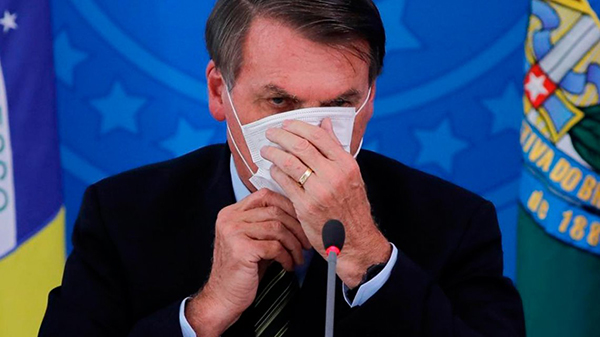
Some conservative governments, like Johnson's in the UK, intervene in the economy and defend workers; others, like Macron's in France, celebrate public health; meanwhile, the reactionary Trump seems to be preparing a Marshall Plan, and Merkel calls for "collective solidarity." In Brazil, Jair Bolsonaro's far-right government denied the crisis for as long as it could. If it weren't for his health minister, the governors, the press, healthcare professionals, and the population, we would be in a much worse situation. The measures adopted by Bolsonaro clearly run counter to national solidarity, encourage individualism, and clearly harm the poorest, as demonstrated by the executive's controversial proposal to suspend employment contracts.
Even so, as everywhere, Brazil's ultraliberal and dinosaur-like economy minister, Paulo Guedes, has to adopt emergency Keynesian measures, mobilizing the state's resources, starting with its material aspects, to confront the health crisis and the recession. The dispute will come later: who will foot the bill? Businesses, with their perpetual tax breaks? Workers, unemployed and indebted? Who will be affected by a possible tax increase: the middle class, through income tax, and the poor, through consumption taxes, or the rich with a wealth tax, which would largely resolve the new deficit that will weigh on public finances? We still have quite a struggle ahead, although it is also clear that the Brazilian government has weakened itself with its ineptitude and irrationality. In fact, the global far right may even be dealt a blow, because only science and democratic transparency, once again, can minimize risks, threats, and catastrophes.
Emergency Keynesianism, state capabilities, prices to pay, and reconstruction efforts in the face of risk and threat. Did we go to sleep in one world and wake up in another? Not exactly, but the changes are clear, and the political struggle is now under different conditions and at different levels. How to develop and apply these enormous state capacities, as well as how to link them to social solidarity, occupies a central place on the political agenda.
[1] IESP-UERJ. Co-coordinator of the CLACSO Working Group on Social Theory and Latin American Reality. Translation of the version published in Portuguese in Newspapers in Brazil, 24/03/2020.
If you would like to receive more information about CLACSO's training programs:
[widget id=”custom_html-57″]
to our email lists.

