
RESSH 2026 Call: Scientific Autonomy Under Pressure
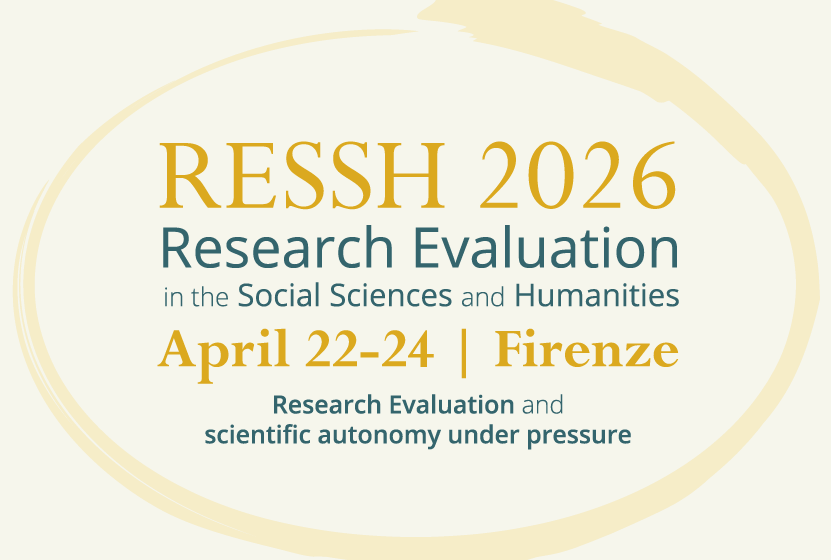
From FOLEC-CLACSO , we are sharing the call for papers for the Research Evaluation in the Social Sciences and Humanities 2026 (RESSH 2026) conference , organized by the ENRESSH Association in conjunction with the Institute for Legal Informatics and Judicial Systems (IGSG) of the National Research Council of Italy (CNR) . The conference will be held in Florence from April 22 to 24, 2026 , and will bring together researchers, managers, policymakers, and professionals interested in rethinking research evaluation within a global context of profound transformations. More information is available at: https://ressh2026.igsg.cnr.it/
Under the theme “Scientific autonomy under pressure: Rethinking research evaluation in the context of global power shifts, security concerns and AI challenges,” the conference invites participants to examine how geopolitical changes, security tensions, and technological advances — particularly artificial intelligence—are reshaping scientific evaluation. The discussions aim to analyze the impact of these processes on academic autonomy, research integrity, knowledge governance, and scientific freedom, in a context where algorithms, metrics, and digital infrastructures are becoming increasingly central.
RESSH 2026 thus opens a space for discussing conceptual, empirical, and comparative approaches to evaluation in the social sciences and humanities. Contributions may address, among other topics, scientific autonomy , center-periphery dynamics , ethics and integrity in the digital age , algorithmic biases , epistemic and linguistic diversity , responsible evaluation , and institutional reforms in science governance. The call for abstracts will remain open until January 12, 2026 , and acceptance notifications will be sent on February 20, 2026.
In line with the debates promoted by FOLEC-CLACSO on responsible evaluation, knowledge sovereignty, and epistemic pluralism , the RESSH 2026 represents a strategic opportunity to strengthen ties between academic communities in the Global South and international research networks. We invite researchers from Latin America and the Caribbean to participate and contribute their experiences and perspectives to this global dialogue on the future of research evaluation.

