
Call for essays: Feminisms and trade unions in Ibero-America
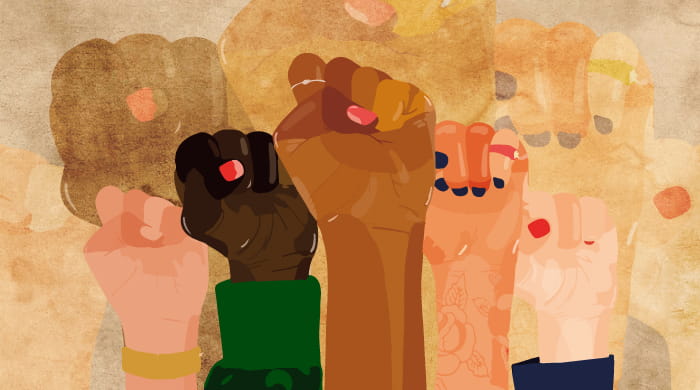
The Latin American Council of Social Sciences (CLACSO) together with the Institute of Social Studies in Contexts of Inequalities of the National University of José C. Paz (IESCODE – UNPAZ) announce the essay contest “Feminisms and unions in Ibero-America: experiences, encounters and disagreements”, with the purpose of encouraging critical research and reflection on the impacts resulting from the confluence of feminist ideas and practices in the union field at a regional scale.
This study aims to explore the dialogues between feminist rhetoric and practice and the broader labor movement, incorporating workers' organizations with varying degrees of formalization, thus addressing the existence of significant gender inequalities in the workplace. It also seeks to raise questions about the role of women and gender-diverse individuals in these union spaces and how this participation relates to feminist demands.
Registration closes: October 30, 2019
The Latin American Council of Social Sciences (CLACSO) together with the Institute of Social Studies in Contexts of Inequalities of the National University of José C. Paz (IESCODE - UNPAZ) announce the essay contest “Feminisms and unions in Ibero-America: experiences, encounters and disagreements” , with the purpose of encouraging critical research and reflection on the impacts resulting from the confluence of feminist ideas and practices in the union field at a regional scale.
In a context of rising mobilizations of women, lesbians, transvestites, and trans people, the aim is to map the central problems emerging today and identify future challenges. To this end, the proposal involves exploring territorially diverse experiences in order to strengthen the connections between emancipatory political practices and discourses originating in traditions that have historically shown more divergences than convergences.
This study aims to explore the dialogues between feminist rhetoric and practice and the broader trade union movement, incorporating workers' organizations with varying degrees of formalization, thus addressing the existence of significant gender inequalities in the workplace. It also seeks to raise questions about the role of women and gender-diverse individuals in these union spaces and how this participation relates to feminist demands.
Profile of applicants for the Competition:
Applicants must be researchers and/or members of social organizations and unions residing in one of the Ibero-American countries.
Preferably, they should be affiliated with one of the CLACSO network member centers. Consult the database of member centers at: www.clacso.org.ar/clacso/centros_miembros_clacso/inicio.php
Characteristics of the proposals:
- Each applicant may only participate with one essay in this Contest.
- Essays authored individually or collectively with up to three authors will be accepted.
- The essays must be an original and unpublished work by the author(s) and must not have been previously submitted to any publisher for publication.
- Provisional versions and works that have already been published or that have received any local, national or international award will not be accepted.
- Members of the Steering Committee or officials of CLACSO or IESCODE - UNPAZ may not be present.
- Submissions from individuals who are currently receiving scholarships or have won awards in research competitions organized by CLACSO will not be accepted.
- Applications from individuals who have previously received scholarships or awards will be accepted, provided that at least two (2) years have passed since the delivery of the revised version of the final report and all contractual obligations duly undertaken have been fulfilled.
Essay proposal format:
- Essays must have a maximum length of 80.000 (eighty thousand) characters including spaces and footnotes, and must comply with CLACSO's editorial guidelines.See here).
- The essay format will be free, respecting the conventions of presenting an academic and publishable text.
- They must be signed with a pseudonym and the name of the authors will not be included anywhere in the proposal, including footnotes.
- Publishable essays written in Spanish and Portuguese will be accepted.
- The online registration form will detail other features of the trial.
Selection criteria for winning entries:
The academic evaluation of the essays will be carried out by a Committee appointed by CLACSO and IESCODE - UNPAZ.
The submitted essays will be reviewed for their formal and administrative aspects to ensure compliance with the call for submissions. Essays that do not meet the established requirements will not proceed to the content evaluation by the Committee.
In evaluating and selecting the winning essays for this call, consideration will be given not only to the quality of the essays submitted and their consistency with the objectives and standards established herein, but also to gender equity and the diversity of regional representation.
All situations not covered in this document will be resolved by the Committee.
Awards:
The competition will award up to seven (7) prizes to the best-evaluated essays, consisting of:
- The publication of the essay in a collective digital book about “Feminisms, work and unionism”, made up of a section composed of articles written by specialists under invitation and a section composed of the winning essays of the current call.
- Support for participation in an event for the presentation of the work to be held during the year 2020.
Publication of the winning essays:
CLACSO and UNPAZ - IESCODE may publish the winning essays in print and digital media, giving them wide publicity and dissemination.
The authors will assign to CLACSO and UNPAZ the original publication rights of the works, although subsequently, they may be published in any other medium, always citing the original publication and the framework of this Call.
Award winners must reliably inform CLACSO of the subsequent publication of the awarded works.
It is mandatory that the essay be submitted through the online registration system provided by CLACSO. Printed submissions and submissions sent by email will not be accepted. It is recommended that you access the online system to review the registration form and the fields required to complete your application.
- Sign In to the online registration system through the CLACSO website.
- Register in the CLACSO Single Registration System (SUIC). The username and password you create will be required each time you wish to access the system to consult, modify, add, or submit information for this or any other CLACSO activity. Applicants submitting essays co-authored by up to three authors must designate one author as responsible for the registration. This person will be responsible for presenting the text at the book launch event.
- Identify the essay by indicating its title and the pseudonym of the applicant(s). Submissions with pseudonyms that correspond to the applicant's legal name and/or surname will not be accepted. Once the corresponding fields are completed, the system will enable the uploading of the following data.
- If applicable, complete the sworn declaration indicating the applicant(s)'s affiliation with a CLACSO member or associate center. Consult the database of member and associate centers at: www.clacso.org.ar/clacso/centros_miembros_clacso/inicio.php.
- Complete the personal and academic data form and attach your curriculum vitae in free format; a digital copy of your identity document, passport or ID card; a digital copy of your highest academic degree (or proof of degree in process).
- Attach the essay proposal respecting the characteristics established in this Call.
- Once registration is closed, the system will produce an electronic certificate of receipt that will serve as proof.
Call for applications valid until October 30, 2019
Winners announced: December 16, 2019
Book publication: 2020.
Presentation of the work: 2020.
The results will be published on the CLACSO website.
The winners will be contacted by email.
Inquiries: [mail protected]
Registration closes: October 30, 2019

OPINION
The Latin American Council of Social Sciences (CLACSO) and the Institute of Social Studies in Contexts of Inequalities of the National University of José C. Paz (IESCODE – UNPAZ) announce the result of the Call for essays: Feminisms and unions in Ibero-America.
189 applications were received , of which 39 were submitted in full and formally reviewed, and then qualitatively evaluated by the International Committee, which considered the quality, relevance, and coherence of the essays.
The evaluation carried out verified the high quality of the essays presented, as well as their soundness and intellectual contribution to the innovative problem of the call.
The Committee was made up of 15 experts from 9 countries: Alba Carosio (Venezuela), Marilane Oliveira Teixeira (Brazil), Natalia Genta (Argentina), Delmy Tania Cruz Hernández (Mexico), Andrea Andujar (Argentina), Ivonne Farah (Bolivia), Patricio Dobrée (Paraguay), Tamara Vidaurrázaga (Chile), Debora Gorban (Argentina), Montserrat Sagot (Costa Rica), Mary García Castro (Brazil), Graciela Di Marco (Argentina), Verónica Gago (Argentina), Antonio Aravena (Chile) and Natalia Quiroga (Colombia).
In accordance with the evaluation process and following the guidelines established in the Call for Submissions, the list of the 7 essays selected for publication is as follows:
| Essay title | Country | Member Center / Trade Union Organization | Author |
| The union by storm. Feminism and union revitalization in Argentina | Argentina | Institute for Research in Humanities and Social Sciences – National University of La Plata and National Council for Scientific and Technical Research (IdIHCS/UNLP-CONICET) Banking Association | Victoria Lucía Estermann |
| The union resistance has a woman's face | Peru | Postgraduate Unit – Faculty of Social Sciences – National University of San Marcos (UPG/UNMSM) Sembrar Movement (Feminist Collective) | Alejandra del Carmen Rivera Alvarado Jareth Goicochea Medina |
| Decent Work in an Informal Sector? Resistance and Empowerment of Domestic Workers in the Southeastern Region of Brazil | Brazil | International Federation of Domestic Workers | Louisa Acciari |
| Social protection negotiated in the gender clauses of Uruguay's Wage Councils: different perspectives on gender equality? | Uruguay | Institute of Political Science – Faculty of Social Sciences of the University of the Republic (ICP/UDELAR) | María Belén Villegas Plá Marcelo Daniel Castillo Fernández |
| Care Revolution: Claiming rights from unions of women in paid domestic work in Colombia | Colombia | Center for Advanced Studies in Childhood and Youth Alliance – University of Manizales (CINDE/UMANIZALES ALLIANCE) | Juan David Almeyda Sarmiento Blanca María Díaz Villa José Rubio Martínez |
| White Collars Without Unions: The Non-Unionization of Women's Office Work | Mexico | Center for Economic, Administrative and Social Research of the National Polytechnic Institute (CIECAS – IPN) | Humberto Merritt Tapia Kelly Taiz Coleman Quiñonez |
| Anarchists, feminists and libertarians in Southern Chile (1932 to 1942): The contributions of the Osorno Women's Trade Union | Chile | Mapuche Information Collective Mapuexpress – Mapuche Information Collective in defense of the Rights of Indigenous Peoples | Martina Paillacar Mutizábal |
According to the provisions of the Call for Proposals, this decision is irrevocable and cannot be appealed.
Buenos Aires, December 27, 2019

