
With deep sorrow we say goodbye to Silvina Jensen
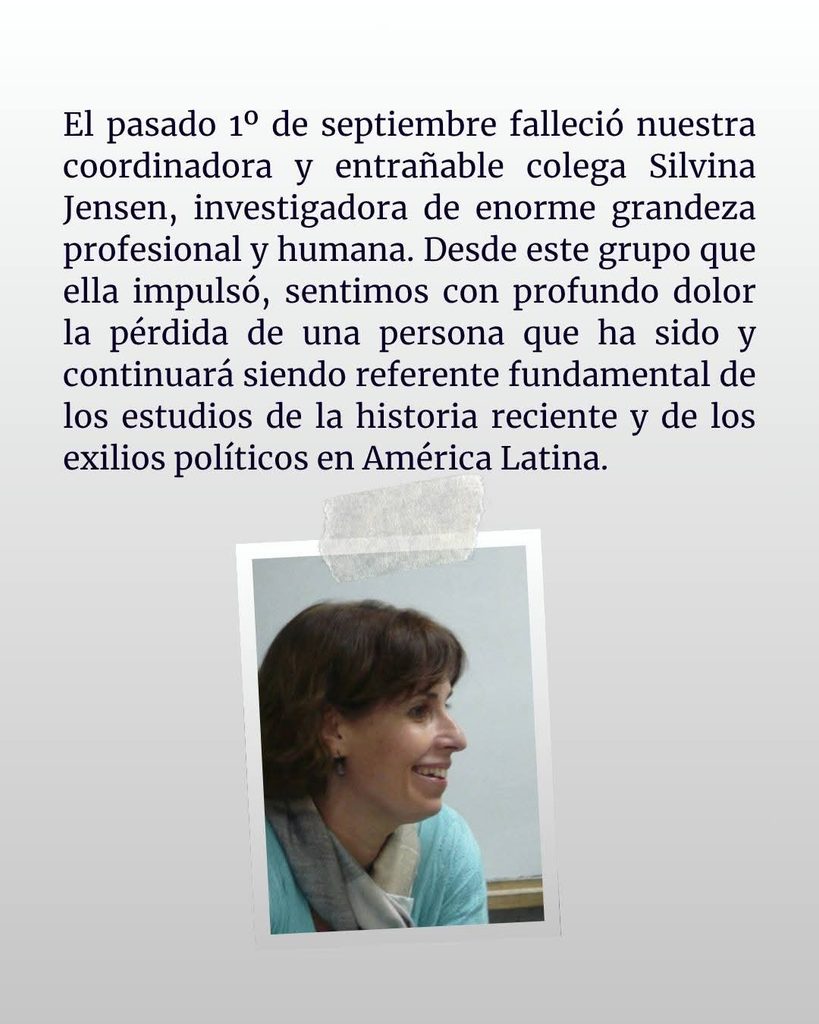
On September 1st, our coordinator and dear colleague Silvina Jensen, a researcher of immense professional and personal stature, passed away. From this group that she helped to establish, we deeply mourn the loss of someone who has been and will continue to be a fundamental figure in the study of recent history and political exiles in Latin America.
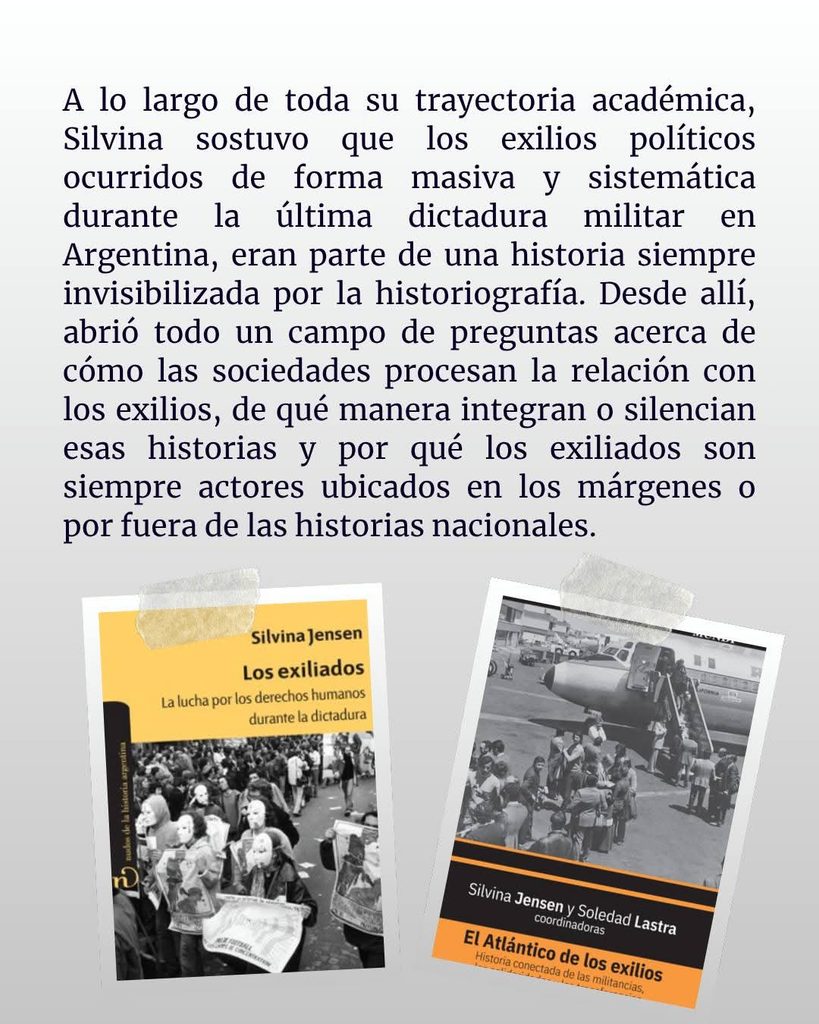
Throughout her academic career, Silvina maintained that the massive and systematic political exiles that occurred during the last military dictatorship in Argentina were part of a history consistently rendered invisible by historiography. From this perspective, she opened up a whole field of questions about how societies process such events.
The relationship with exiles, how these histories are integrated or silenced, and why exiles are always actors situated on the margins or outside of national narratives. Their empirical and theoretical contributions sought to strengthen the dialogue with other historiographies of repression, social memory, and Ibero-American circulations, arguing that exiles are windows through which to view broader and more complex political, social, and cultural processes that affect an entire nation.
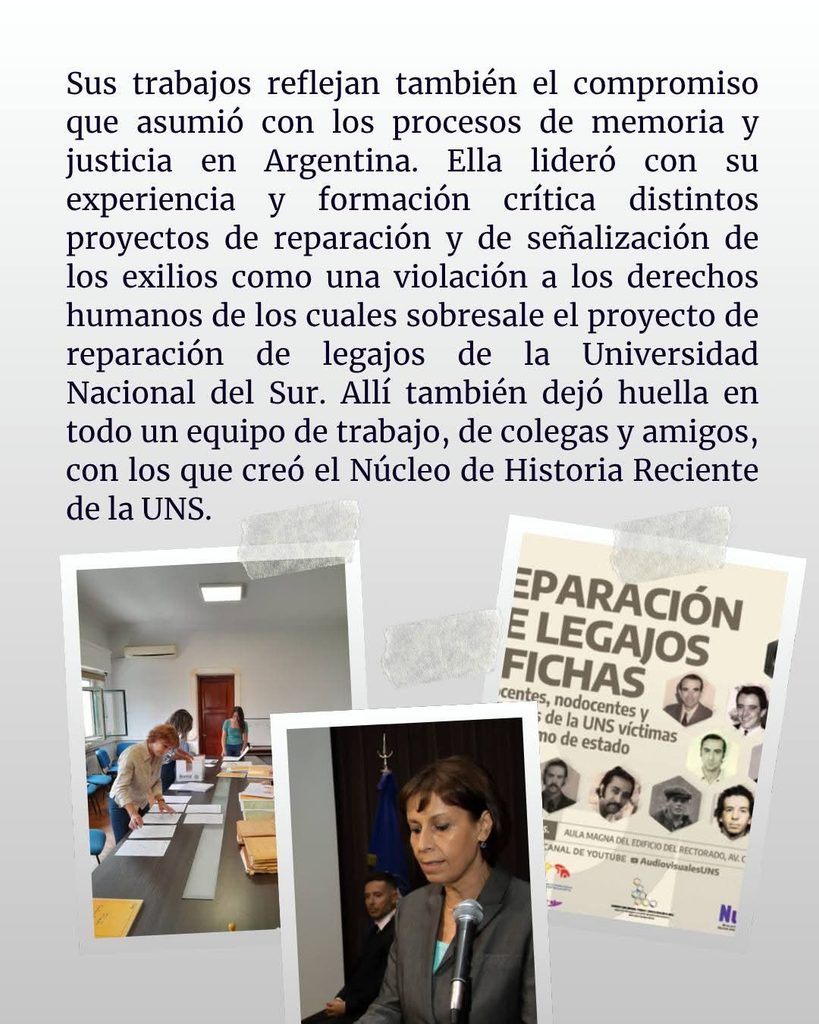
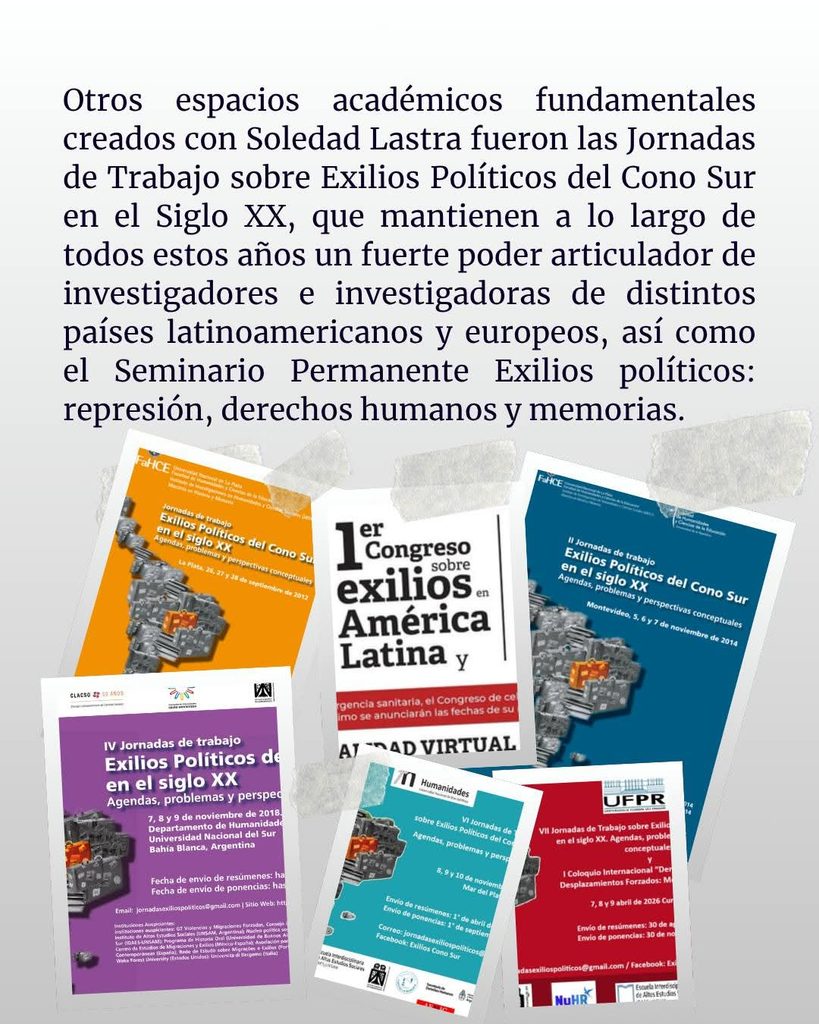
Her work also reflects her commitment to the processes of memory and justice in Argentina. With her experience and critical perspective, she led various projects focused on reparations and highlighting exile as a human rights violation, most notably the project to repair the records of the National University of the South (UNS). There, she also left her mark on a whole team of colleagues and friends, with whom she created the UNS's Center for Recent History. Other fundamental academic spaces created with Soledad Lastra include the Workshops on Political Exiles of the Southern Cone in the 20th Century, which have maintained a strong unifying force for researchers from various Latin American and European countries, as well as the Permanent Seminar on Political Exiles: Repression, Human Rights, and Memory.
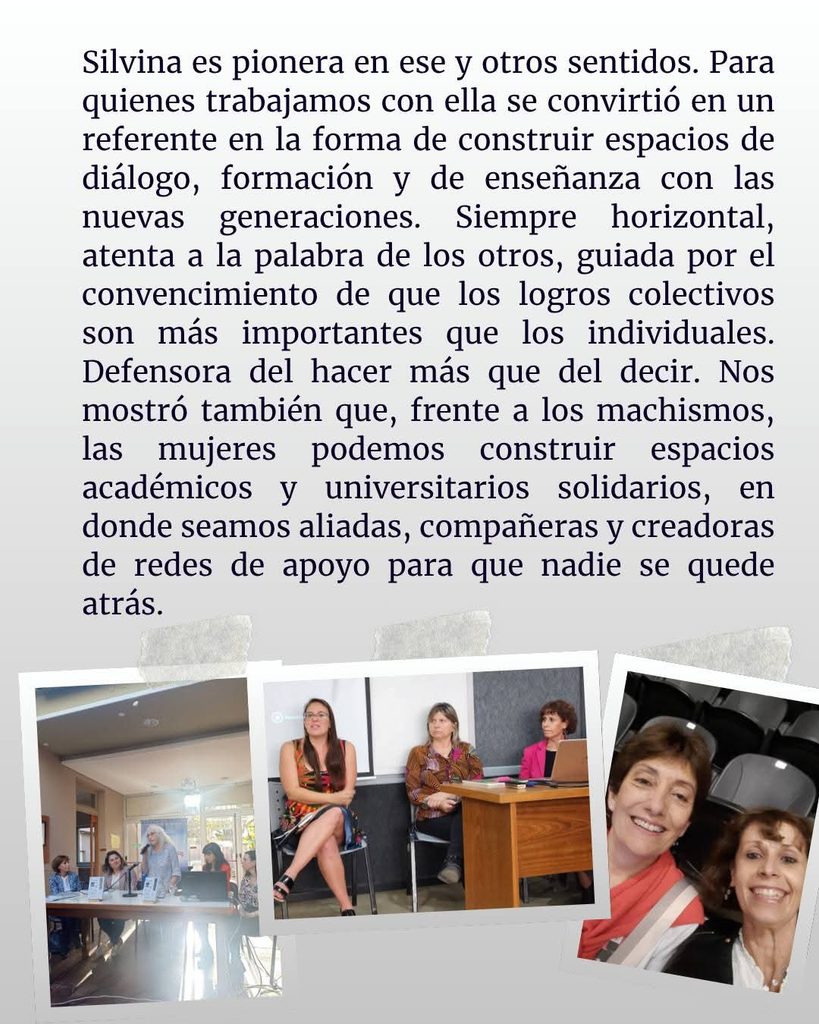
Silvina is a pioneer in this and other ways. For those of us who worked with her, she became a role model in building spaces for dialogue, training, and teaching with new generations. Always horizontal, attentive to the words of others, guided by the conviction that collective achievements are more important than individual ones. A champion of action over words. She also showed us that, in the face of sexism, women can build supportive academic and university spaces where we are allies, companions, and creators of support networks so that no one is left behind.
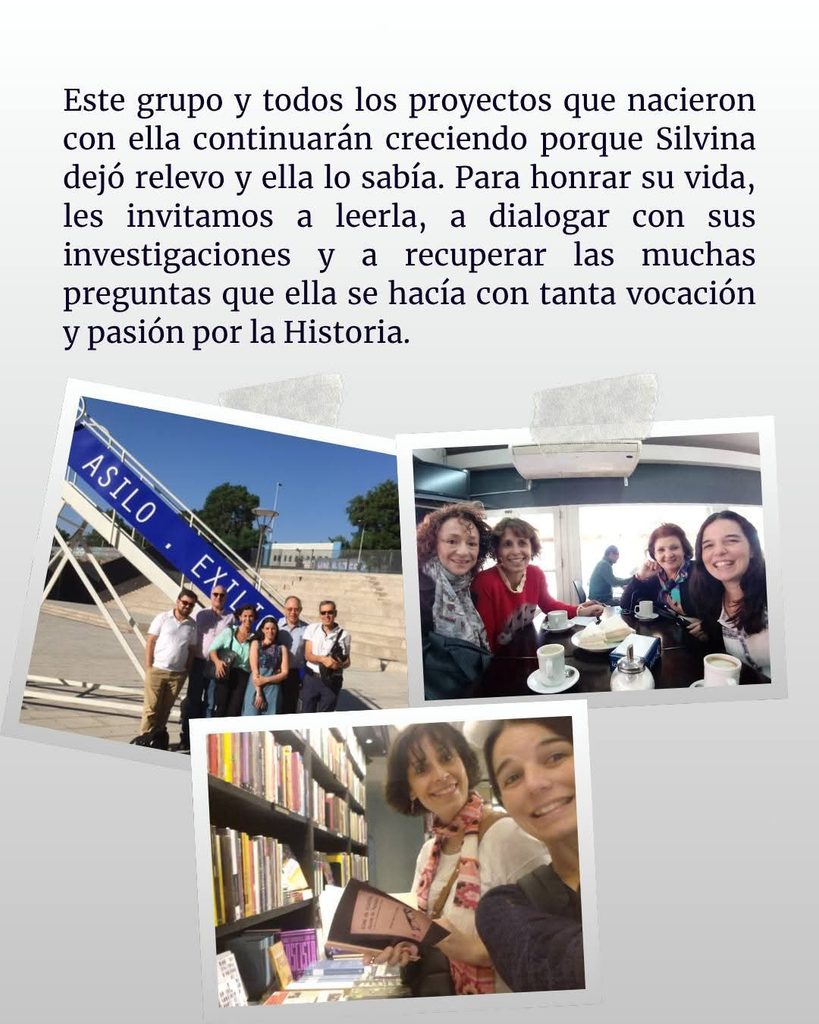
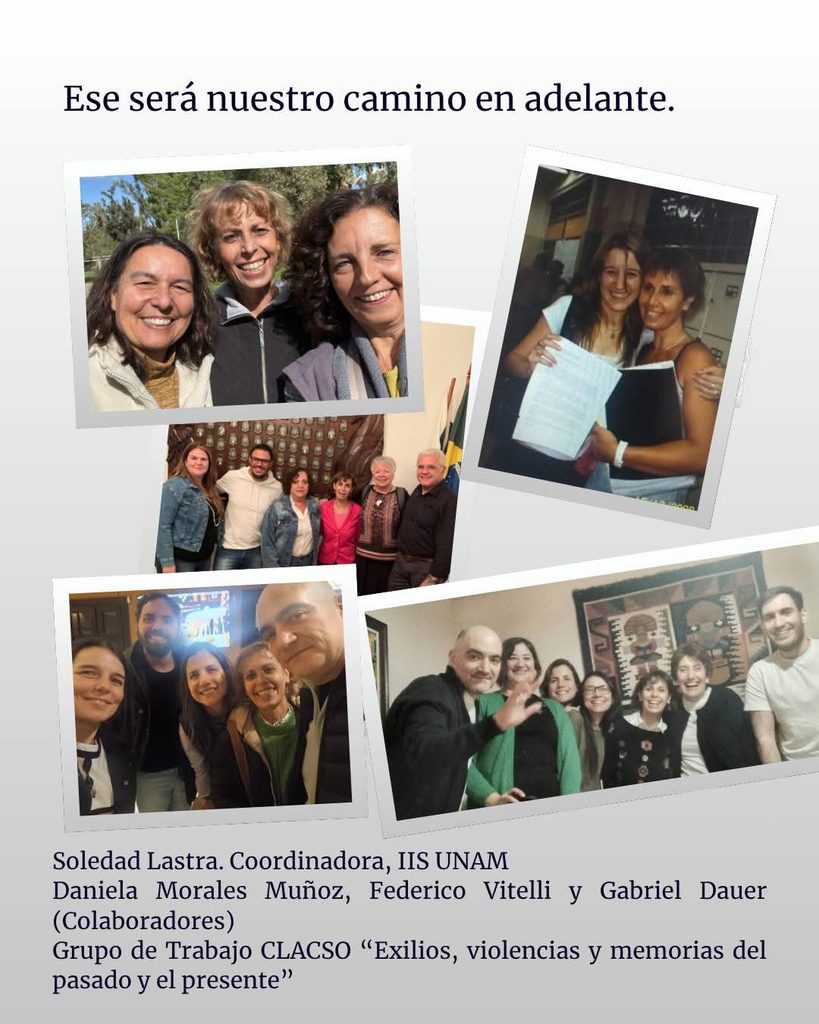
This group and all the projects that began with it will continue to grow because Silvina passed the torch, and she knew it. To honor her life, we invite you to read her work, engage with her research, and revisit the many questions she posed with such dedication and passion for history. That will be our path forward.
Soledad LastraCoordinator, IIS UNAM
Daniela Morales Muñoz, Federico Vitelli and Gabriel DauerContributors
CLACSO Working Group on Exiles, Violence and Memories of the Past and Present
This text expresses the position of the aforementioned Working Groups and not necessarily that of the centers and institutions that make up the CLACSO international network, its Steering Committee or its Executive Secretariat.

