
Understanding the flow of international funding in science and technology
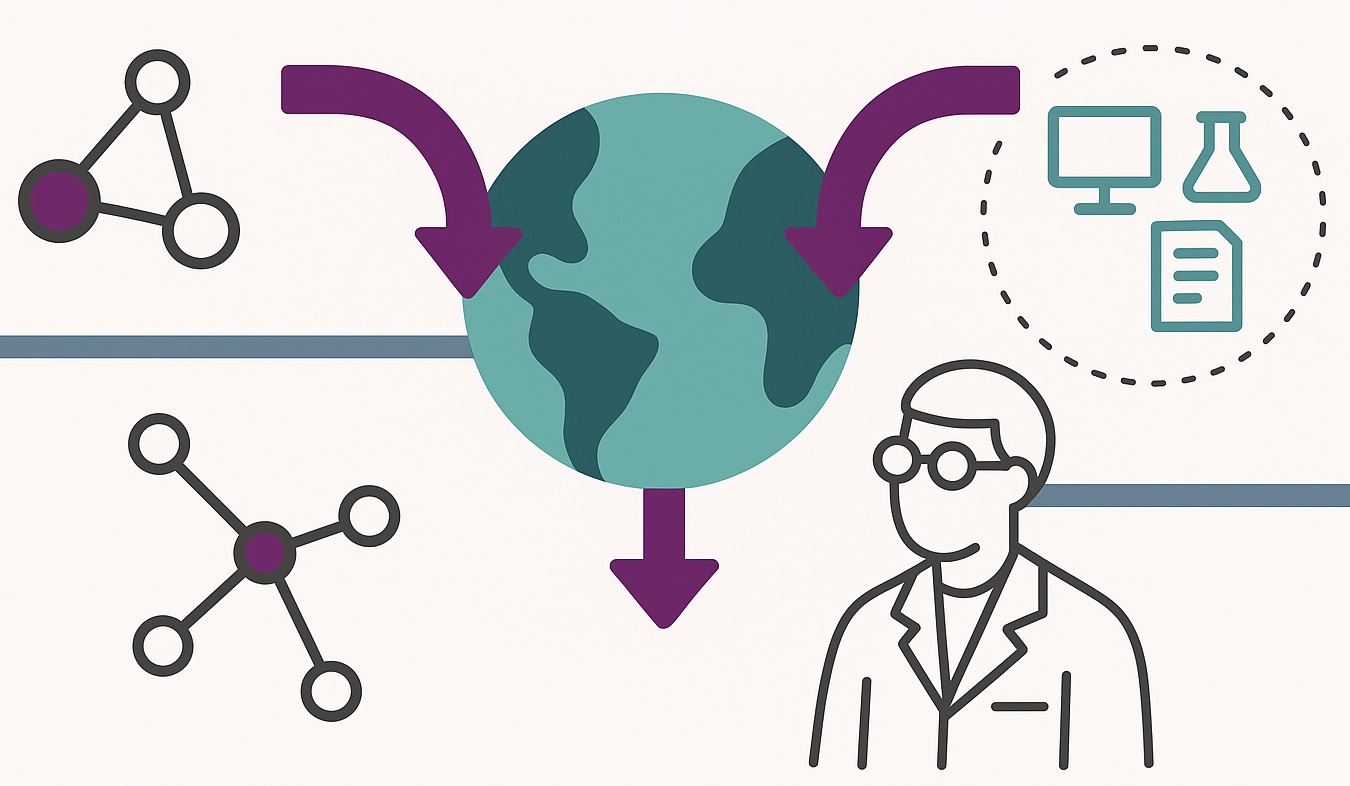
International funding for research and development (R&D) in the Global South is a complex network marked by structural inequalities and power dynamics. This introductory analysis, based on a recent review of grey literature—that is, documents not formally published through traditional commercial or academic channels, such as reports from multilateral organizations, foundations, or NGO technical documents—seeks to begin unraveling how international funds allocated to the science and technology sector move, among whom, and according to what criteria.
When we talk about international funds, we are referring to the economic resources coming from entities external to the recipient countries (such as cooperation agencies, private foundations, philanthropic entities, multilateral organizations or foreign government institutions) that finance research, innovation and development projects.
What do we observe in the circulation of international funding in science and technology?
- Structural and chronic inequalities: There are profound differences between the scientific systems of the Global North and South. These gaps are reflected in unequal access to infrastructure, specialized training, international networks, and institutional capacities. Consequently, access to international funding is not distributed equitably, which can further exacerbate existing disparities.
- Predefined agendas: In many cases, major funders predefine the research topics and lines to be funded, which are then transferred to the Global South on a "turnkey" basis; that is, without any opportunity for recipient institutions to propose or adapt these topics to their own realities. This limits the capacity of local teams to align projects with their scientific and social priorities.
- Ownership of data and results: The involvement of multiple international actors creates situations where research data and results fall under the exclusive control of those funding or leading projects from the Global North. This can mean that local teams lack full access to the information or must pay to reuse it, hindering the development of new research based on that data and reducing the potential for local knowledge ownership.
- Imbalances in decision-making: Institutions in the Global South often have limited participation in key project design stages. In many cases, they are integrated late or marginally, without an active role in defining objectives, methodologies, or evaluation criteria. This creates dependencies and weakens local capacities to lead their own scientific agendas.
- Lack of transparency: Information on how international funds are allocated, distributed, and spent is often neither public nor accessible. This lack of clarity hinders the proper evaluation of the real impacts of R&D investments, makes it difficult to monitor projects, and limits accountability mechanisms both to funding bodies and to the communities that should benefit from the knowledge produced.
Why is it important to understand these dynamics?
This preliminary analysis, which functions both as a diagnosis and as a call for reflection, makes visible how international financing schemes often influence, indirectly but decisively, the scientific and technological development of countries in the Global South.
Understanding these dynamics is key to identifying critical points, designing improvement strategies, and promoting more equitable and sustainable financing models aligned with local priorities. It's not just about increasing the amount of funding, but about rethinking how it circulates, who decides on its allocation, and what criteria are used to evaluate its impact.
At the same time, this text seeks to bring our reflections closer to a wider audience (researchers, students, decision-makers and the general public) through accessible language that helps to denaturalize certain practices and open the debate on the need to build more inclusive, transparent and contextualized financing systems.
We invite you to join us on this journey through the dynamics of international R&D funding, and discover how, by understanding its circuits and tensions, we can move towards a fairer, more open science oriented towards the integral development of our societies.
Understanding the Circulation of International Funding in Science and Technology
International funding for research and development (R&D) in the Global South constitutes a complex web shaped by structural inequalities and power dynamics. This introductory analysis—based on a recent review of gray literature (ie, documents not formally published through commercial or traditional academic channels, such as reports by multilateral organizations, foundations, or NGO technical papers)—seeks to begin unpacking how international funds for the science and technology sector move, among whom, and according to what criteria.
When we refer to international funds, we mean financial resources originating from entities external to the recipient countries—such as cooperation agencies, private foundations, philanthropic organizations, multilateral bodies, or foreign government institutions—that support research, innovation, and development projects.
What do we observe in the circulation of international funding in science and technology?
- Structural and chronic inequalities: There are profound disparities between the scientific systems of the Global North and the Global South. These gaps manifest in unequal access to infrastructure, specialized training, international networks, and institutional capacities. As a result, access to international funding is not equitably distributed, which may further exacerbate existing inequalities.
- Predefined agendas: In many cases, major funders define in advance the topics and research lines to be supported, which are then transferred to the Global South in a “ready-made” format—leaving little room for recipient institutions to propose or adapt these topics to their own realities. This limits local teams' ability to align projects with their scientific and social priorities.
- Predefined agendas: In many cases, major funders define in advance the topics and research lines to be supported, which are then transferred to the Global South in a “ready-made” format—leaving little room for recipient institutions to propose or adapt these topics to their own realities. This limits local teams' ability to align projects with their scientific and social priorities.
- Predefined agendas: In many cases, major funders define in advance the topics and research lines to be supported, which are then transferred to the Global South in a “ready-made” format—leaving little room for recipient institutions to propose or adapt these topics to their own realities. This limits local teams' ability to align projects with their scientific and social priorities.
- Predefined agendas: In many cases, major funders define in advance the topics and research lines to be supported, which are then transferred to the Global South in a “ready-made” format—leaving little room for recipient institutions to propose or adapt these topics to their own realities. This limits local teams' ability to align projects with their scientific and social priorities.
Why is it important to understand these dynamics?
This preliminary analysis, which serves both as a diagnosis and as a call for reflection, highlights how international funding schemes often influence the scientific and technological development of Global South countries in indirect yet decisive ways.
Understanding these dynamics is essential to identifying critical issues, designing strategies for improvement, and promoting funding models that are more equitable, sustainable, and aligned with local priorities. It is not only about increasing the amount of funding, but about rethinking how it circulates, who makes decisions about it, and the criteria by which its impact is assessed.
At the same time, this text aims to bring our reflections to a broader audience—including researchers, students, policymakers, and the general public—through accessible language that helps challenge normalized practices and opens up debate about the need to build more inclusive, transparent, and context-sensitive funding systems.
We invite you to join us on this journey through the dynamics of international R&D funding—and to discover how, by understanding its circuits and tensions, we can move toward a more just, open, and socially responsive science.

