
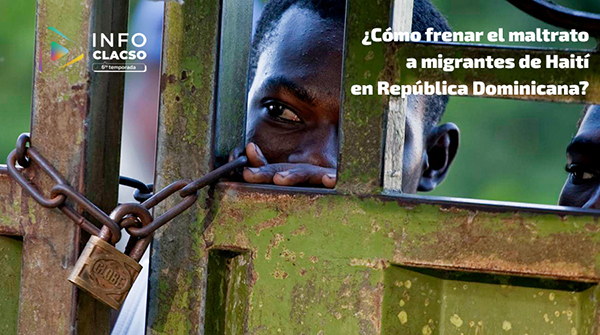
How to stop the mistreatment of Haitian migrants in the Dominican Republic?
On Wednesday, May 14, at 3:30 p.m. Argentina, Uruguay and Brazil time (UTC-15:00), InfoCLACSO will be live on the YouTube channel and the Facebook and LinkedIn profiles.
The Dominican government has been hardening its anti-immigrant policy, deporting approximately 10.000 Haitians per week. This policy intensified in early April with new measures that are both persecutory and violate human dignity. Analysis by Karina Batthyány , Juan Miguel Pérez , Lilliam Fondeur , Bridget Wooding , Gloria Amézquita , and Elena Lorac.
Furthermore:

Forever “Pepe” Mujica : On May 13, former Uruguayan president and Our America icon José “Pepe” Mujica passed away. He had memorable contributions to CLACSO, such as the VII Latin American and Caribbean Conference of Social Sciences in November 2015 in Medellín, Colombia, and promoting the International Course “Latin America: Citizenship, Rights and Equality” the following year.

X Latin American and Caribbean Conference of Social Sciences : Talk with Jorge Iván Bula Escobar , national director of the Higher School of Public Administration of Colombia (ESAP), one of the three venues of #CLACSO2025 from June 9 to 12 in Bogotá.
The program for Wednesday, May 14th covers three of the axes of the Platforms for Social Dialogue that CLACSO is promoting for the coming years: “Migration and human mobility”, “Rights, violence and gender equality” and “Democracy, human rights and peace”.
She drives: Gustavo Lema, Director of Communication and Information at CLACSO
Directed and edited by: Guido Fontán
Production: Eric Domergue, Noelia Croci, Agustina Castaños and Ángel Dávila
Design and programming: Sebastián Higa, Marcelo Giardino, Christian Iturricha, Camila Pastor and Renata Maestrovicente
Open to the addresses of the Executive Secretariat and the members of the Steering Committee of CLACSO to disseminate activities and topics specific to each country, this communication channel is also a space to analyze and deepen the Platforms for Social Dialogue (PDS) that CLACSO promotes for the coming years, to interview researchers, and for everything that makes up the life and production of the Latin American Council of Social Sciences.
If you would like to receive more information about CLACSO's training programs:
[widget id=”custom_html-57″]
to our email lists.

