
CLACSO brought together its working groups and member centers at ALAS 2026
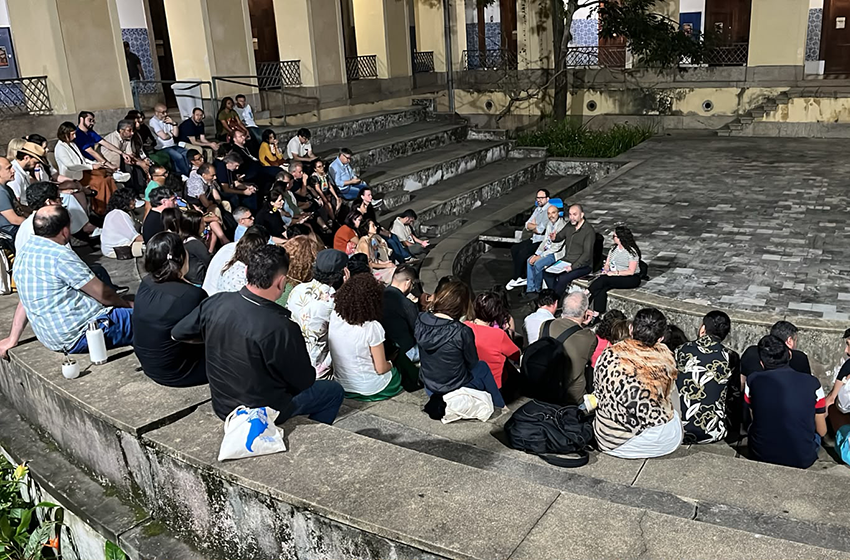
More than 100 researchers participated in a meeting to discuss the role of the network in the current situation and to share the lines of work for the period 2025-2028.
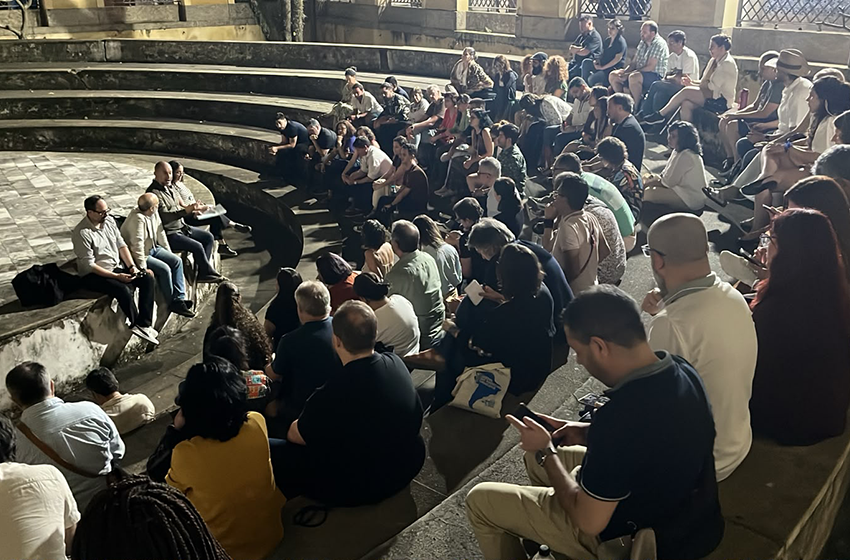
Within the framework of the 2026 Congress of the Latin American Sociological Association (ALAS), held in Rio de Janeiro, the Latin American Council of Social Sciences (CLACSO) convened a meeting with its working groups and member centers, with a special focus on centers from Brazil. The meeting brought together more than 100 people, including coordinators and members of working groups and representatives of member centers from different countries, in a space for exchange, collaboration, and collective dialogue.
The meeting was led by CLACSO Executive Director Pablo Vommaro; Juan Agulló, alternate member of the Steering Committee for Brazil; Fernanda Pampín, director of publications; and Gustavo Lema, director of communication and information.
A network of critical thinking in a time of dispute
In his opening remarks, the Executive Director offered an analysis of the regional and international situation. He argued that Latin America and the Caribbean are undergoing a geopolitical reconfiguration that places the region in a position of contention, and he reaffirmed CLACSO's role as a network of critical and transformative thought that connects academia, universities, social movements, local communities, and public policy.
Vommaro defended a notion of "multiple" sovereignty—territorial, energy, economic, fiscal, and data-related—understood through cooperation, collaboration, and regional integration. She emphasized the need to reclaim the capacity for initiative and to challenge established narratives with proposals based on rigorous research and knowledge, and reaffirmed the commitment of a feminist and anti-racist CLACSO in the face of the resurgence of hate speech. She also warned about attacks on public universities, education, and science in several countries of the region, and about the decline in international cooperation, a scenario that reinforces the commitment to the network's intellectual and economic autonomy.
The Executive Director reviewed the ten strategic axes defined for the 2025-2028 period, which emerged from the Bogotá Assembly and consultations with member centers. He reported that 88 new working groups were selected in April—a third of them proposals new to the network, many linked to territories, peripheries, and social movements—and mentioned the open calls for research and essays, including those related to the 200th anniversary of the Amphictyonic Congress and the contested futures.
Member centers, publications and communication
Juan Agulló, alternate member of the Steering Committee for Brazil, encouraged the centers to rejoin and participate actively, and highlighted the network's value for collaboration and knowledge sharing. He announced a virtual meeting in September for interested centers, with a special focus on the northern, northeastern, and western regions of the country.
The director of publications, Fernanda Pampín, presented the latest developments in the institutional repository —the largest in social sciences and humanities, with 200.000 open access titles and more than 9,6 million downloads in the last year— and announced the upcoming call for submissions to the Public Impact Notebook, the ongoing call for submissions to the journal Tramas y Redes, and 50 full scholarships for staff from member centers in academic publishing and open access.
The director of communications and information, Gustavo Lema, encouraged groups and centers to diversify their dissemination formats—podcasts, videos, and audiovisual materials—to reach beyond academic circles. He noted the sustained growth in views over the past few months and offered training to support those interested in producing this type of content.
A space for meeting and collaboration
The round of interventions reflected the diversity of the network: working groups dedicated to sexual activism and citizenship, citizen sciences, borders and globalization, and intercultural dialogues, among many others, participated, as well as member centers from Brazil, Mexico, Colombia and Central America.
At the closing, the Executive Director reaffirmed the principles guiding the network: working for academic freedom and transforming knowledge assessment systems—through programs like FOLEC and in dialogue with scientific organizations in the region—and a commitment to multilingualism, including Indigenous languages. The meeting concluded with a call to continue strengthening the network and an invitation to continue the exchange during the ALAS Congress.

