
CLACSO welcomes a delegation of publishers from the People's Republic of China

CLACSO received a distinguished delegation of publishers from the People's Republic of China at its executive headquarters, as part of their visit to the 50th Buenos Aires International Book Fair.
The delegation was headed by Chen Biao, Deputy Editorial Director of China Social Sciences Press, and composed of representatives of the International Communication Bureau of the National Press and Publication Administration, People's Publishing House, People's Literature Publishing House, China Social Sciences Press, People's Medical Publishing House and Fujian Education Journal Press.
The Executive Director participated on behalf of CLACSO, Pablo Vommaro, the Director of Editorial Production, Fernanda Pampín, the Academic Director, Gloria Amézquita Puntiel, and the Director of Communication and Information, Gustavo Lema.
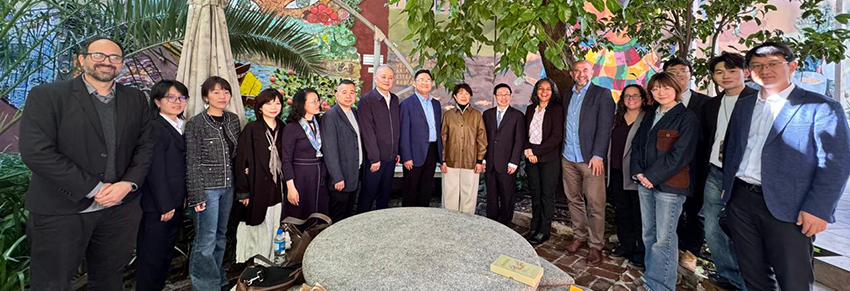
The meeting reaffirmed the commitment of the Latin American Council of Social Sciences to international cooperation and multilateralism from a Global South perspective, strengthening strategic links and promoting multilingualism in the production and circulation of knowledge.
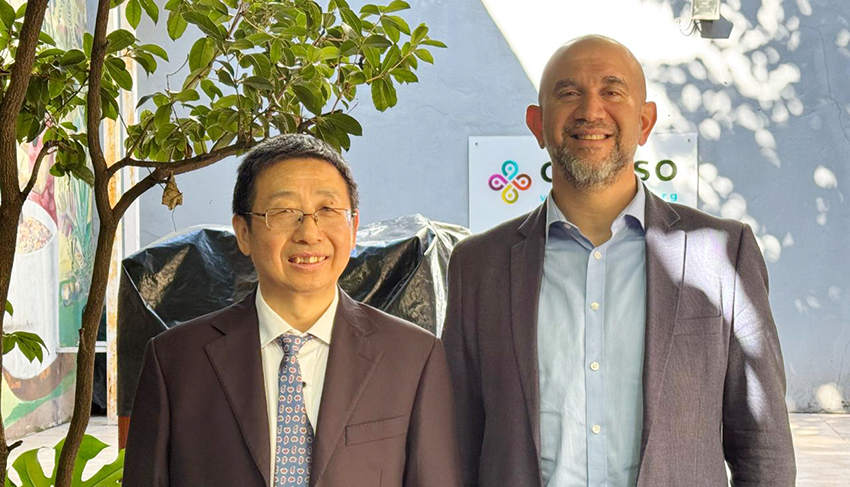
Regarding CLACSO's strategy and the Global South, Pablo Vommaro argued that “This strengthening responds to a conviction that we assumed from the beginning of my term as Executive Director, in July 2025: to consolidate a perspective of international cooperation and multilateralism focused on cooperation with the Global South.” He added that “Intellectual cooperation with China represents an opportunity to deepen mutual understanding, strengthen institutional capacities, consolidate shared security, economic prosperity and cultural integration, and contribute to more equitable forms of development.”
And he concluded: “I am convinced that this path, based on intellectual cooperation and the articulation of our capabilities, will not only deepen the relationship between China and Latin America and the Caribbean, but also contribute to a more pluralistic, fairer and more inclusive international order.”
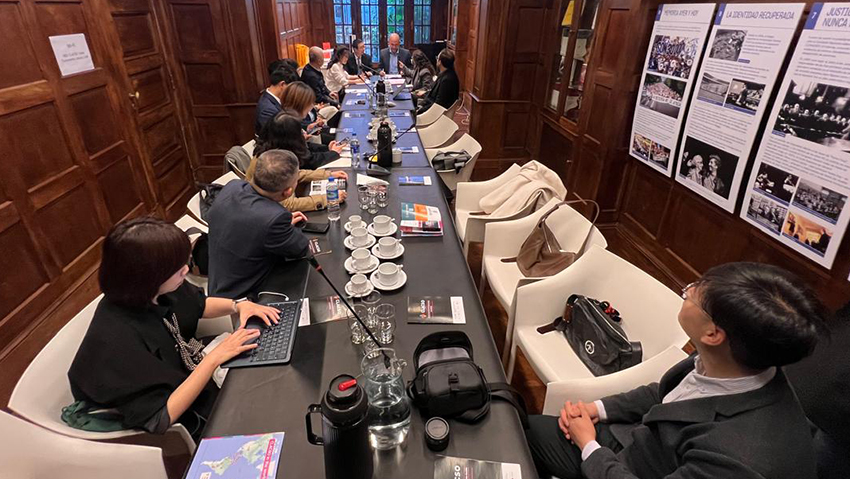
From the publications area, the importance of these exchanges was highlighted in order to consolidate more equitable, diverse and representative publishing ecosystems, as well as to advance in the construction of a more diverse and shared knowledge infrastructure between regions.

