
CLACSO present at the meeting “Reform of research evaluation”
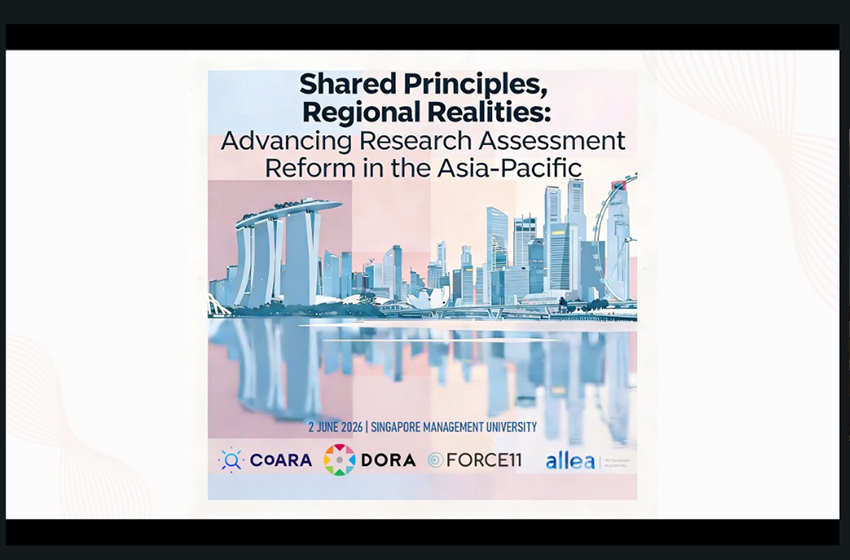
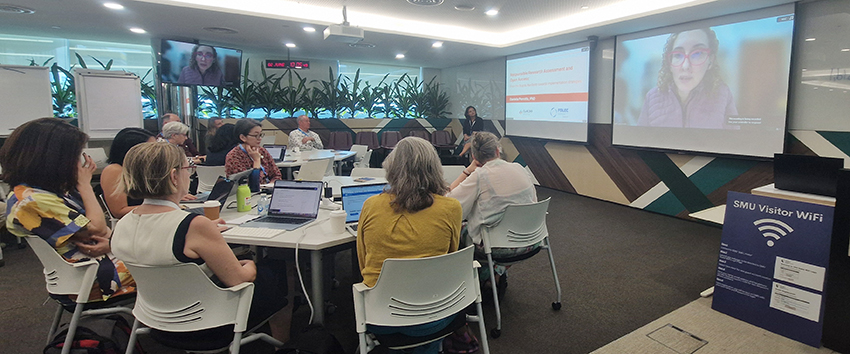
El Latin American Council of Social Sciences (CLACSO), through the Latin American Forum on Scientific Evaluation (FOLEC), participated on June 2nd in the international meeting “Research assessment reform: regional perspectives and global dialogue"(Reforming Research Assessment: Regional Perspectives and Global Dialogue), held in Singapore and considered one of the most relevant spaces for international exchange on the future of research evaluation.
The meeting brought together representatives from funding bodies, national science and technology agencies, universities, academic associations, and international networks currently leading scientific assessment reform processes in different regions of the world. Participants included representatives from the Global Research Council (GRC), the Coalition for Advancing Research Assessment (CoARA), the Declaration on Research Assessment (DORA), philanthropic foundations, funding agencies, and organizations specializing in science policy and open science.
The meeting aimed to exchange regional experiences, identify common challenges and strengthen international coordination of initiatives that seek to transform research evaluation systems, historically focused on bibliometric indicators and impact metrics that have been increasingly questioned by broad sectors of the global scientific community.
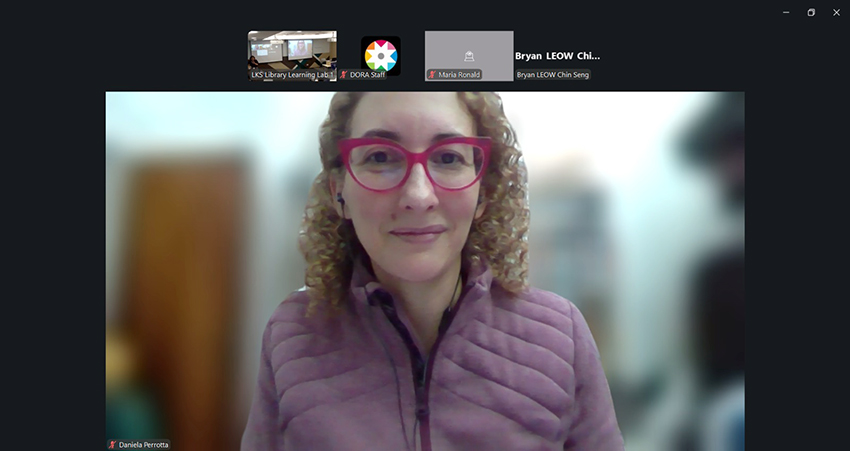
In representation of CLACSO He participated Daniela Perrotta, coordinator of FOLEC, who presented the progress promoted by the Forum and shared the Latin American and Caribbean perspective on scientific evaluation processes.
During her remarks, Perrotta emphasized that Latin America and the Caribbean have a unique history of developing alternatives to dominant models of scientific evaluation and communication. Long before evaluation reform became a global agenda, the region had already developed pioneering initiatives related to non-commercial open access, bibliodiversity, multilingualism, and the defense of knowledge as a public good.
In that context, he noted that FOLEC was created in 2019 as an initiative driven by CLACSO to channel and articulate debates, concerns, and proposals already present in broad sectors of the region's academic and scientific communities. Since then, the Forum has established itself as one of the main spaces for reflection, training, and advocacy on scientific evaluation in Latin America and the Caribbean.
CLACSO's participation in these international dialogues stems from the conviction that discussions on scientific evaluation are not merely technical. On the contrary, they involve strategic decisions about what knowledge is recognized, what research agendas are encouraged, what languages are legitimized, and what contributions are considered valuable to societies.
From this perspective, CLACSO promotes a vision of scientific evaluation based on principles of equity, diversity, social relevance, and openness of knowledge. These principles were enshrined in the Bogotá Manifesto on Scientific Evaluation, developed within the framework of FOLEC, which proposes to move towards contextualized, inclusive evaluation systems capable of recognizing the plurality of forms of knowledge production and circulation.
The experience of the Latin American School of Scientific Evaluation, a training initiative developed by FOLEC to strengthen institutional capacities and contribute to the training of new generations of evaluators committed to responsible approaches to research evaluation.
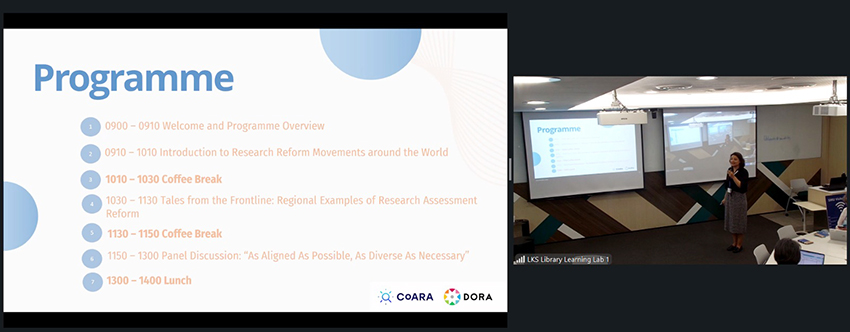
CLACSO's presence at this meeting made it possible to highlight the contributions of Latin America and the Caribbean to a debate of growing international relevance and to strengthen cooperation links with organizations and initiatives from other regions of the world.
In a global context marked by profound transformations in science, technology and innovation systems, CLACSO reaffirms its commitment to building evaluation models that recognize the diversity of knowledge, strengthen science as a public good and contribute to the democratization of knowledge production and circulation worldwide
Participation in these high-level forums is strategic to ensure that the voices, experiences, and priorities of Latin America and the Caribbean are included in global discussions about the future of science. For CLACSO, the reform of scientific evaluation represents an opportunity to move toward more democratic and pluralistic knowledge systems, committed to the challenges facing our societies, and to incorporate into the international debate the contributions that the region has made over decades in the areas of open access, bibliodiversity, academic cooperation, and science oriented toward the common good..

