
CLACSO facing the social and political crisis in Ecuador
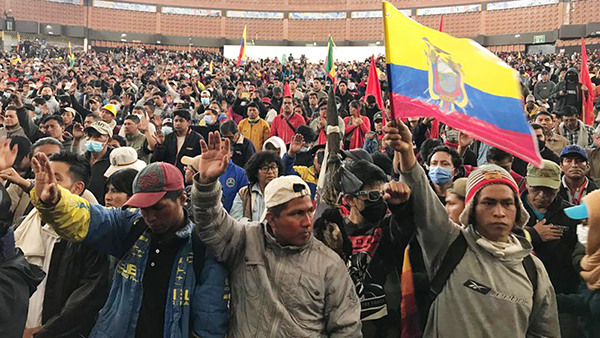

The 12 days of mobilizations called by Ecuador's Indigenous movement, along with the growing participation of diverse social sectors (feminists, students, workers, youth, cultural managers, among others), clearly demonstrate the accumulated discontent within society. For just over a year, the Indigenous movement has been proposing direct dialogue with the government. As in 2019, they are demanding a reduction in fuel prices; their 10 demands aim to improve the living conditions of the population and curb the encroachment on their territories. However, the prospects for resolving the conflict seem increasingly remote.
We are dismayed to observe that the government has prioritized a strategy of repression that undermines the minimum conditions of a democratic society, not only because it has issued a State of Emergency that legitimizes the violation of rights, the active presence of the military, and the progressive use of force; but also because the arrest of the president of CONAIE, Leónidas Iza; the militarization of the House of Ecuadorian Culture, which is a symbolic space for the struggles of all social movements; and the rhetoric that attempts to link the protests with drug trafficking, organized crime, and the old specters of the guerrillas—in this case, Shining Path—ultimately foster a scenario of polarization that does not help in building the dialogue that the president himself calls for.
The reports of police use of firearms and intimidation of civilians are a form of behavior that society as a whole rejects. Human rights organizations have been very clear in showing the rise in violence and human rights violations. On this 12th day of the strike, there are already reports of 3 deaths, 49 human rights violations, 93 people injured, 94 arrests, and 4 missing persons.
As a society, we must respect the exercise of citizens' rights, collective rights, and the right to protest. We urge the government to cease the repression and criminalization of protest. At this time, it must ensure the safety of all citizens and seek democratic means for dialogue with the Indigenous movement and other sectors.
CLACSO Steering Committee
If you would like to receive more information about CLACSO's training programs:
[widget id=”custom_html-57″]
to our email lists.

