
CLACSO strengthens Ibero-American cooperation to promote Open Science
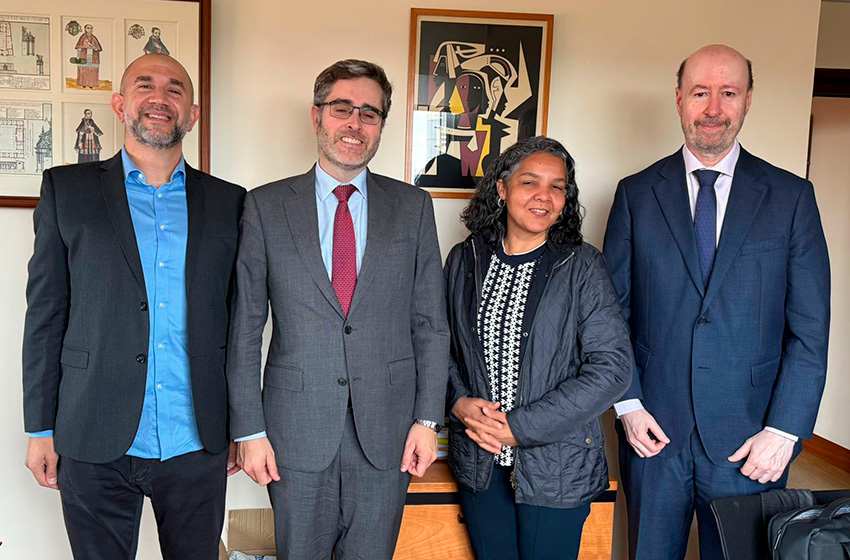
On Monday, March 9, Pablo Vommaro, Executive Director of CLACSO, held a meeting in Madrid with Santiago Sierra González del Castillo, Deputy Director of Cultural and Scientific Relations and Cultural Promotion of the Spanish Agency for International Development Cooperation (AECID), the main body for the management of Spanish cooperation, attached to the Ministry of Foreign Affairs.
Also participating Gloria Amézquita, Academic Director of CLACSO, and Félix García LausínSecretary General of the Ibero-American Program of Science and Technology for Development (CYTED), created by the governments of the Ibero-American countries to promote cooperation on issues of science, technology and innovation for the harmonious development of Ibero-America.
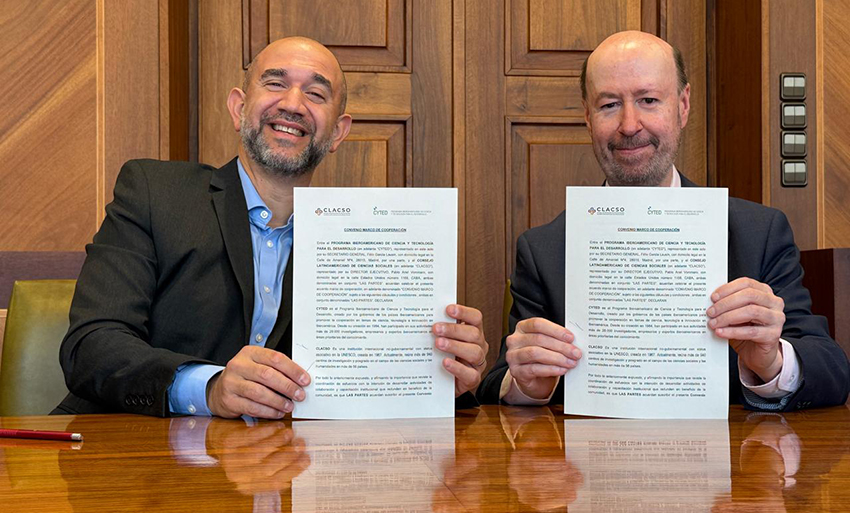
On this occasion, CLACSO and CYTED signed an agreement to establish the basis for inter-institutional cooperation to develop, promote, drive and execute activities to promote science and innovation, as well as dissemination, training, publications and research activities, in order to promote concrete actions in Ibero-America, also promoting the principles of open science and the use of Spanish and Portuguese as languages of scientific communication and in the field of Artificial Intelligence, in a context of respect for linguistic diversity.
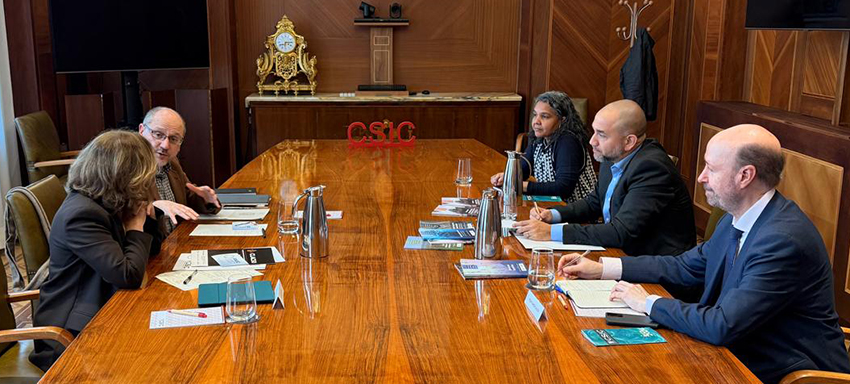
Based on the points of agreement on these and other issues, they agreed to move forward with joint work on the road to the XXX Ibero-American Summit of Heads of State and Government, to be held in the city of Madrid, on November 4 and 5, 2026, under the motto: “Ibero-America. Together we build our Community. Together we project it towards the future and towards the world.”
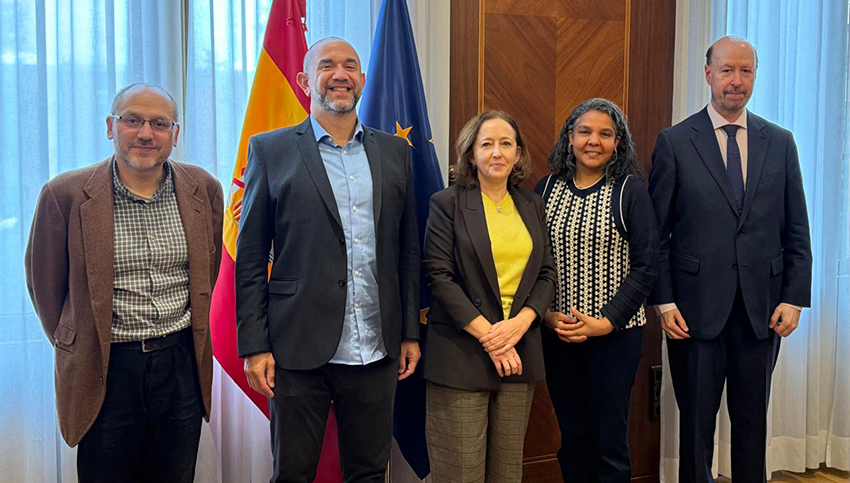
Pablo Vommaro and Gloria Amézquita also held a working meeting with the Spanish National Research Council (CSIC), represented by its President. Eloísa del Pino Matute and by its Vice President of International Relations, Javier Moreno Fuentes.
They agreed to work together to promote the role of the Social Sciences, Humanities and Arts in scientific production and to collaborate on issues of unbiased Artificial Intelligence, social relevance of science and responsible evaluation based on the principles of Open Science.

