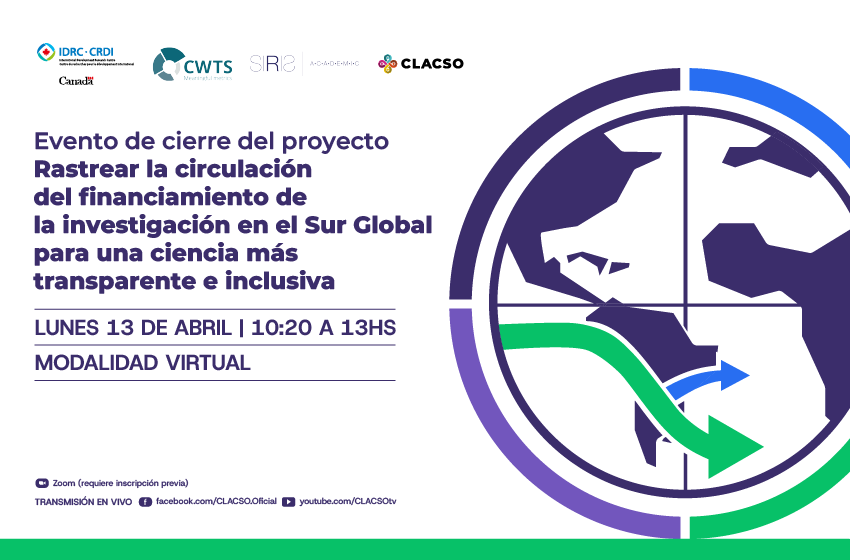
CLACSO-FOLEC presents the results of the project on research funding flows in the Global South
The Latin American Council of Social Sciences (CLACSO), through the Latin American Forum on Scientific Evaluation (FOLEC), is holding the closing event of the project “ Tracking research funding flows in the Global South for more transparent and inclusive science ” on April 13 and 14 in the city of Buenos Aires.
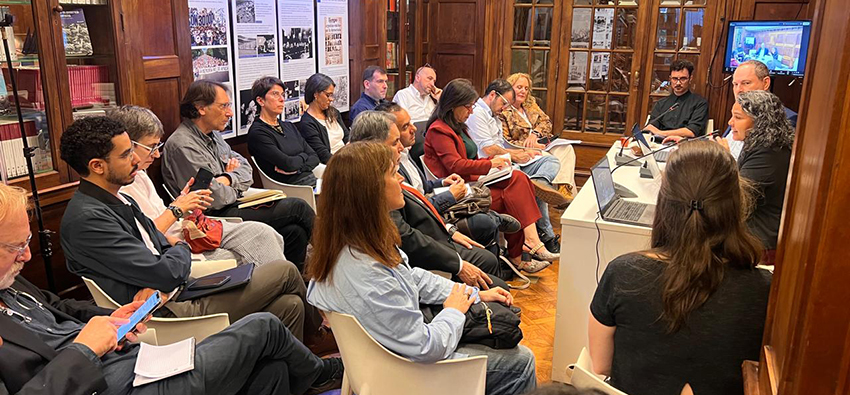
The meeting will be geared towards presenting and discussing the main results of an investigation that analyzes the dynamics, characteristics and effects of the circulation of science and technology funding in the Global South, with a special focus on Latin America and the Caribbean.
In an international context marked by persistent asymmetries in the production and circulation of knowledge, as well as by recent trends of restriction and reconfiguration of scientific funding, the study highlights the situation of “double structural constraint” faced by the countries of the region: on the one hand, the insufficiency or weakening of national public funding; on the other, the growing uncertainty, competition and conditionality associated with resources from international cooperation.
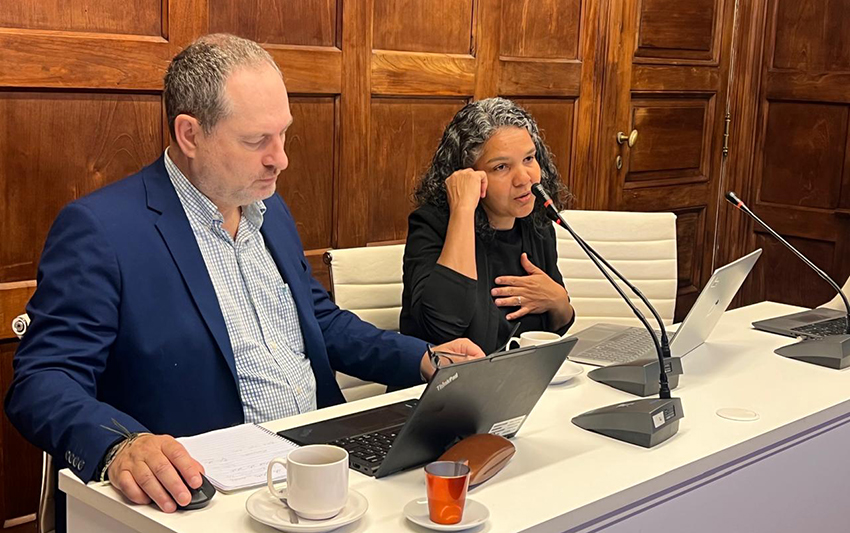
From this perspective, the project addresses funding not only as an input for research, but also as a structuring factor in scientific agendas, institutional capacities, and the trajectories of scientific and technological development. In this sense, analyzing funding flows allows us to understand who funds what, under what conditions, and with what implications for the direction of the knowledge produced.
One of the study's central findings is the elusive and opaque nature of these flows. On the one hand, there are significant methodological limitations related to the fragmentation of information sources, the low standardization of data, and the difficulty in reconstructing the traceability of resources. On the other hand, political and institutional dynamics are identified that restrict their visibility, such as the intermediation of agencies, data aggregation, and the lack of transparency in allocation criteria.
The project combines quantitative data analysis with a qualitative approach based on case studies (Brazil, Colombia, Costa Rica and India), allowing for a deeper understanding of the specific ways in which actors access, manage and use financing, as well as the tensions that emerge in contexts of international cooperation marked by asymmetrical relationships.
Among its main contributions, the research helps to highlight research funding flows in the Global South, identify patterns and inequalities, and generate analytical tools to strengthen decision-making in science policy. It also proposes moving towards more equitable and transparent funding schemes aligned with local priorities, promoting greater autonomy and agenda-setting capacity for countries in the region.
The event will bring together specialists, representatives from funding agencies, public policymakers, and stakeholders in the science and technology sector. The academic community, policymakers, and the general public are invited to connect remotely to the live broadcast of the project's public presentation of results, which will take place on Monday, April 13, between 10:20 a.m. and 13:00 p.m. (Buenos Aires time). This event will provide an opportunity to learn firsthand about the research's main findings, approaches, and contributions.
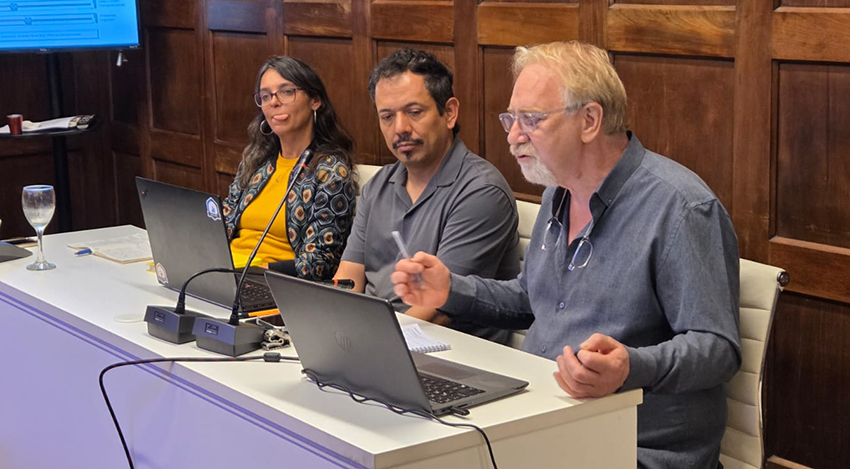
The afternoon activities on the first day, as well as the second day of the event, will be held in person in a closed workshop and will focus on in-depth discussion of the project's results and the issues it addresses. Through roundtables and discussions with specialists and invited guests, the aim is to enrich and critically examine the findings presented, generating key input for their consolidation and for future publications that will be disseminated through the project website.
This initiative is part of CLACSO-FOLEC's work to promote a more open, inclusive and socially relevant science, contributing to the strengthening of scientific systems capable of responding to the needs and challenges of Latin America and the Caribbean.
Registration form for the virtual activity on Monday, April 13th, from 10:20 AM to 13:00 PM : https://forms.gle/gERLtf2qviwhrwwa9