
Closing Ceremony of the Diploma Program in “Care and Public Policies in Central America”
With the participation of institutional representatives, teachers and students, the closing ceremonies of the 2025 editions of the Higher Diploma in “Care and Public Policies in Central America ” were held, an initiative promoted by CLACSO , We Effect , UN Women and the Government of Guatemala.
The proposal was developed within the framework of the second phase of the Women, Local Economy and Territories program (MELYT II), financed by the Italian Ministry of Foreign Affairs and International Cooperation (MAECI), through the Italian Agency for Development Cooperation (AICS), in which the initiative “Weaving Co-responsibility of Care in the Central American Trifinio” is developed, promoted by We Effect and UN Women.
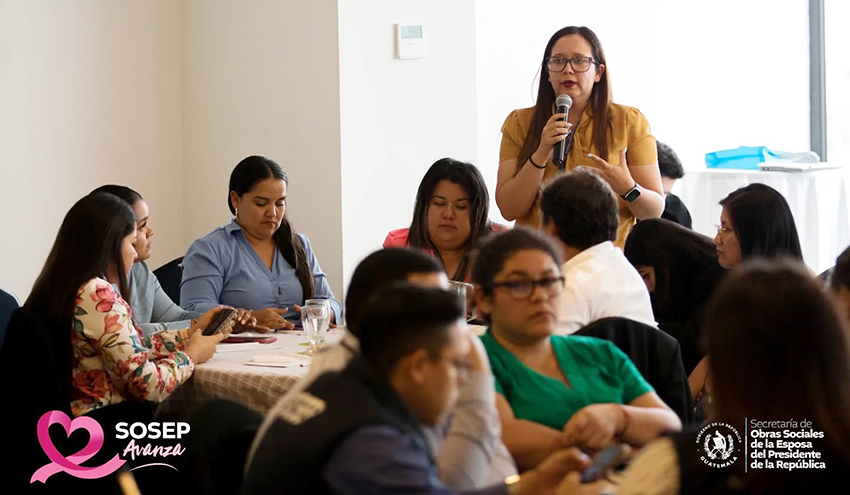
During 2025, two cohorts of the Diploma were carried out, with a total of 350 people enrolled:
• 200 participants in the second cohort
• 150 participants in the third cohort
The training was primarily aimed at Guatemalan public officials linked to areas of social protection, gender and care policies, in a first Cohort with the Secretariat of Social Works of the Wife of the President (SOSEP) and the Secretariat of Social Welfare (SBS); in a second Cohort with the Ministry of Social Development (MIDES), the Presidential Secretariat of Women (SEPREM), the National Institute of Statistics (INE), the General Secretariat of the Presidency, the Ministry of Labor (MINTRAB), institutions that make up the Strategic Care Table in Guatemala.
The Diploma aimed to strengthen technical and political tools for the design, implementation and consolidation of Integrated Care Systems, promoting training from perspectives of gender, human rights, intersectionality and interculturality.
The academic proposal addressed debates on gender inequalities and the social organization of care, integrated care systems, financing of public policies, and methodological tools for the analysis of care and the uses of time.
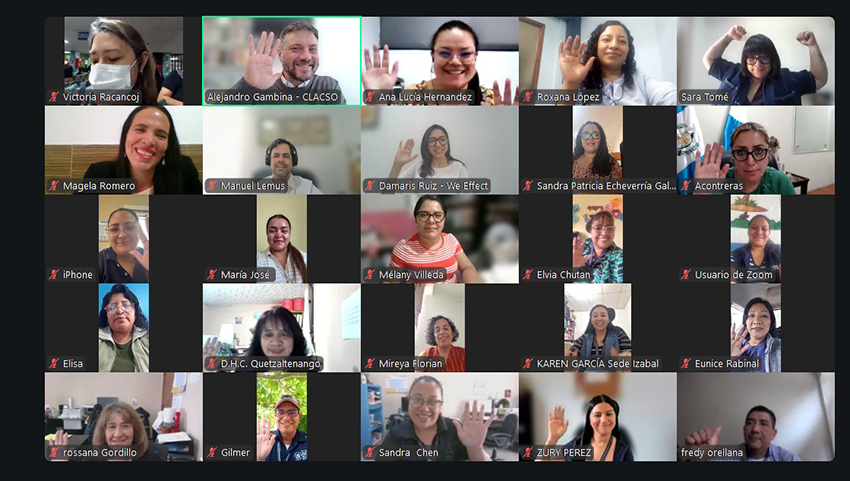
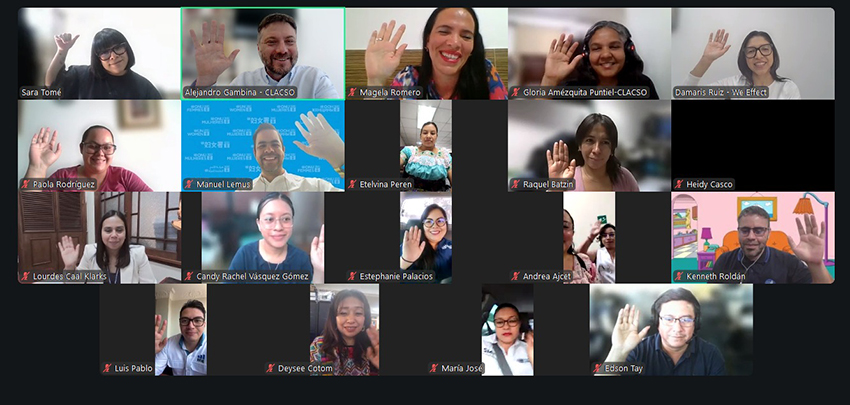
The closing ceremony brought together students from both cohorts and included the participation of Natalee Contreras , Undersecretary of Social Promotion at SOSEP. Representatives from We Effect, including Dámaris Ruiz and Sara Avilés , and from UN Women Guatemala, Nidya Pesántez and Eugenia Close , also participated.
Representing CLACSO were Gloria Amézquita Puntiel , Academic Director of the Council, and Alejandro Gambina , Director of Training at CLACSO.
During the meeting, Nidya Pesántez, representative of UN Women Guatemala, highlighted that the Diploma made it possible to “strengthen knowledge, share experiences and build a common vision to advance towards the care economy in Guatemala”, contributing “to reduce, redistribute, recognize, represent and reward unpaid care work”.
For her part, Dámaris Ruiz, director of We Effect Central America, emphasized that the initiative not only promoted training processes, but also “a regional dialogue” and the strengthening of capacities for the design and implementation of public care policies with a gender perspective and a regional focus.
From CLACSO, Glória Amézquita reaffirmed the institution's commitment to Central America and the Caribbean as priority regions, highlighting the importance of promoting educational proposals "that will build the public sphere and gender justice."
During the event, students participating in the Diploma program also shared their reflections. Ana Lucía Hernández emphasized that the training experience allowed them to “open their eyes to all the actions being taken in Latin America” and understand that caregiving “is not only provided at a micro level, in our homes, but must be carried out at a national level.” She also highlighted the importance of moving towards public policies that recognize the economic and social value of caregiving, stating that “the well-being of society depends on caregiving.”
Representing the teaching team was Magela Romero Almodóvar, a full professor at the University of Havana, coordinator of the Cuban Network of Studies on Care, and a teacher and tutor for the Diploma program.
Academic coordination was handled by Karina Batthyány and Valentina Perrotta , from the University of the Republic (Uruguay). The faculty included renowned specialists from Latin America and internationally, among them Joan Tronto, Laura Pautassi, Eleonor Faur, Corina Rodríguez Enríquez, Lucía Scuro, Nadya Araujo Guimarães, and Paola Mascheroni.
The 2025 editions of the Diploma consolidate a regional experience aimed at strengthening the care agenda in Central America and promoting public policies that recognize care as a right and as a central component of social well-being.

