
Letters to Lula
This collective project from the National University of General Sarmiento (UNGS) consists of a series of ten podcasts that revisit, through the voices of leading figures in culture, education, and politics, some of the more than 15 letters that the Brazilian people wrote to Lula after his unjust arrest on April 7, 2018. The project is also the direct result of extensive prior work called “Lines of Struggle” (“Linhas de Luta”), a website that involved the collaboration of historians from around the world, where some of the letters that arrived at the Lula Institute, the headquarters of the Workers' Party, and even the Curitiba prison itself can be read.
Visit the Letters for Lula website
As director of FM La Uni 91.7 (the UNGS radio station), Esdenka Sandoval highlighted the role of radio in dissemination. For Sandoval, the podcasts produced are a way to demonstrate “How are pain and hunger expressed in the sounds of injustice… We believe that radio is a cultural force that transforms reality. That’s why we want this material to be shared and circulated.”.
Access the FM La Uni 92.7 YouTube Channel
“We often ask ourselves what the function of a public university is, and I believe that the function of a public university is reflected, for example, in this work,” Gabriela Diker, rector of UNGS, stated her gratitude for the collaboration of the historians, the radio staff, and the public figures who lent their voices to the texts, including Liliana Herrero, Taty Almeida, Nicolás Trotta, Horacio González, and Estela de Carlotto, whose voices you can hear below.
The series “Letters to Lula” produced by FM La UNI can be listened to and downloaded on Spotify or Anchor.
Access the Letters for Lula Podcast Channel on Spotify
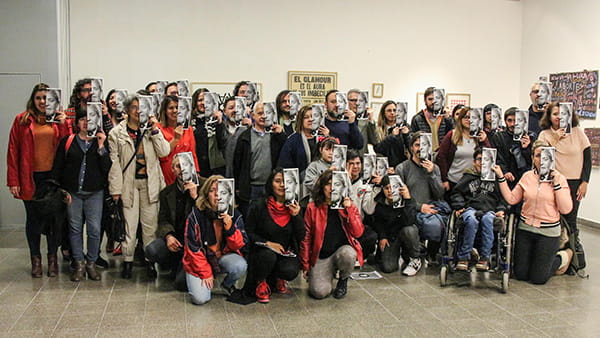
Letters to Lula are also faces, captured in a photographic series that superimposes the faces of women and men with half of Lula's face, seeking those who look to see themselves reflected in others. This work is by María José Malvares, author of the book "We Are All Miracles."
If you would like to receive more information about CLACSO's training programs:
[widget id=”custom_html-57″]
to our email lists.

