
Carolina Jiménez: “Building a different common sense”
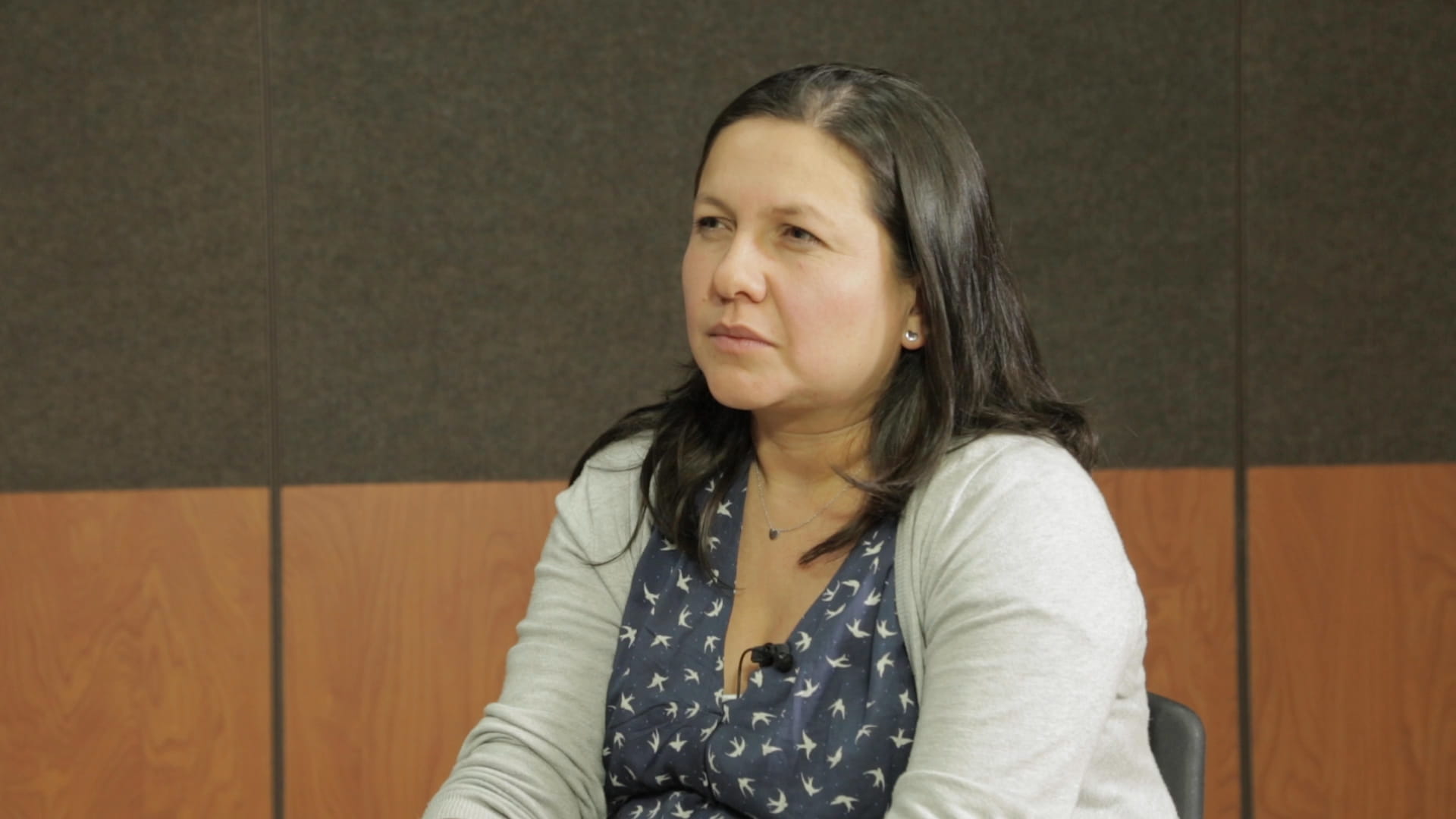
Carolina Jiménez, a member of the CLACSO Steering Committee for Colombia, Ecuador and Venezuela, and a member of the Department of Political Science at the National University of Colombia, participated in the meeting of the Executive Committee of the Latin American Council of Social Sciences in El Salvador in March 2019.
In an interview with Gustavo Lema for CLACSO Radio, she asked, “How much debate takes place in the struggle of ideas, how much progress have we made in building a different common sense that allows us to organize ourselves as a different society?”
What were the guidelines that were discussed in these CLACSO meetings?
It was a very productive meeting, and above all, a very important one given the current situation in our Americas. There is a deep concern on the part of the Executive Secretariat and the Steering Committee of CLACSO regarding this onslaught we are facing from governments that clearly intend to limit the rights and achievements of Latin American workers. Therefore, a very clear first point emerged: CLACSO's commitment to defending democracy and peace in our Americas, rejecting any militaristic or interventionist war that violates the sovereignty of the region's nation-states. The second point is that CLACSO understands the need for critical thinking and Latin American academia at this time. It is a highly committed academic community that has much to contribute to social processes, and there is a strong commitment to strengthening all the work that can be carried out by the different, diverse, and heterogeneous member centers that make up CLACSO.
In this sense, and speaking in relation to CLACSO, what do you think the role of the social sciences should be, especially in the logic of a turbulent world like the one we are living in today with a very strong loss of rights due to the arrival of very conservative right-wing governments?
I believe that critical thinking, Marxism, already plays a fundamental role. Antonio Gramsci very aptly defined the role of the intellectual, academia, and thought in helping to understand social dynamics. This moment requires an academic community that helps conceptualize and understand what this is—whether it's neo-fascism, post-fascism, or a neo-right. Because there are elements that may indeed carry a legacy of previous political processes, but there are also very new elements that we don't yet fully understand and that we need to understand, conceptualize, and reflect upon in order to contribute to the social struggle. Critical thinking must have an organic role in the struggle for democracy, in the struggle for peace, and in that sense, CLACSO takes on a very relevant place, because it is perhaps the most important forum in Latin America where the diverse critical perspectives of the region converge.
There's a topic that's sometimes almost taboo in progressive circles, and it has to do with the debate surrounding the role of progressivism in the rise of conservative governments. I'm referring to possible mistakes, missteps along the way, or misjudgments in anticipating what might be coming. What's your position on this?
There are quite a few diverse and heterogeneous interpretations, even adapted to national realities. In any case, I believe there is a common element worth considering in this scenario, and that is understanding the moment and development of capitalism. Therein lies a fundamental question: are these projects for a good life, for well-being, for more just societies, possible within a capitalist social order? I think that's a very important question. And the second element, which I think is very interesting and which various Latin American authors have been raising, is the extent to which cultural debate occurred within these projects. Because there has undeniably been a certain development of very positive social policies to address the high levels of social precarity, or, more importantly, the fundamental issue of how much debate takes place in the struggle of ideas, how much progress we make in constructing a different common sense that allows us to organize ourselves as a different society. I think there's a breaking point there, one could say, to varying degrees, a very significant flaw in these alternative experiences taking place in the region.
It seems that in some places, in some countries specifically based on what you were saying, the opportunities, the economic advantages, the access that sectors of the middle class had or that were consolidated during those periods, far from being considered close to the policies that were carried out by those governments within those states, was a lack or difficulty of political belonging, of access to the explanation of how those social policies were what allowed growth and change… How do you see that situation?
There are several elements at play here: it's very important in the analyses that have emerged in recent years regarding these experiences, and it's a critique that has been somewhat termed an exercise in "class conciliation." That is to say, there are many elements that should be considered: this alternative experience coincides with a significant moment in terms of commodity prices, a variable that must be taken into account, and this allowed for an influx of capital that, in any case, was not going to be sustainable in the medium and long term within a context of capitalist crisis. So, when you have a scenario of how Latin America and these governments played out in the context of the commodities boom, how do you try to reconcile classes with antagonistic interests? These are pacts that cannot be sustained indefinitely. When the crisis hits, that conciliation breaks down for those with greater leverage; the balance of power favors them more, and that's where we see that the sectors hardest hit by the crisis are indeed the popular sectors. When you haven't managed to build that battle of important ideas—that is, when that hegemonic struggle hasn't taken place—you have social sectors that can't quite grasp the explanation of the problem, and other alternatives emerge saying, "I'll solve this for you." I don't know if it's legitimate, but it can be understandable that in precarious conditions you might choose a political option that says, "I can solve this for you." Furthermore, in a context where the whole issue of fake news was so prevalent, it demonstrated the impossibility of alternative experiences providing conditions of stability. What they did in Brazil with the PT was monstrous, and in Colombia, what was done with the discourse of peace or war... So I think there are many elements that help explain the problem without trying to homogenize it, because I believe that national realities are quite diverse.
I'd like to ask you about the peace process in Colombia. I understand there are many complexities and many disagreements. What is the current situation and what stage is Colombia at?
"That's quite a broad and difficult question… I'd like to highlight something that's very important for us Colombians: the Peace Agreement constituted a very important turning point in recent political history. The signing of the Peace Agreement represented the recognition of the political nature of a conflict that may seem obvious but had been systematically ignored. And the other fundamental element was that the existing social order was the explanatory factor for the conflict. So, I think that's of very significant importance for Colombian society; it implied that a series of minimum reforms had to be made to move towards a somewhat more just society. There's a very interesting exercise that was carried out within the framework of the Havana negotiations, which was the Historical Commission on the Conflict: one of the commissioners says that there is a kind of counterinsurgency state in Colombia and that peace can help dismantle the counterinsurgency character of that state." The agreement was signed—a very important agreement for society—and a process began, it must be said, with a very responsible FARC, because I think it's fair to point out their compliance. They carried out their political reintegration, they formed the party, but on the institutional side, implementation began to be significantly blocked or proceeded at a very slow pace during the Santos administration; a very traumatic scenario under the Iván Duque administration. Perhaps the most difficult event right now is the six objections that Duque raised against the JEP's Statutory Law, because these objections have several aims: to limit the scope of the jurisdiction, especially for Peace, but also to create conditions of legal uncertainty for former combatants, and I think that sends a very strong message. And here I think we must point out what's really behind attacking the JEP, attacking the Truth Commission, is that the Comprehensive System of Truth, Justice, and Guarantees of Non-Repetition offers the possibility of knowing the truth about the war. We have been presented with a very limited narrative of the war, one that identifies only one responsible actor. The inclusion of different actors is essential to constructing a much more complex and reliable narrative, one that listens to the victims, acknowledges the complexities of the different regions, and demonstrates that the war has been the responsibility of a diverse range of actors. But above all, and this is deeply traumatic, a part of the economic process, the very model of capital accumulation, has been sustained by the exercise of violence. In other words, violence has been a privileged tool in Colombia, both for acquiring economic power and for effectively closing off the political sphere.
I was thinking about the logic of collective memories and constructions, and possibly part of what is happening in Colombia is building that collective memory with respect to what the armed conflict was…
"What you're saying is very important because it was precisely the second point I wanted to make: despite the complex situation—that is, there's a prevailing argument that we might be witnessing treachery toward the agreement—the transformative potential of the agreement has allowed important things to unfold, and I think it's crucial to say that. Having a new institutional framework that allows for the creation of the Special Jurisdiction for Peace is invaluable because it tells society: look, here we're going to create a mechanism that will allow us to construct a narrative. The political reintegration of the FARC is very important: the recognition of a political actor who was once armed as a political actor who will now participate in the democratic process under different conditions. This has also shaped the electoral process we went through in 2018, allowing for the formation of a Peace Caucus. In any case, it's a political force that doesn't have a majority, but it's important in terms of the debate in Congress." A movement for peace has allowed different actors to come together in defense of what we call—and what the Constitution recognizes—the right to peace. So, despite the difficulties, this is a new moment that is very important for Colombian society, which is why we have a deep commitment to peace. We are advocating for and demanding its implementation under the agreed-upon and effective conditions.
Finally, I'd like to ask you about the current situation of the Women's Movements in Colombia with respect to these struggles in all aspects, whether it be violence, care work, etc.
-The first thing I want to say is that I share your interpretation. I believe that the Women's Movement is now established as one of the most important political forces for understanding the processes of transformation in the region. What they have done is invaluable because it has been very difficult to wage this struggle. In the Colombian case, if one were to make a comparative analysis with the Argentine or Brazilian experiences, it is a movement that is in a process of consolidation, let's say it's on a path, also due to the very conditions we have faced: women have been the main victims of the war. So, the war even created conditions for a very interesting organizational process for women… In terms of rights, there has been a struggle by women to know the truth about where their children, their husbands, and their brothers are, because they have been victims of violence, especially of the absences caused by the war, and they have done fantastic work in this regard. It's very painful for the work done by the mothers of Soacha, victims of state crimes, whose children were disappeared and murdered by the Armed Forces. It's a regrettable situation, but it also gives them a lot of hope and vitality, because the work of women's victim organizations has been fantastic… And now the Movement is growing, and I think it's important to mention that university students have played a fundamental role. At my National University of Colombia, in the faculty where I am, there are a number of wonderful groups that have fought to get the institutions to recognize that there is a problem of gender-based violence here, and they are fostering a discussion and bringing it very strongly into the public sphere. So I think a very interesting dynamic and force is emerging among women, not only within feminist movements but also with other sectors joining the struggles. If you look at what's happening right now with the Indigenous Minga, it's perhaps one of the strongest organizations currently active in Colombia. The work of women is very important. What happened in the student movement—the young men and women broke up after about three months of mobilization—was exemplified by the women, some of whom were great leaders who went to the public squares and negotiated with the government. I also think we need to consider all these aspects of how women are playing a very important political role in other expressions of social movements.

