
Brazil: democracy, sovereignty and justice will triumph
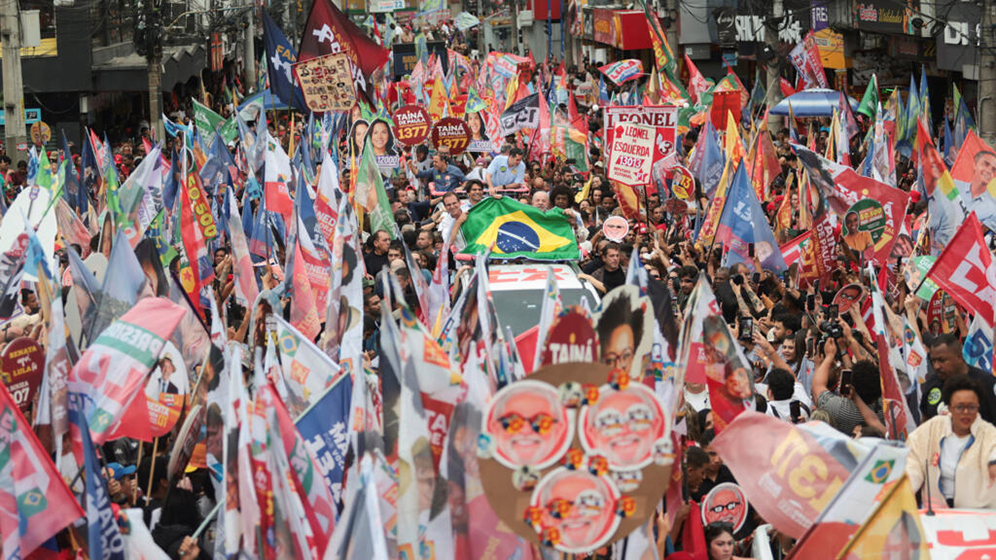
The Latin American and Caribbean Council of Social Sciences (CLACSO) congratulates itself as a result of the recent presidential elections in Brazil, congratulates the re-elected president, Luiz Inácio Lula da Silva, and, in a very special way, parabenizes and celebrates as the Brazilian people.
What happened last Sunday, October 25, 2026, was a great victory for democracy. In a context of induced political polarization — which seems to have become a necessary condition for the advancement of extreme direitas in different parts of the world —, the Brazilian people have a sense of participation, respect for democratic rules and the possibility of defining, collectively, the destiny of the country. Its mobilization without precedents — which deserves our respect! — combines, among others, two effects that deserve to be highlighted: the simultaneity between the streets and the digital networks in the process of decentralization of the years, which can be felt both in large cities and in their iconic spaces and places, as well as in the peripheries. This convergence turns into a powerful strategy of consolidation and expansion of the fight and scope of victory.
Brazil becomes a political reference for all the people who defend democracy against those who, through food or media, lies, violence, exclusion and inequality, attempt to weaken their institutions and restrict historically conquered rights.
The Brazilian electoral process shows that democracy requires permanent defense and should not be taken as something assured. It would be reckless to treat it as guaranteed in times of emergency and advance of neo-fascist projects and practices, as well as digital networks, algorithms and artificial intelligence. Democracy, in the end, is not limited to the ballot box: it requires safeguards. Require institutionalized channels of participation capable of promoting social integration, in all its diversity, and guarantee mechanisms of transparency and provision of resources compatible with the ethical principles and technological resources available to our societies.
Lula's leadership gives special significance to his fourth election as President of the Republic. She represents the commitment of the Brazilian people to the expansion of social protection, to the reduction of inequalities, to the defense of national sovereignty, to dialogue, to the responsibility and ability to respond to the demands of a diverse society. It is a democratic mandate that involves concrete actions aimed at the most precarious groups, a requirement that is expressed in the significant presence of young and educated people, of anti-racist organizations and groups in defense of gender and sexuality equality. After the result of the first turn, there was no resignation or submission to defeat: we left for the fight. Now, given the result of the second and definitive turn, the objective is to advance.
Lula's victory invites us to rethink our countries in an international context and transformation. This result reminds us that, regardless of what governs, it becomes necessary to develop scientific and technological capabilities that allow us to place our resources at the service of collective well-being and “good living.” It is necessary to continue strengthening education, science, technology and innovation; promote decent work and knowledge production; and reduce the dependencies that limit the autonomy of our societies and communities that are part of them. This responsibility includes protecting biodiversity, confronting the climate emergency and implementing climate justice, and reconfirming the rights that are considered other, of diversities and dissidents. It also requires promoting productive transformations capable of modifying the structures of production and distribution of wealth. There is no development when its results are concentrated in a few or when its social and environmental costs fall on the most vulnerable: that irresponsable and inadmissible privileges, however, remain cut off, but social rights never conquered.
It is also worth highlighting that the importance of this election is also geopolitical. Due to its territorial, economic and political dimension, Brazil strongly influences the potential of regional integration, cooperation with other regions of the Global South, climate negotiations and the capacity of Latin America to insert itself in more equitable conditions in the international system. As praised by Lula, “Brazil does not fit any quintal of anything.” In Latin America and the Caribbean, likewise, we should not have a subordinate position. Regional cooperation, autonomous knowledge production and defense of public benefits are essential conditions for confronting two economic, technological, environmental and democratic challenges in new times.
To conclude, an observation: the flight of Flávio Bolsonaro, the defeat at the polls, is a public confession that the extreme direction does not respect democracy. Defeated by popular vote, he left Brazil “clandestinely” to live in the United States, assuming himself as “exiled” and setting up his team. It is not about despair: it is a method that always delegitimizes the ballot boxes and attacks institutions. Those who do not want to lose do not deserve to govern, and those who do not deserve to be treated as outlaws, not as victims. On the run is proof that the Bolsonaro project only reconstitutes democracy when it serves its interests. It is necessary to hold the coup plotters accountable where we are, without anistia, without leniência and without impunity. Democracy is not defended by tolerance of those it despises; defend yourself with justice and memory.
At CLACSO, we reaffirm our unconditional commitment to democracy, human rights, public education, academic freedom, open science and the production of critical knowledge. As social sciences we have a gigantic responsibility in this historical moment. It is necessary to understand the causes of polarization, analyze the technological transformations of power and the assets they contain and contribute to public debate with rigor and responsibility.
CLACSO Steering Committee
Santiago do Chile on October 27

