
Brazil, the triumph of democracy
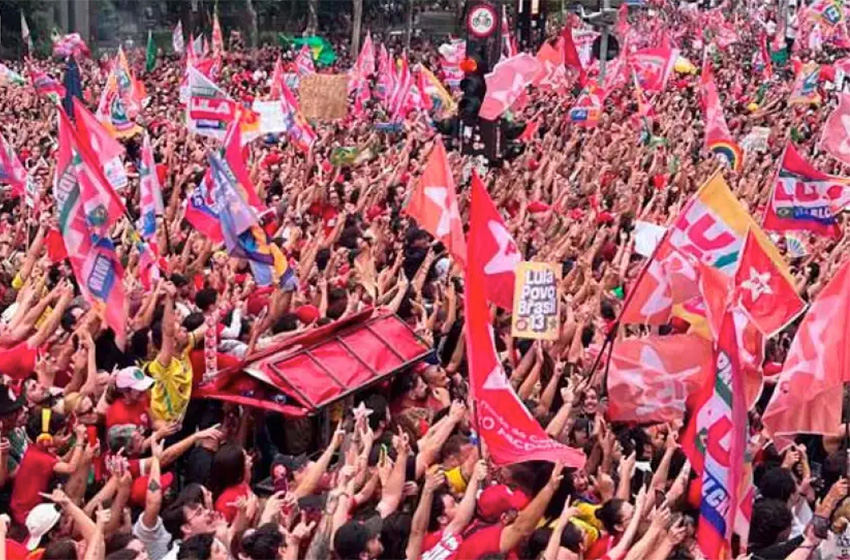
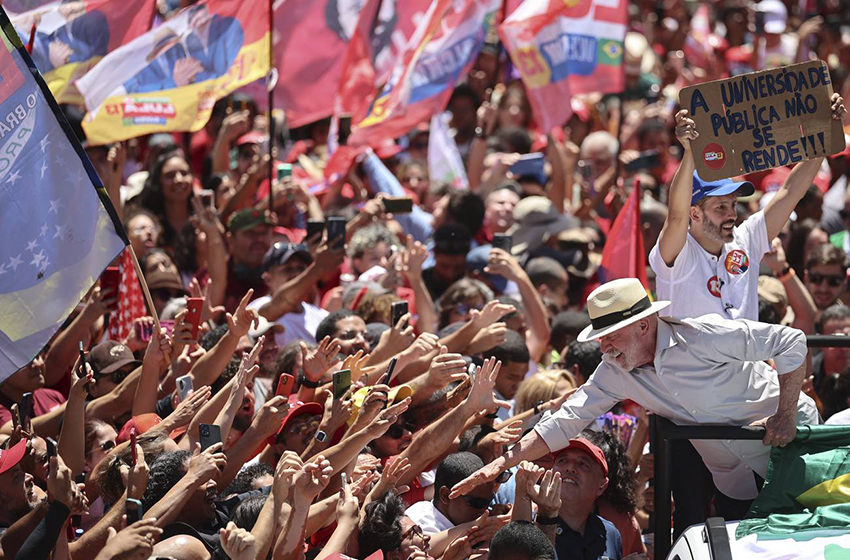
The victory of Luiz Inácio Lula da Silva in Brazil on Sunday, October 25, represents a strategic triumph for democracy, social justice, and popular sovereignty against the advance of neoliberal models and the authoritarian far right. It signifies the continuity of a state project committed to eradicating hunger and inequality, protecting the environment and the Amazon rainforest, and guaranteeing fundamental rights in a country marked by profound social and political polarization.
At the regional level and for the BRICS, this victory maintains Brazil as a central and indispensable actor to reactivate Latin American and Caribbean integration and that of the Global South from a multipolar, solidarity-based and sovereign approach.
CLACSO applauds the feat at the polls of the Brazilian people who redoubled their activism after a first round of elections favorable to the far-right proposal and for having raised high the banner of sovereignty against the foreign interference that has been causing so much damage to the democracies of Our America.
Pre-election analyses of CLACSO Network members ahead of the second round of elections on Sunday, October 25.
Brazil 2026 in debate: Social gains, regressive threats and dispute over meaning
Pablo Vommaro , executive director of CLACSO, analyzes the political, social, and geopolitical implications of the presidential elections in Brazil. With nearly 160 million citizens eligible to vote in a polarized contest between Luiz Inácio Lula da Silva and Flávio Bolsonaro (the Liberal Party candidate and son of Jair Bolsonaro), election day transcends local borders to become a defining moment in the balance of power across the entire region.
Vommaro openly denounces the interference and interventionist maneuvers promoted by the US administration of Donald Trump, along with figures like Marco Rubio, aimed at influencing the election results. Among these direct pressures, the executive director of CLACSO cites the arbitrary application of sanctions and trade barriers—such as the imposition of tariffs on Brazilian exports—the attacks and harassment against the public payments system Pix to favor corporate financial interests, and the constant legislative and judicial threats. In the face of these aggressions, he highlights strategic intelligence analyses that position Brazil as the nation with the greatest degree of sovereignty and capacity for autonomous counterweight to Washington's tutelage.
On the geopolitical chessboard, Vommaro emphasizes Brazil's role as one of the world's ten largest economies and the second-largest global holder of rare earth elements. In a subcontinent increasingly shaped by authoritarian and regressive projects, the continuity of the democratic project represents a crucial bulwark against a revival of the Monroe Doctrine and the region's subordination as a "backyard." He also underscores Lula's diplomatic trajectory in uniting the Global South, consolidating the BRICS+, revitalizing Mercosur and CELAC, and his peacemaking role in border disputes such as those between Guyana and Venezuela.
In evaluating the government's performance, Vommaro details the structural achievements of the last four years: the reduction of 14 million people living in poverty, Brazil's historic removal from the FAO's hunger map, the strengthening of the Unified Health System (SUS), the progressive tax reform that reduced taxes for workers by taxing large corporations, and the drastic halt to deforestation in the Amazon to regain leadership in climate sustainability.
In contrast, it warns against the far-right platform expressed in the programmatic document "For Brazil to Overcome Backwardness," which deepens the neoliberal model inherited from Jair Bolsonaro and mirrors the austerity and concentration policies of Javier Milei. If implemented, this scheme would entail dismantling historical gains through freezing the minimum wage, cutting allowances for senior citizens and people with disabilities, restricting programs like Bolsa Família, weakening indigenous and racial equity policies, and handing over natural resources and energy sovereignty to concentrated capital.
Faced with the paradox of a close electoral contest despite the overwhelming socioeconomic indicators, the CLACSO representative explains how the machinery of mass disinformation operates, how the agenda of violence and insecurity is exploited, and how an affective and emotional polarization is constructed that distorts rational debate. In this sense, he calls on grassroots movements and the social sciences to strengthen the struggle for meaning in order to engage the vast majority.
Finally, Vommaro presents the CLACSO open-access book: “ The Country in Debate: Brazil 2026. Between the Internal Dilemma and the New World Order ,” coordinated by Wagner Iglecias . The work compiles diverse interviews with leading figures in Brazilian culture, politics, and academia to offer a rigorous assessment of the country's last two decades—from the PT's first terms in office, the parliamentary coup, and lawfare, to contemporary challenges and emancipatory horizons—consolidating an indispensable tool against media manipulation.
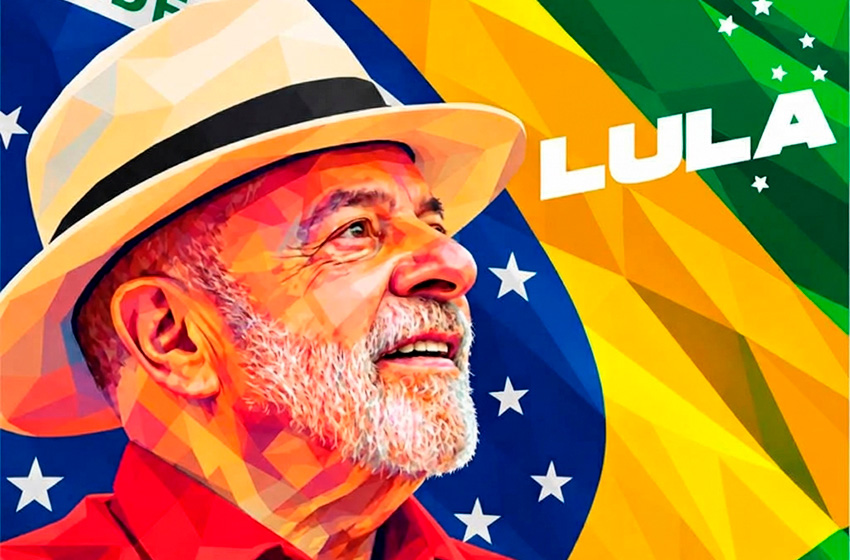
Latin American and Caribbean Manifesto in support of Lula and the Brazilian people
It received more than 5.000 signatures of support.
What's at stake isn't just who will govern Brazil for the next four years. It's democracy. It's social justice. It's hard-won rights. It's environmental protection. It's sovereignty over natural resources. It's Brazil's place in Latin America and the world…
For all these reasons, we cannot remain indifferent to the possibility that Flávio Bolsonaro might win the election. His candidacy is inextricably linked to his family's political history and the government of his father, Jair Bolsonaro, who upon leaving the presidency left behind a legacy of polarization, institutional and economic decline, and social conflict unlike anything seen in recent memory.
"An unequal struggle": Disinformation, the rise of the far right, and popular resistance in Brazil.
Silvia Borelli , researcher and representative of the CLACSO Steering Committee for Brazil, analyzes the political, social, and regional crossroads the country faces in the lead-up to the elections. In an international context marked by the rise of the far right and the conservative resurgence on the continent, the Brazilian election is positioned as a crucial point: a bastion of popular resistance or a factor in validating the reactionary offensive in Latin America and the Caribbean.
Borelli warns of the implications of the project led by Flávio Bolsonaro, characterized by its open subordination to US interests, the adoption of Nayib Bukele's punitive and security-focused model, and the direct intervention of far-right figures such as Donald Trump and Javier Milei. This scenario, he emphasizes, represents a direct threat to the social sciences, the production of critical knowledge, and university autonomy, repeating the dismantling of public policies and integration experienced during Jair Bolsonaro's administration.
Based on her research on youth, the specialist debunks the narratives that attempt to blame younger generations for the rise of the far right. She explains that the 16-34 age group—along with women and older adults—accounts for nearly 40% of undecided voters. Far from apathetic, this sector expresses profound discontent with traditional forms of party representation, affected by unemployment and partly seduced by the promises of entrepreneurship, but also strongly mobilized by demands for climate justice, anti-racist struggles, and dissident movements calling for new horizontal practices.
Finally, the interview focuses on the fierce asymmetry that defines the battle of narratives. On one side, there is the traditional media concentration that skews the public agenda; on the other, the deployment of digital militias that operate with artificial intelligence, fake news, and religious fundamentalism, articulating hundreds of irregular accounts to distort the electoral contest. Faced with this algorithmic ecosystem, Borelli reaffirms the strategic centrality of activism in the streets, community communication, and the unwavering defense of the local community.
Why does the far right appeal to the majority?
Beto Vasques , director of Institutional Relations at the Democracy in Check Institute and coordinator of the Public Opinion Laboratory at the School of Sociology and Politics of São Paulo (FESP-SP), breaks down the complex political scenario facing Brazil and its impact on all of Latin America.
During the interview, Vasques analyzes the paradox of Lula da Silva's government, which boasts record-breaking economic and employment indicators, contrasted with an extreme right wing that, even with its leading figures under investigation and its fundamental problems unresolved, maintains a competitive electoral base and strong popular support. The expert warns about the alliance between autocratic leaders and digital magnates, the use of disinformation campaigns, and the regional coordination of geopolitical interference strategies.
It also delves into the challenges of contemporary progressivism: the urgency of moving beyond outdated discourses, undertaking radical reform in sensitive areas such as citizen security and judicial corruption, and challenging common sense through everyday empathy and new ways of building collective belonging.
"The blue wave is not genuine, it's manufactured": elections in Brazil, disinformation and the future of Latin America
Monica Valente , director of the Perseu Abramo Foundation, executive secretary of the São Paulo Forum and a key figure in Brazilian politics, analyzes the political scenario in depth on the eve of elections that are decisive for Brazil and all of Latin America and the Caribbean.
Valente delves into the structural conflict between popular sovereignty and authoritarian subordination. He explains how the far right has mutated following the disqualification and conviction of Jair Bolsonaro and high-ranking military officers, as well as the new and sophisticated algorithmic disinformation schemes (colabs) operating in the shadows of regulatory frameworks. He also examines colonial interests in rare earth elements and critical minerals, debunks the supposed spontaneity of the "blue wave" in the region, and advocates for energy and economic integration through the BRICS as the essential path toward sovereign and multipolar development.
An unavoidable conversation to understand what is at stake in the giant of the South and its resonances in the democratic struggles of Our America.
Lula vs. Bolsonaroism: Why do good economic data not guarantee the election?
What is really in dispute in the Brazilian presidential elections and what is the impact of this result for the future of Latin America and the Caribbean?
In this special edition of CLACSO TV, we spoke with Josué Medeiros – political scientist, professor at the Federal University of Rio de Janeiro (UFRJ), director of the Lauro Campos Foundation and Marielle Franco and coordinator of the Eleitoral Political Observatory (OPEL).
Medeiros analyzes the persistence of political polarization between the democratic camp and the extreme direction represented by the candidacy of Flávio Bolsonaro, the limits imposed by the institutional chaos and the complex dynamics of the “diffuse anti-system” – which explains why the inflation remains and the growth of the business does not automatically convert into lost votes for the government.
A deep conversation about the role of the National Congress, the progressive responses to public security and combating feminicides, along with the crucial geopolitical dilemma: the preservation of a sovereign Brazil, integrated into Mercosul and the BRICS, facing the risk of subordination to the security directors of the United States.
Artificial Intelligence, Social Networks and Misinformation: The Challenges of Regulation in Brazil
How does a country with more than 200 million inhabitants face the growing impact of artificial intelligence, platform algorithms and electoral manipulation? In this interview, we spoke with Vinicius Padrão , lawyer, researcher at the Institute of Technology and Society of Rio de Janeiro (ITS Rio) and professor for the UERJ, about the regulatory and democratic moment experienced in Brazil.
Padrão analyzes the singularity of a gigantic consumer market of data where the inequality of access - accentuated by the practices of *zero-rating* - faces how a large portion of the population is focused on messaging applications without an internet franchise to check the veracity of deepfakes and fake news.
Além disso, the researcher debate the role of the Supreme Court of the Federal and the Electoral Justice in not confronting technological abuses, the application of ECA Digital in the protection of children and adolescents and the importance of adopting a regulation based on constitutional principles and values, inspired by the Civil Framework of the Internet, avoiding excessively detailed regulations that could suffocate innovation in the country.
What's at stake in a polarized Brazil? – InfoCLACSO September 30
The second round of elections is taking place against a backdrop of Latin American oligarchy aligning itself with the United States, largely due to Trump's interference in the elections held during his second term in various countries of the region. This time, he has already announced his preference for Flávio Bolsonaro, the son of Jair Bolsonaro, who was convicted for attempting a coup in January 2023.
The analysis of:
-Pablo Vommaro, Executive Director of CLACSO
-Silvia Borelli, member of the CLACSO Steering Committee for Brazil
–Monica Valente, Director of the Perseu Abramo Foundation, Executive Secretary of the São Paulo Forum and member of the Lula 2026 Campaign Coordination
-Luyara Franco, Marielle Franco Institute, Brazil
-Beto Vasques, Director of Institutional Relations at the Instituto Democracia em Xeque and Coordinator of the Public Opinion Laboratory at the School of Sociology and Politics of São Paulo
-Daniela Silva, Executive Director of CTRL+Z Brazil
–Josué Medeiros, Brazilian political scientist, professor at the Federal University of Rio de Janeiro, coordinator of the Political and Electoral Observatory and Director of Training and Research at the Marielle Franco Foundation
-Matías Bianchi, President of the Argentine Association of Evaluation and coordinator of the +Digital project in Southern Affairs
-Oliver Kornblihtt, Midia Ninja, an independent and self-managed media outlet formed by young Brazilian activists starting in 2011 as an alternative to the traditional press
–Edna Castro, Professor Emerita of the Federal University of Pará. Interviewed in the framework of the XXXV Latin American Congress of Sociology in Rio de Janeiro “Between polycrisis and alternatives: horizons of Latin American critical sociology”.

