
"Ensuring the sustainability of science and books is a public mission."
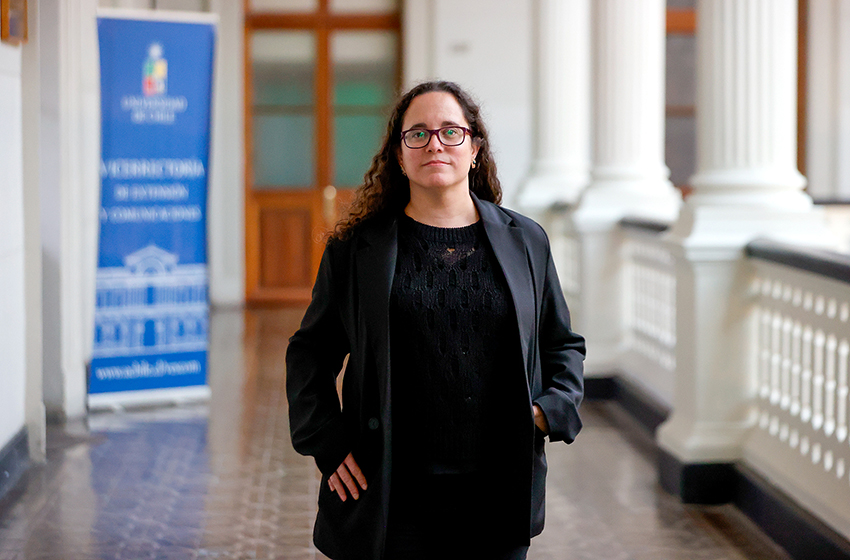
Fernanda Pampín , editorial director of the Latin American Council of Social Sciences (CLACSO) , participated in the International Seminar " Challenges of university publishing from public institutions ", a meeting that brought together representatives of universities and cultural organizations from Latin America to discuss the role of university publishing in the circulation of knowledge and the strengthening of the cultural and democratic life of the region.
The seminar , held at the main building of the University of Chile , facilitated a shared understanding of how public institutions can better manage their intellectual output in the face of the hegemony of the commercial publishing market. In this context, the meeting served as a forum for exchanging management experiences and defining strategies.
The international delegation included Fernanda Pampín , PhD in Literature and graduate in Letters from the University of Buenos Aires (UBA) and editorial director of CLACSO, who participated in Panel 1: The Role and Mission of University Publishing from Public Institutions. During her presentation, the editor addressed the role of academic publishers as sovereign platforms that must ensure a more inclusive and equitable circulation of knowledge.
In this interview given during his time at the University of Chile, Pampín delves into the need to consolidate regional cooperation networks, advocating for university publishing as a "channel of cultural extension that connects the university with society and territories."
— What does it mean for you to visit Chile and, specifically, a public, state-run institution committed to social development like the University of Chile?
This institutional visit is extremely significant, as regional integration, cooperation, and the strengthening of inter-institutional ties are fundamental pillars of our work. We are currently implementing a framework agreement signed by our executive director and the Rector of the University of Chile, which will allow us to work together in strategic areas such as postgraduate training, research, publications, and outreach. There are numerous projects on the agenda, and there is tremendous enthusiasm for bringing these initiatives to fruition.
— Why are strategic alliances, such as the one established between CLACSO and the University of Chile, so fundamental?
Our alliance is highly significant because the University of Chile has the largest number of member centers associated with our network of any institution in the country. CLACSO is a network that brings together nearly a thousand educational and research centers in 56 countries, primarily in Latin America and the Caribbean. Having such a strong presence at this university motivates us to expand our collaborative opportunities and strengthen what we can build together.
— What is the relevance of establishing formal links with public institutions in the region?
At CLACSO, we are promoting a large-scale institutional project called Platforms for Social Dialogue. Its central objective is to build strong bridges between academia, public policy design, state institutions, and social movements. We firmly believe in critical and transformative thinking, and we understand that this can only be generated through the articulation and unity of all these social actors.
— What work is currently a priority in terms of publications from CLACSO?
We believe that university presses, and CLACSO as a network of networks, fulfill a strategic function that the private publishing market cannot or will not assume. This function is to legitimize knowledge situated and produced in Latin America and the Caribbean, in both Spanish and Portuguese. We are interested in establishing our languages as languages of science in the face of the Anglo-Saxon dominance of the Global North. This is related to the democratization of knowledge and bibliodiversity, rescuing production in fields that are often underrepresented in commercial circuits, such as the humanities, the arts, and the social sciences.
— What is the point and relevance of public universities deciding to edit and publish books?
University textbooks are essential tools that act as a counterweight to the dynamics of the private publishing market. They validate the region's intellectual output, which in turn opens a necessary discussion about scientific evaluation systems: we require metrics that are relevant and appropriate to our realities. Likewise, public publishing functions as a channel for cultural outreach, connecting the university with society and local communities. At CLACSO, we have been pioneers in open access for over three decades because we understand that books must be accessible, address national issues, and offer critical editions, not just those that serve the interests of the Global North.
— How can university publishing configure its catalog to actively influence contemporary social and cultural discussions?
To influence and transform reality through critical thinking, the first step is ensuring that books reach the public. The key tool for achieving this is advocating for open access diamond; that is, maintaining publishing policies that charge neither for publishing nor for reading. To make this viable, it is necessary to promote co-publishing among various universities to share costs, develop their own infrastructure, and ensure the presence of catalogs in interoperable repositories, coordinating the work of publishers with library systems.
The major challenge today is financial sustainability, especially in a complex regional context marked by severe budget cuts in public education that affect teachers' salaries, research, and scholarships. Given their dependence on budgets vulnerable to political and economic cycles, ensuring the sustainability of science and books is a public responsibility. Forums like this seminar are essential for developing collective strategies for regional collaboration.
Furthermore, we must transform academic evaluation systems that currently favor publications in English and international commercial circuits. Through the Latin American Forum on Scientific Evaluation (FOLEC) , created by CLACSO in 2019, we are working directly with public and institutional bodies in the region and Ibero-America to develop alternative criteria that recognize and incentivize the social, political, and pedagogical impact of local production.
SEE NOTE AT UNIVERSITY OF CHILE
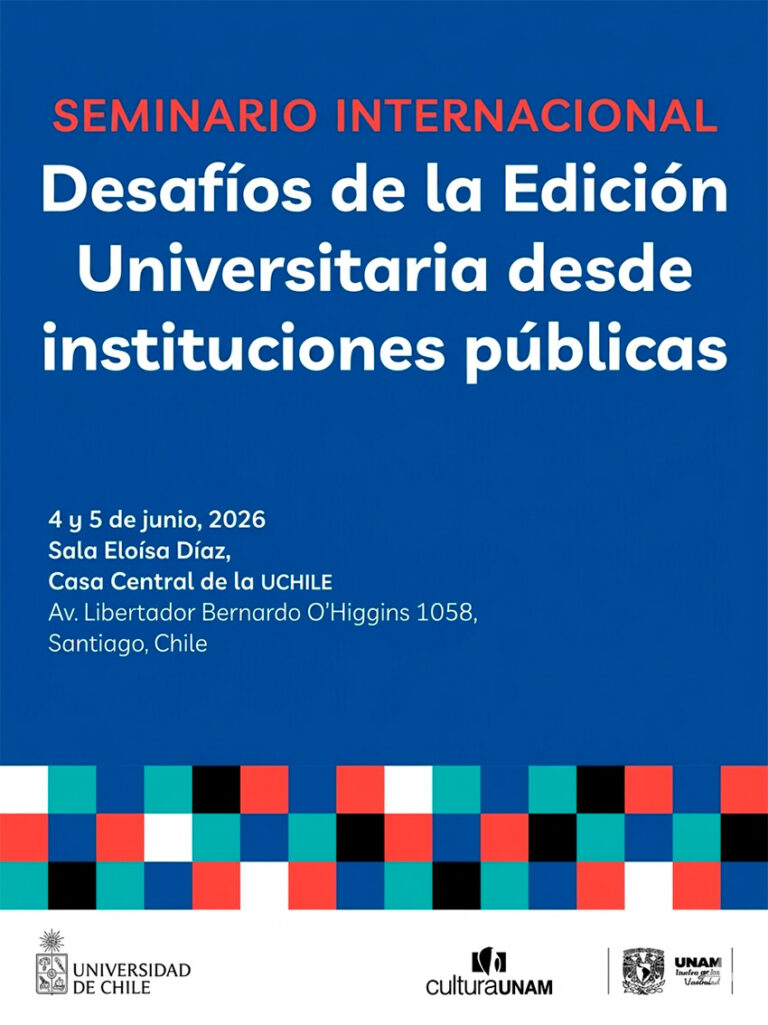
CLACSO at the University Publishing Seminar

