
Argentina mobilized in defense of education and health
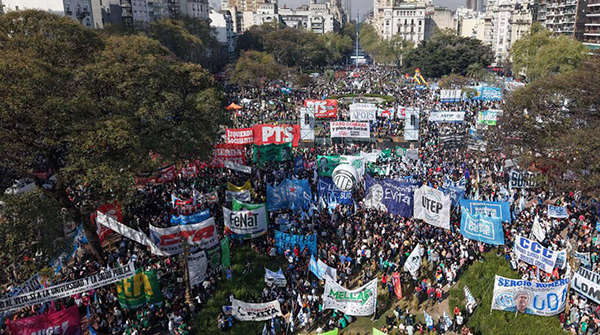
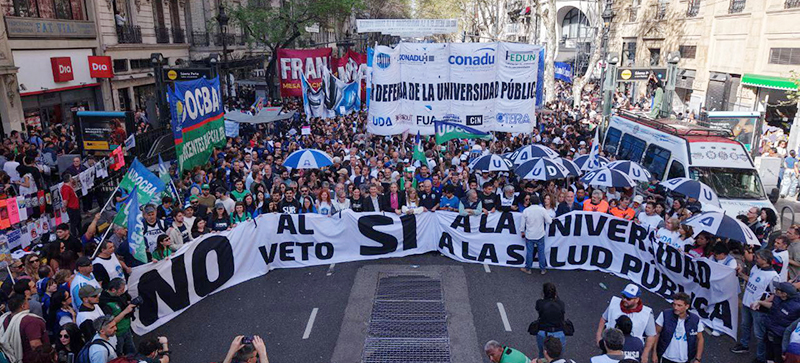
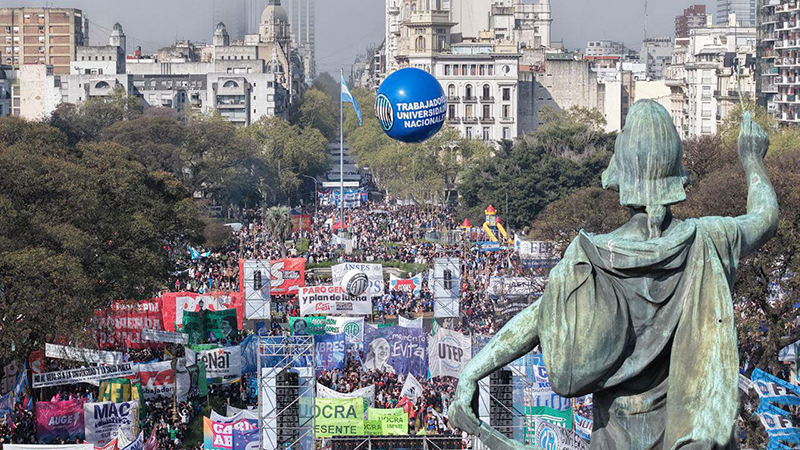
The Argentine capital and the country's main cities also saw massive demonstrations on Wednesday, September 17, coinciding with the session in the Chamber of Deputies that rejected President Javier Milei's vetoes of the Pediatric Emergency and University Funding laws.
The street protests brought together different sectors, with a marked youth presence, who joined forces to confront once again the recessionary policies imposed by the neoliberal government since its assumption of power on December 10, 2023, with cuts to public education and health, to retirement benefits, to research and science, particularly the social sciences and the humanities, etc., increasing inequalities and poverty in accordance with the demands of the International Monetary Fund.
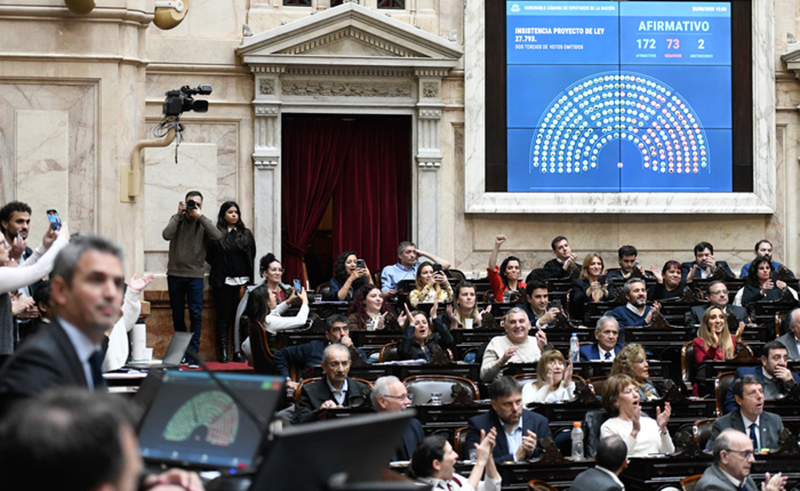
The opposition in the lower house needed a two-thirds majority to pass the approved laws and override Milei's vetoes. The pediatric emergency bill passed with 181 votes in favor, 60 against, and 1 abstention, while the university funding bill passed with 174 votes in favor, 67 against, and 2 abstentions. The decisions will now go to the Senate, where the ruling party does not hold a majority.
The two laws vetoed by Milei had been approved last August and expanded public budgets allocated to the 52 public universities and the country's main pediatric hospital, the Garrahan. The pediatric emergency law also grants extraordinary funds to underfunded public hospitals and stipulates a salary adjustment for healthcare workers based on inflation. Meanwhile, the university funding law updates university operating expenses according to the Price Index and improves the salaries of faculty and support staff. The Executive's veto reignited protests at the state-funded national universities, where nearly two million people study.
According to a report prepared by the Ibero-American Center for Research in Science, Technology and Innovation and the Federation of University Teachers, investment in Argentine public universities fell by 22,1% in 2024 and is projected to decline by an additional 8,6% in real terms by 2025. As a result, the university budget has fallen to represent 0,5% of GDP this year, its lowest level since 2005.
CLACSO supports the demands for a larger budget and investment in public education and health, denouncing the ultraliberal and far-right policies that take from those who have the least and need the most for the benefit of a financial oligarchy favored by rulers who sustain themselves through anti-democratic and cruel measures and through repressive forces, as has been happening in Milei's Argentina.

