
Argentina, the tenacious memory
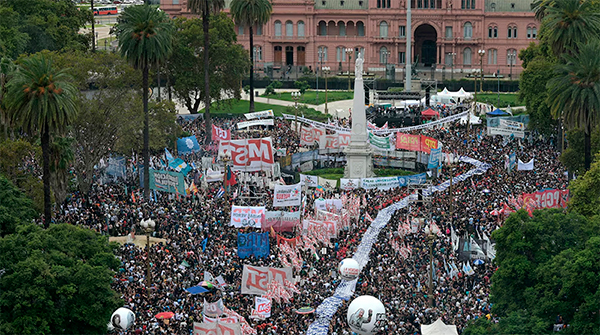

Fifteen months after the arrival in Argentina of a denialist government that vindicates the civic-military dictatorship of 1976 to 1983, the response was in the streets.

In several cities across the country, with the epicenter in Buenos Aires, tens of thousands of protesters once again raised high the banners of memory, truth and justice, freedom of expression and the defense of democracy against the fascist-style attacks of some governments in the region, among which the government of Javier Milei and Victoria Villarruel in Argentina stands out.

The broad participation of people of different ages, with a marked presence of young people, took place in a context of cuts to public freedoms and the right to demonstrate, which was evidenced, with more brutality than on other occasions, in the march of pensioners in front of the National Congress on Wednesday, March 12, who were met with rubber bullets and tear gas, with a toll of serious injuries and more than 100 detainees in a framework of deployment of repressive forces never before seen since the return to democracy in December 1983.

The 30.000 disappeared detainees of the dictatorship were more present than ever in the posters and slogans.

At the main event, Estela de Carlotto, president of the Grandmothers of Plaza de Mayo association, demanded that the State continue to guarantee “the restitution of the identity of the grandchildren. We are fighting to restore the identity of the hundreds of babies stolen by the dictatorship. Appropriation is enforced disappearance, and until their true identity is known, it continues to be committed,” she asserted. She concluded: “We need all of society to find them all. It is never too late.”


If you would like to receive more information about CLACSO's training programs:
[widget id=”custom_html-57″]
to our email lists.

