
Regarding the situation of our brother nation of Peru
The neoliberal shift of Peruvian social democracy in the 1980s created a serious crisis of political representation for Peru's ruling classes. The party that had historically represented them lost its capacity to mediate with the popular sectors and to facilitate class conciliation. Fujimorism was an authoritarian attempt at social control that built a significant social base, but it failed to represent all the interests of landowners and businesspeople. Subsequently, all efforts to build a stable alternative political instrument that represents the interests of the wealthy, has mass influence, and counters the adventurism of Fujimorism have failed. Today, Fujimorism is the extreme right-wing movement absolutely opposed to the interests of the people.
Faced with this crisis of representation, the Peruvian bourgeoisie has transformed parliament into an arena for precarious balances to sustain the neoliberal agenda. This, however, has not prevented internal disputes, leading to the instability that has characterized seven presidents in recent years. All of this has occurred with insensitivity to the needs of the citizenry.
In that context, a teacher from a humble background came to embody the aspirations for social justice, being elected president of the country. Despite the errors and omissions he committed, Pedro Castillo was removed from his position as constitutional president as a result of a maneuver by the Peruvian right wing, with the approval of the White House.
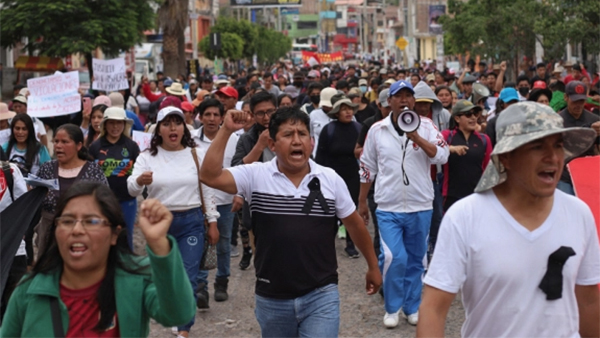
Unlike other political moments, the removal of Pedro Castillo has generated widespread rejection among the population and sparked a cycle of mobilizations that reflect the exhaustion of the parliamentary balance system implemented over the last decade. The public demand for the dissolution of Congress, early elections, a constituent assembly, and the release of Pedro Castillo represents a turning point, demonstrating the need to defend democracy as a political system that serves the interests of the majority. The response of the illegitimate government has been repression and murder; we condemn these acts and urge that those responsible, both directly and indirectly, for these human rights violations be punished.
The CLACSO Venezuela centers believe it is important that the Latin American community, its academia, researchers and intellectuals, respecting the sovereignty of the greater homeland, speak out clearly, supporting the aspirations of the humble who cry out in the streets for a government at the service of its people.
December 19th 2022
CLACSO Venezuela Centers
If you would like to receive more information about CLACSO's training programs:
[widget id=”custom_html-57″]
to our email lists.

