
Amazon in flames
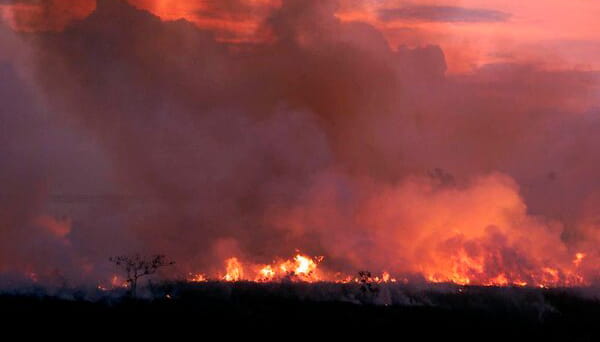
The increase in fires in the Amazon is the result of the Bolsonaro government's criminal policy of environmental destruction that even motivated the creation of Day of Fire by large landowners, timber owners and agribusiness entrepreneurs.
2019 will be known as the year of destruction. The multiplication of the number of fires in the Amazon forest has had an impact on a global scale, provoking the reaction of governments and society organizations in various countries.
The smoke of the burned-out flames engulfed the cities of the Southeast of Brazil, darkening the metropolis of São Paulo. A large part of the urban areas of the Amazon have been affected by this gigantic environmental crime.
The expansion of agricultural and livestock areas involves the sacrifice of numerous species of fauna and flora of the Amazon region to benefit agribusiness profits, through the increase in the production of commodities destined for the markets of North America, Europe, the Middle East, China and Japan.
With greater participation of the financial system in agricultural and livestock systems, this complex of systems called agribusiness has developed and expanded its devastating power, turning into two most predatory models of neoliberal capitalism.
In Brazil, the alliance between large landowners and agribusiness entrepreneurs expanded their power with the election of the Bolsonaro government and began to treat environmental issues in an irresponsible, mischievous and criminal manner, based on the interests of capitalist corporations.
Latifundiários use burns to expand the agricultural frontier, increase the stock of land for speculation and intensify land concentration. This predatory process addresses the ambitions of mineral and agricultural neoextrativism.
The international reaction also demonstrates the hegemonic power of the alliance of landowners and agribusiness entrepreneurs that dominates both conservative and progressive governments. This power determines the megaprojects of the agricultural and mineral development model, which can be more or less offensive in accordance with the political tendency of the government.
The Bolsonaro government with its neoliberal policy opened all the possibilities of exploring natural resources to agribusiness, landowners and mining companies. Approved the use of dozens of types of pesticides, and encouraged the exploration of indigenous, Camponese and quilombola territories.
The Minister of the Environment affirmed that Amazon needs “capitalist solutions” that will provide nearly twenty thousand people living in the region. He criticizes the creation of conservation areas and considers restrictive environmental laws. In fact, it will not be the Bolsonaro government that comes up with solutions to reverse the increase in deforestation in the Amazon.
The Bolsonaro government ignores the concepts of development of indigenous and rural people who understand and respect nature and society and whose priority is to ensure decent living conditions for the population and promote the preservation of the Amazon.
Bernardo Mançano Fernandes – Paulista State University (UNESP) and Mônica Dias Martins – Universidade Estadual do Ceará (UECE) are representatives of Brazil in the Board of Directors of the Latin American Council of Social Sciences (CLACSO)

AMAZON IN FLAMES
The increase in forest fires in the Amazon is the result of the criminal policy of environmental destruction of the Jair Bolsonaro government, which also led to the creation of a Day of Fires by landowners, loggers and agribusiness entrepreneurs.
2019 will be known as the year of destruction. The surge in fires in the Amazon rainforest has had a global impact, prompting a response from governments and civil society organizations in several countries.
Smoke from the fires reached cities in southeastern Brazil, darkening the metropolis of São Paulo. Most urban areas in the Amazon have been affected by this massive environmental disaster.
The expansion of agricultural and livestock areas has sacrificed countless species of fauna and flora in the Amazon region to benefit agribusiness profits by increasing the production of commodities for markets in North America, Europe, the Middle East, China, and Japan.
With the increased involvement of the financial system in agricultural systems, this complex of systems called agribusiness has improved and expanded its devastating power, making it one of the most predatory models of neoliberal capitalism.
In Brazil, the alliance of landowners and agribusiness entrepreneurs expanded its power with the election of the Bolsonaro government and began to treat environmental issues in an irresponsible, petty, and criminal manner, based on the interests of capitalist corporations.
Landowners use fires to expand the agricultural frontier, increase their land reserves for speculation, and intensify land concentration. This predatory process serves the ambitions of neo-extractivism in mineral and agricultural production.
The international reaction to the fires also demonstrates the hegemonic power of the alliance of landowners and agribusinesses that dominates both conservative and progressive governments. This power determines the megaprojects of the agricultural and mining development model, which can be more or less offensive depending on the government's political leanings.
The Bolsonaro government, with its neoliberal policies, has opened up all possibilities for the exploitation of natural resources to agribusiness, large landowners, and mining companies. It has approved the use of dozens of types of pesticides and has encouraged the exploitation of Indigenous, peasant, and quilombola (Afro-descendant) territories.
The Environment Minister said the Amazon region needs "capitalist solutions" that generate income for the approximately 20 million people who live there. He criticizes the creation of protected areas and considers environmental laws to be restrictive. In fact, it will not be the Bolsonaro government that proposes solutions to reverse the increase in deforestation in the Amazon.
The Bolsonaro government ignores the development conceptions of indigenous and peasant peoples who understand and respect nature and society and whose priority is to ensure decent living conditions for the population and promote the preservation of the Amazon.
Bernardo Mançano Fernandes – Paulista State University (UNESP) and Mônica Dias Martins – Universidade Estadual do Ceará (UECE) are representatives of Brazil on the Steering Committee of the Latin American Council of Social Sciences (CLACSO).

