
Goodbye, Bartomeu Melià
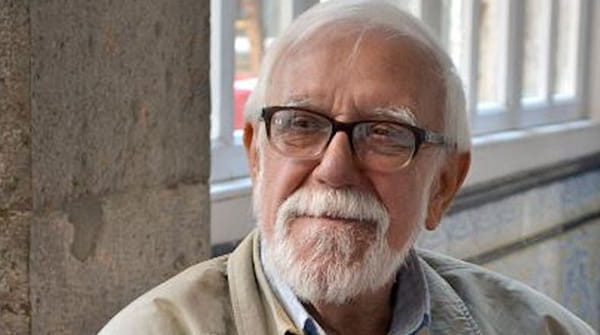
At 87 years of age, this great man has left us. What can be said about him? He was a profound researcher, anthropologist, and linguist. He arrived in Paraguay from his native Spain in 1954 as a Jesuit and delved, like few others, into the intricacies and depths of Paraguayan identity.
Four years later, he left the country for his studies. He returned in 70, when Stroessner's tyranny was intensifying. The persecution of all free thinkers also targeted him, and he was forced into exile in 1976, like others who escaped the despot's deadly grip.
More than a decade later, after clashes between powerful mafias, the tyrant fell and fled to Brasilia. And in that promising year of 1989, Meliá returned to settle permanently in the land he adopted as his own, becoming one with it. Who else mastered the Guarani language like him, a language he learned through intense experiences shared with rural people and indigenous communities? Is there another linguist of his caliber in these parts?
He traveled from town to town and left us countless pages of essays, which are socio-anthropological reflections, where his central and constant axis is an inquiry: "How, for example, in cultural terms, have the Guarani societies, despite the pressures, interferences and attacks suffered, managed to reproduce themselves with a fidelity that is overcoming 500 years of colonialism?"
In these final weeks of his hospitalization, he probably didn't learn much about the upheavals our America is currently experiencing. And perhaps that was for the best, so that the flame of hope he carried within him would remain burning until his last breath.
There is a phrase of his that sums it up: "I believe that no one can live in a country if they don't discover and invent it every day." Now, we have no choice but to compare his life with our own, to try to reach the heights of what his life was and, thus, with his example, be worthy of this time and this space that we inhabit.
Mario Casartelli
Asunción, December 6, 2019
A religious figure, anthropologist, and linguist, he was born in Porreres, Mallorca, Spain, on December 7, 1932. A member of the Jesuit order, he came to Paraguay in 1954, where he began studying the Guarani language and culture with Father Antonio Guasch. He holds a doctorate in linguistics from the University of Strasbourg, France. A disciple and collaborator of León Cadogan, he was a professor of ethnography and Guarani culture at the Catholic University "Our Lady of the Assumption." He also served as president of the Center for Anthropological Studies at the Catholic University and as director of the journals Suplemento Antropológico and Estudios Paraguayos until 1976, when he was forced to leave the country. In Brazil, from 1977 onward, he alternated between research and work with indigenous peoples, initially among the Enawene-nawé of Mato Grosso. In Paraguay, he conducted studies among the Guarani people on ethnohistory and ethnolinguistics. He actively participated in various bilingual intercultural education programs in Paraguay, Bolivia, Brazil, and Argentina. He was a member of the National Commission on Bilingualism. He was a member of the Royal Spanish Academy of History and received the Bartolomé de las Casas Prize. Among other distinctions, he was awarded an honorary doctorate from the Pontifical University of Comillas, Spain. Some of his books include: *The Conquered and Subdued Guaraní*, *The Land Without Evil of the Guaraní*, and *Indigenous Peoples of Paraguay*. He died in Asunción on December 6, 2019.
[+] Latin American and Caribbean Front
in the struggle for democracy and the people
If you would like to receive more information about CLACSO's training programs:
[widget id=”custom_html-57″]
to our email lists.

