
Goodbye to Nora Cortiñas
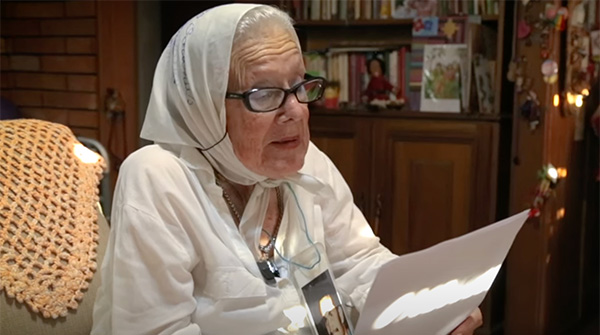
The Latin American Council of Social Sciences deeply regrets the passing of Nora Cortiñas, a member of the Mothers of Plaza de Mayo Founding Line of Argentina and one of the most emblematic and beloved figures in the struggle for human rights. She dedicated her life to the search for truth and justice for the victims of the dictatorship in Argentina.
He leaves an immense void, but also an indelible legacy. His life and work are a testament to the power of love and justice in the face of oppression and injustice.
A big hug to her family, friends and colleagues in this moment of deep sorrow, and we reaffirm our commitment to the ideals that Norita defended with such courage.
Nora Cortiñas, present. Now and forever!
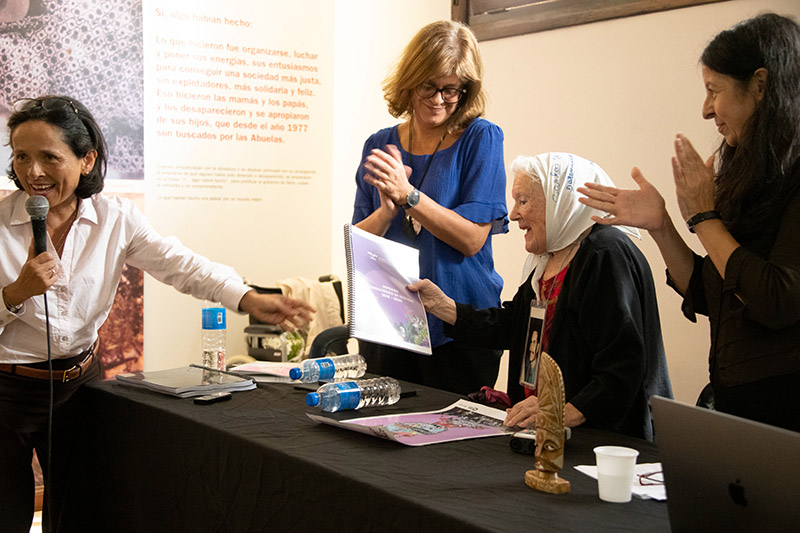
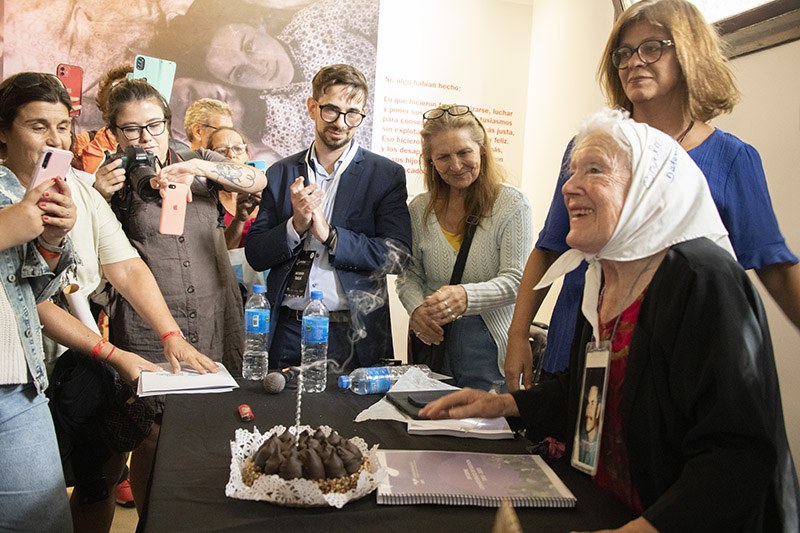
We share her participation, in March 2023 in the Panel "40 years after the return of democracy in Argentina: The forced disappearance of people in Latin America and the defense of human rights", together with Karina Batthyány, Luz Marina Monzón, Constanza Ramirez Molano and Ana María Careaga.
These are his warm words, which he gave to CLACSO in 2023, on the occasion of 40 years of democracy, and which will remain etched as an indelible memory in the minds of all:
"Every dawn the struggle is renewed, without giving up.".
We have been walking, searching, and raising the banners of the 30.000 for over 45 years. We walk more slowly, it's true; many mothers and grandmothers are no longer with us, but we are propelled forward by the strength of the new generations. Memory does not fade, truth is our daily cry, and justice is a debt that must be paid. The 40th anniversary of the return to democracy represents a true victory that we must all cherish. Today, as yesterday, the struggle is renewed with each dawn, without ever giving up.
We take up the banners of struggle of our sons and daughters; we can say that they "gave birth" to us. Thus, on this long road that never stopped, we absorbed and embraced that commitment and dedication they instilled in us, and the courage and solidarity that are innate gifts.
Year after year, it is essential to continue to mark the memory of that fateful day in 1976 with fire, mobilized, every March 24th. It is an opportunity to renew the condemnation of the civic-military dictatorship in Argentina, which was yet another link in the series of coups d'état in South America in the 50s, 60s and 70s, orchestrated from Washington and the School of the Americas in Panama.
The toll of the systematic plan of repression in our country is well known: 30 women and men detained-disappeared, torn from their families, their jobs, their union or political activism; thousands murdered, imprisoned, exiled; half a thousand babies appropriated from their captive, pregnant mothers, most of them waiting to find their true identity, as 132 have managed to do thanks to the tireless search of the Grandmothers of Plaza de Mayo.
Personally, I joined the marches that began on April 30, 1977, around the Pyramid of Plaza de Mayo in Buenos Aires to demand answers about my son Gustavo, a political activist kidnapped on April 15, 1977. He was a student and began his activism alongside Father Carlos Mugica in Villa 31. Since then, shoulder to shoulder with other courageous women, we have become mothers to all the 30.000 young people taken away during the darkest night of contemporary Argentine history.
The first round was on a Saturday, then we chose Thursday because, according to a mother, in folklore, days spelled with the letter R bring bad luck; that left us with only Monday and Thursday. Monday was impossible, we had weekend tasks to finish. So it was Thursday at 3:30 pm, since that's when the largest crowds of people are leaving their offices in downtown Buenos Aires. You can still see us there and join us in the round, which was only interrupted by the Covid-19 pandemic.
Our struggle, surrounded by the warmth of our people, was very difficult in its beginnings. The first mothers were united by pain, anguish, uncertainty, not knowing where they were, why they were taken. They did not tolerate us taking to the streets with our white headscarves; many doors were closed to us; we were called "terrorist mothers"; a dictator called us "the Madwomen of Plaza de Mayo"; we were persecuted, and three of our comrades were taken away on December 8th and 10th, 77: Azucena Villaflor de Devincenti, Mary Ponce de Bianco, and Esther Ballestrino de Careaga, along with the French nuns Léonie Duquet and Alice Domont, and a group of human rights activists, victims of the genocidal Alfredo Astiz and his gang of kidnappers at the Navy Mechanics School (ESMA). We honor our comrades with every step we take because they put their bodies on the line during times of the most brutal repression.
The search for truth is linked not only to the trials of the perpetrators (slow, incomplete, biased, and delayed), but also to the search for the remains of the disappeared. Bones speak, they accuse, they heal wounds, they open new paths of struggle, they nourish memory. It is important to highlight the work of the Argentine Forensic Anthropology Team (EAAF), both scientifically and humanly, in supporting each family in their search and in the moment of identifying a son or daughter.
47 years after the 1976 coup, 40 years after the restoration of democracy, the Mothers remain steadfast, supporting popular struggles, embraced by the warmth and affection of boys and girls who have taken up the torch of the 30 and continue to cry out for memory, truth, and justice.
Poster: Right to memory and resistance

If you would like to receive more information about CLACSO's training programs:
[widget id=”custom_html-57″]
to our email lists.

