
Statement from civil society organizations on the execution of two girls in Paraguay
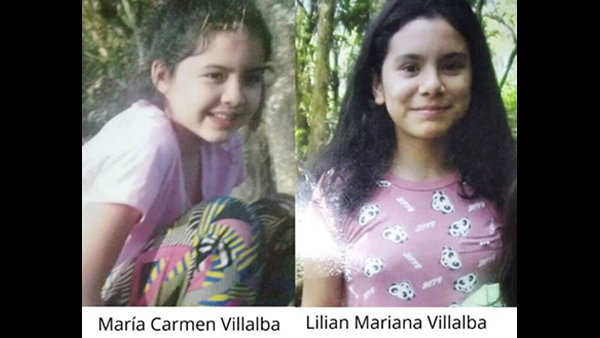
The members of CLACSO Working Group on Childhood and Youth We endorse the statement of civil society organizations regarding the massacre of the girls María Carmen Villalba and Lilian Mariana Villalba at the hands of the Joint Task Force (FTC).

The undersigned social, political and human rights organizations and social activists wish to express our deep indignation and condemnation of the murder of two 11-year-old girls on September 2nd in Yby Yaú, Concepción department, at the hands of the Joint Task Force (formed to apprehend terrorism).
We condemn and denounce the cruelty displayed on their bodies and the treatment given to them by exhibiting them as war trophies.
We condemn the way some media outlets have handled this case, disregarding the regulations governing the dissemination of news involving children. A propaganda campaign was orchestrated around the girls' murders to try to explain or construct false narratives, aiming to garner support from as many actors and citizens as possible for this type of state action and its security proposals. Considering other precedents, we believe the girls were initially considered "false positives," hence the need for a serious and independent investigation into the circumstances of their murders.
We condemn this state action that violates all the rules that regulate the comprehensive protection, the confidentiality of identity and the care of the privacy of these "martyr" girls.
Even more serious is the publication of the "news" as a triumph, with the comments of the President of the Republic of Paraguay, Mario Abdo Benítez, tinged with patriarchal violence and in a warlike language, which takes us back to the dark times of the Latin American dictatorships within the framework of Operation Condor.
We know that this is not the first time that the Joint Task Force has deployed its repressive ferocity against peasant populations, young people and children in that area of the North militarized by the Paraguayan State.
The public outcry is not unified in the face of this sad event; the question "What were the girls doing there, with the EPP - Paraguayan People's Army?" is frequently heard. We believe it is important to state that this question warrants further consideration:
Why aren't drug cartels being combated forcefully and decisively in the northern territories?
What are the FTC, army, and shock security forces doing there, with heavy weapons, firing indiscriminately at anyone who presents themselves as a presumed danger, without deterring and, in any case, apprehending them as stipulated in a state of law?
Why didn't the FTC film the procedure, given its substantial budgetary resources?
Why did the Paraguayan State attempt to fabricate and justify such massive murders by claiming in the media that "two women were killed," "two young women were killed in a confrontation," "members of the EPP's inner circle fell"?
Why did the government and the FTC celebrate such a tremendous act of infanticide with such triumphalism?
Why did the authorities inconceivably rush to bury the girls' bodies?
Those who legitimize such actions claim, as a pretext, that the girls were in the mountains, in an inappropriate place, with the clear intention of blaming them, and blaming - as we hear - their families.
The Paraguayan state has placed the girls in a position of conflict, and the same state has given a response: it murdered them.
A state is responsible for state crimes; let's not lower the level of debate to questioning what we, as citizens, do at any given moment. We reaffirm that the state's responsibility is to safeguard our rights, particularly those of children and adolescents, who are subjects of special protection by virtue of their status as developing and growing individuals.
REMINDER:
a) The unconstitutionality of the Joint Task Force, the National Defense and Internal Security Law, and the Decree that created this force with a budget of 20 million dollars, a figure that far exceeds that allocated to social programs. Indeed, the controversial Law 5036/13 and Decree 103/13, which authorize the use of the all-powerful Joint Task Force to subdue the EPP (Paraguayan People's Army) in the Departments of Concepción, San Pedro, and Amambay, effectively constitute a powerful repressive apparatus in the hands of the State. This apparatus ends up harassing, detaining, imprisoning, and killing civilians residing in rural areas, with the implicit aim of disciplining social groups.
b) Extreme care must be taken in adopting a securitization approach, based on the interests of economic groups (large soybean and livestock companies), which guide public agendas for their own benefit.
c) The State's responsibility is to protect children and adolescents, regardless of social conditions, nationality, or who their parents are.
Given this sad situation, the International Convention on the Rights of the Child (CRC, 1989) and Paraguay's own Code for Children and Adolescents stand out as highly valuable, establishing rights and reinforcing duties and guarantees regarding the need for protection of children and adolescents. We recall that the CRC stipulates as a right the unrestricted respect for human dignity, physical and psychological integrity, and the equal protection of all children.
All these questionable actions by the FTC and the Government are contrary to the principles stipulated in the CRC and those derived from the General Comments issued by the International Committee on the Rights of the Child in Geneva:
-General Comment No. 8 (2006) The child's right to protection from corporal punishment and other cruel or degrading forms of punishment
-General Comment No. 10 (2007) Children's rights in juvenile justice
-General Comment No. 12 (2009) The child's right to be heard
-General Comment No. 13 (2011) The child's right not to be subjected to any form of violence
-General Comment No. 20 (2016) The effectiveness of children's rights during adolescence
-General Comment No. 24 (2019) on the rights of the child in the juvenile justice system
We also recall the validity of the provisions of the Geneva Conventions of 1949 and the Optional Protocols of 1977, especially the “Optional Protocol to the CRC on the Protection of Children in Armed Conflict” (2000), as well as the Rome Statute (1998) of the International Criminal Court, and regional documents such as the Inter-American Convention on the Prevention, Punishment and Eradication of Violence against Women (adopted in Belem do Pará by the Organization of American States, 1994).
For all these reasons, we call attention to the latent danger of the remilitarization of our Latin America and Caribbean, in this case of the residents of the territories of Concepción and San Pedro in our brother country of Paraguay.
WE DEMAND THAT THE AUTHORITIES
● The cessation of state violence with all the characteristics of a terrorist state against the population.
● An independent international investigation to clarify what happened to the two girls massacred in Yby Yaú, Paraguay, and the punishment of those responsible before the justice system.
● Respect for international treaties and national laws.
We call for the dismantling of the FTC and urge investment in policies to protect children and adolescents, and in development for peasant agriculture: access to land and productive means for settlement.
We aspire to eradicate remilitarization, paramilitarization, neoliberal policies and extractive models that displace thousands of families and communities from their territories.
We aspire to eradicate the biased, adult-centric views that lead to the abuse of power by adults over children and adolescents. We repudiate the attempt to justify abhorrent actions such as the murder and burial of two girls, and a series of other abuses extensively documented by human rights organizations in Paraguay.
We aspire to build territories of just and dignified coexistence, through peace networks and with the leading involvement of civil society at the local, regional and national levels.
The State is responsible for using all constitutional means, within the framework of international humanitarian law, to protect children and adolescents living in its territory.
No more children being violated, murdered and subjected to torture.
No more deaths
Never again infanticide!
September 5, 2020
Organizations, citizens, South American citizens
National Human Rights Assembly
APDH LA MATANZA
APDH Regional Formosa
APDH Regional Jujuy
APDH Regional Río Tercero
APDH Regional Northwest of Chubut
APDH Esquel
APDH Regional Catamarca
APDH Regional Punta Indio
APDH Regional CABA
APDH Regional Rosario
APDH Regional Bariloche
Nora Cortiñas and Mirta Baravalle - Mothers of Plaza de Mayo - Founding Line
Mothers of Plaza de Mayo Founding Line - Member Association of FEDEFAM
CELS - Center for Legal and Social Studies - Argentina
HIJOS National Network
Grandmothers of Plaza de Mayo
RedxlaIdentidad Formosa
Tres Arroyos Node - Province of Buenos Aires - (Identity Network)
Neuquén Identity Network
Network for the Identity of Cipolletti
MEDH Ecumenical Movement for Human Rights. Argentina
Argentine League for Human Rights
TeCMe - Clinical Territories of Memory
CODESEDH- Norberto Liwski
Collective for the Rights of Children and Adolescents of Argentina
Civil Association for Children's Rights
APIABA - Assembly for the children and adolescents of CABA
Assembly for Children and Adolescents of Buenos Aires – Argentina APIABA
Childhood and Territory
Coordinating Committee for Children's Rights in Argentina – Nora Pulido
Civil Association Forum Childhoods
CLACSO Working Group "Childhoods and Youth"
Forum for Children of the Province of Buenos Aires
Argentine Network No to Lowering the Penalty
No to Lowering the Mendoza Law
Defense for Children International Argentina
Hey kid
Argentine ID card
Stolen Childhood Network - San Luis Forum
Human Rights San Oscar Romero- Isla Maciel
HIJOS Regional Formosa
Ñande Roga Guazú- Clorinda- Formosa
The Howl Group Not One Less - Las Lomitas - Formosa
Women, Lesbian and Trans Collective of Formosa
CTA of the Workers - Formosa
MUMALA Formosa
National and Popular Transversal Front - Formosa
Kuñá Ñepu´a Feminist Collective of Clorinda- Formosa
CDD Formosa - Catholics for the Right to Decide.
Santiago Renevot Public Library
Barrios de Pie – LIBRES Formosa
Moreno Civil Association for Memory
Latin American and Caribbean Committee for the Defense of Women's Rights - CLADEM Paraguay
National Human Rights Commission - FePRA
College of Psychologists of Salta
ACFuPPsi - Fuegian Civil Association of Psychology Professionals
APF - Association of Psychologists of Formosa
Free Chair of Human Rights of Philosophy and Letters – UBA
Carlos Alberto Zamudio Chair of Human Rights
Legitimate Justice Northeast
“Pedro Peczak” Human Rights Center of the UNAM
RATT Argentina Founding Line - President Sandra Barrios
Peasant Movement of Formosa
NATIONAL PEASANT FRONT
Association of former political prisoners and exiles during the last dictatorship "La Solapa"
Association of Former Political Prisoners and Relatives of Misiones Ramón Alberto Acuña President
Human Rights House of Curuzú Cuatiá
Cuatiá Renda Popular Library
Father Luis Farinello Foundation
Popular Community Gardens MP La Dignidad
The MIGUELITO PEPE
Militant Memory Collective
AC Los Naranjos
Vereda Classroom
Network of Teachers, Families and Organizations of Bajo Flores
Argentine Committee of Solidarity and Friendship with Nicaragua of Rosario-
Patria Misiones Front (and sectors that comprise it)
CTD Aníbal Verón National
December 13 Movement
Homeland for All - Missions
Operation Rescue AR
SUOR - Single Union of Rural Workers
FTV-Miles on the CTA
Centenary Association - El Dorado - Misiones
Pastors Against Hunger - Missions
The Collective - Political and Social Current
La Mateada - Feminist Popular Council
The Failure of Patriarchy Collective - Buenos Aires
Observatory of Human Rights and Social Conflicts - CTA-A
Human Rights Observatory of Commune 7
Communist Party - Argentina
Frente Grande Party
Evangelical Church of the River Plate - IRP
FEMI UNIDAS- PARAGUAY
NGO TIERRA NUEVA- Paraguay
Nordic Arts Paraguay Production Company
Coordinator of Paraguayans in the U.S. “Margarita Sánchez”
Coalition No. 6 "Networks that save lives" "IACHR OAS" Fernando Mao Regional Coordinator for the Americas.
Feminist Collective Las Fuegas de La Plata- Berisso – Ensenada
Women Creating Platform - CGT Castellón Union
Rebellion Collective - Lupe Pérez
Anti-War Committees in Solidarity Whit the Struggles for Self-Determination
CERP – Center for Listening and Popular Resilience
Workers and delegates of the 70s - American Mascaró Cinema
Not One Less Migrant
Zenobia Camprubi Borriana Association
OLAS - Free Organizations of Argentina for Socialism
Women in Black - Andalusia - Spain
National Campaign for the Right to Legal, Safe and Free Abortion - San Luis Merlo and Traslasierra Region
ADEM San Luis - Association for Women's Rights
This statement expresses the position of the CLACSO Working Group Childhoods and youth and not necessarily that of the centers and institutions that make up the CLACSO international network, its Steering Committee or its Executive Secretariat.

If you would like to receive more information about CLACSO's training programs:
[widget id=”custom_html-57″]
to our email lists.

