
CLACSO at Open Access Week 2025, “Who owns knowledge?”
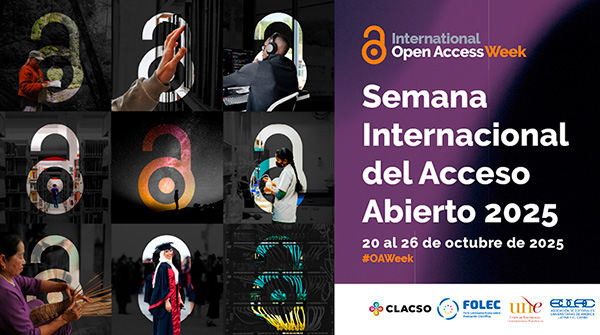
The "Open Access Week The “2025” event took place this year from October 20th to 26th under the slogan: “To whom does knowledge belong?” convened by CLACSO (Latin American Council of Social Sciences), FOLEC (Latin American Forum for Scientific Evaluation), UNE (Union of University Publishers of Spain) and EULAC (Association of University Publishers of Latin America and the Caribbean).
This strategic alliance seeks to strengthen the Ibero-American publishing ecosystem from an open, multilingual and collaborative perspective, consolidating a common front for the democratization of knowledge.
Within the framework of this event, the synergy between CLACSO, FOLEC, UNE and EULAC promoted three thematic panels with international guests and a training workshop, in addition to multiple initiatives to promote the free flow of knowledge.
Panel 1: Science as a common good: Ibero-American perspectives
Reflections from the Global South on knowledge as a right and collective heritage.
Opening words:
Gloria Amézquita (Academic Director, CLACSO)
- Participants:
- Judith Naidorf (Coordinator, FOLEC)
- Pilar Paneque (ANECA)
- Arianna Becerril-García (Director, Redalyc)
- Eduardo Aguado (Director, Redalyc)
- Izaskun Lacunza (General Director, FECYT)
- Alejandro Uribe (Researcher of the Working Group “Open Science and Common Goods”)
Moderation and comments:
Lizbeth Alvarado Campos (Representative of the EU in Peru – EULAC)
Training workshop: Good practices in open access
A workshop designed for CLACSO member centers and publishers associated with UNE and EULAC. With triple certification, it was presented as a key opportunity for publishing professionalization, providing greater regional and international visibility and strengthening collaborative networks throughout Ibero-America.
- Facilitators:
- Lucas Sablich (Editorial Team Coordinator, CLACSO)
- Alejandra González Barranco (Tecnológico de Monterrey, EULAC representative)
- Ana Isabel González and Joaquín Corbacho (CEA APQ Collections and Monographs Seal)
- Mª Ángeles Coslado (FECYT journal seal)
Panel 2: Democratization, publishing networks and multilingualism
Strategies to make diverse voices visible and strengthen inclusive publishing infrastructures.
- Opening words:
Lía Castillo (President, EULAC) - Participants:
- Maribel Cabrera (President, UNE)
- María Fernanda Pampín (Director of Publications, CLACSO)
- Marco Giraldo Barreto (ASEUC, Colombia)
- Laura Figueroa Lizarraga (Representative of the Text Network, Mexico)
Moderation and comments:
Remedios Pérez García (Deputy Director, UNE)
Panel 3: Science policies surrounding open science
Dialogue with public policy officials on regulatory frameworks and regional challenges.
- Participants:
- Pablo Vommaro (Executive Director, CLACSO)
- Pilar Rico (FECYT)
- Ana María Cetto (Advisory Council of the Open Science Action Plan, Mexico)
- Patricia Muñoz Palma (ANID, Chile)
- Dominique Babini (Open Science Advisor)
Moderation and comments:
Laura Rovelli (UNLP)
Webinar on Open Access Week
As part of the International Open Access Week 2025, International Social Council (ISC) organized an online meeting on October 20 in which community-driven and academic-led publishing models were presented.
The session highlighted five non-commercial platforms within the ISC community that promote open, equitable, and sustainable ways of sharing research.
This session presented non-commercial open access platforms that enable researchers and communities to share knowledge equitably and sustainably. It was aimed at researchers, librarians, policymakers, and anyone interested in alternative publishing models that prioritize community ownership and equitable access to knowledge. CLACSO was among the platforms presented to promote the network's publishing model.
More information and full event schedule
The activity was designed for both ISC members and affiliated networks.
Training capsules
During Open Access Week 2025, short capsules on scholarly publishing, technical standards, and open access strategies were released in accessible and multilingual formats.
CLACSO disseminated content from CLACSO Classroom And UNE presented its UNE in Diamond series: a selection of key videos to expand knowledge and strengthen editorial capabilities.
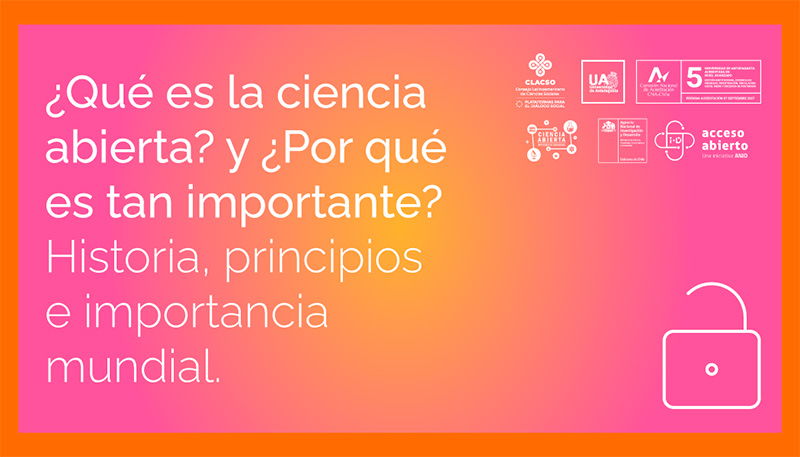
1. What is open science?
Why is open science so important? History, principles, and global significance. Episode 1 of the series What is Open Science? produced by CLACSO and the University of Antofagasta.
What do we mean when we talk about open science?
Subscribe and access this video
2. What are the benefits of open science?
How does it facilitate research and collaborative work? Episode 2 of the series What is Open Science? produced by CLACSO and the University of Antofagasta.
Subscribe and access this video
3. How do we use open science and institutional repositories in education?
Applications as a pedagogical, work and research tool. Episode 3 of the series What is Open Science? produced by CLACSO and the University of Antofagasta.
Subscribe and access this video
Diamond union
Academic journals in the new landscape of scientific evaluation
Crossref and interconnected metadata: diagnosis
European Diamond Capacity Hub (EDCH) Forum and Registry
In the lead-up to Open Access Week 2025, the weekly Wednesday program InfoCLACSO October 15 offered a Special Edition Featuring interviews with key figures in open access. An opportunity to hear firsthand about the experiences, debates, and challenges that are transforming academic and scientific publishing in Latin America.
For inquiries, please write to [email protected]

