
Five years after the murder of Marielle Franco in Brazil
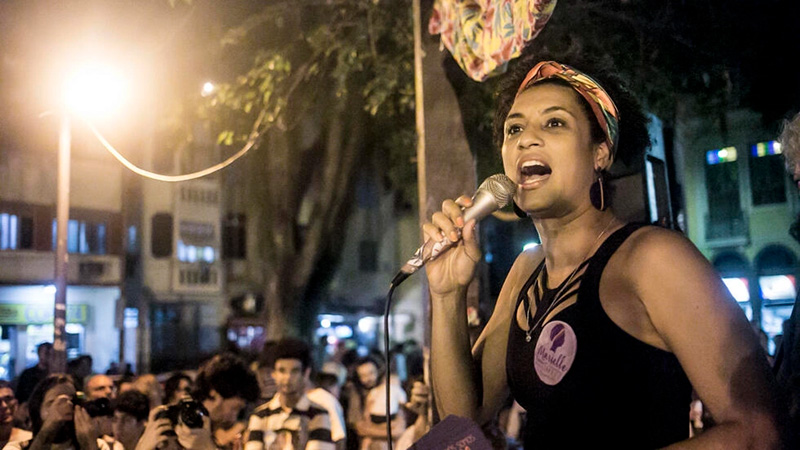
Sociologist, feminist, human rights activist, and advocate for Black women's rights in Brazil, Marielle Franco was shot dead on the night of March 14, 2018, in Rio de Janeiro. She was 38 years old. At the time, she had been denouncing the violence in the favelas and the actions of paramilitary groups. Five years after the crime, which also claimed the life of her driver, Anderson Gomes, the case remains unsolved.
“It’s been five years without that smile. Who ordered Marielle’s murder and why?” asks the Marielle Franco Institute, an organization created by the family of this leading figure in the fight against injustice and the defense of the rights of the poorest. Years ago, the investigation into the case stalled when Rio de Janeiro’s investigative police found links between the family of former president Jair Bolsonaro and the two police officers arrested for killing the socialist councilwoman; until last February 22, Justice Minister Flavio Dino requested its reopening.
Her sister Anielle, promoter of the Marielle Franco Institute and current Minister of Racial Equality in Lula's government, maintains that "since then, the month of March is even more of a struggle. It is the month of women, but in Brazil it must also be the month of the fight against political violence."

Marielle Franco She was born on July 27, 1979, in Complexo da Maré, a favela of nearly 150.000 inhabitants in northern Rio de Janeiro. “A feminist woman, Black, and daughter of the favela,” she defined herself. She was a young mother and sparked debates on gender issues, the protection of reproductive rights, the defense of the LGBTIQ+ community, and the fight against racism.
CLACSO It permanently rescues the figure and legacy of Marielle, whose name adorns the main hall of its headquarters in Buenos Aires. Furthermore, it published the essay “It was always about us. Accounts of gender-based political violence in Brazil"in which Brazilian politics Manuela D'Avila It compiles the voices of fifteen women from her country with testimonies about discrimination and gender-based violence in the political sphere. One of the chapters is dedicated to Marielle Franco.
If you would like to receive more information about CLACSO's training programs:
[widget id=”custom_html-57″]
to our email lists.

