
15 years after the Equal Marriage Law in Argentina
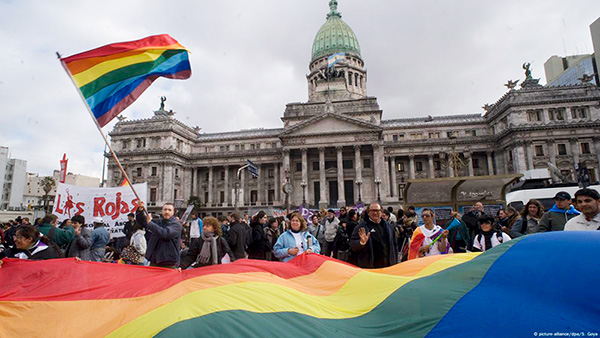

On July 15, 2010, the Argentine Parliament approved Law 26.618, which allowed same-sex marriage, the result of long struggles and a process of conquest for the expansion of rights and recognition of diversities, equating the effects and requirements with marriages between people of different sexes.
By allowing same-sex marriage, the law guaranteed access to essential rights such as joint health coverage, shared property ownership, survivor's pension and inheritance, providing a legal framework of protection and security for these unions.
Such an achievement deserves to be rescued and defended all the more in the current regressive context in many countries of the region and the world, with fiery anti-rights speeches and the repeal of equal regulations where the far right came to power, as in the Argentina of Javier Milei.
The impact of the law's enactment was profound and extended beyond the direct beneficiaries. It altered how family relationships, parentage, surname transmission, care arrangements, and other aspects of life are understood.
On July 15, 2010, Argentina became the first country in Latin America and the Caribbean to recognize same-sex marriage. Brazil and Uruguay followed in 2013, while Colombia did so in 2016, Ecuador in 2019, and Chile in 2021. Costa Rica approved it in 2020, and Cuba and Mexico in 2022.

CLACSO MATERIALS ON THE TOPIC
-Gender, sexuality and the Latin American left – The demand for rights during the pink tide
Today, as the pink tide is clearly receding and a veritable right-wing tsunami shakes much of the region, it is nevertheless more crucial than ever to evaluate the successes and failures of left-wing governments in order to envision strategies that might help feminists, queer people, and other progressive forces navigate the abrupt shift underway throughout the Americas. From the epilogue by Sonia E. Álvarez
Today, as the pink tide is clearly receding and a veritable right-wing tsunami shakes much of the region, it is nevertheless more crucial than ever to evaluate the successes and failures of left-wing governments in order to envision strategies that might help feminists, queer people, and other progressive forces navigate the abrupt shift underway throughout the Americas. From the epilogue by Sonia E. Álvarez
-Livable sexual citizenships in Latin America and the Caribbean
The book, coordinated by Amaral Arévalo, is an in-depth analysis of the struggle of gender and sexual minorities in Latin America and the Caribbean for the recognition of their rights. Through a critical and intersectional perspective, the book addresses the expansion of citizenship beyond the political and legal spheres, questioning the limitations imposed by neoliberalism and the state. Bodies that reject borders and desires that defy the norm become the focus of this reflection. This text not only advocates for inclusion but also transforms the very idea of citizenship, proposing a struggle for a more real, sensitive, and livable citizenship.
– Cuba says 'yes' to the Family Code that includes same-sex marriage and surrogacy
If you would like to receive more information about CLACSO's training programs:
[widget id=”custom_html-57″]
to our email lists.

