
“COVAX managed to make the patent discussion invisible”
Gonzalo Basile
Gonzalo Basile, an epidemiologist specializing in public health and coordinator of the CLACSO International Health Working Group, spoke with TSS about the effects of the pandemic in Latin America and the Caribbean, and about countries' responses to control it, vaccinate their populations, and protect themselves against a potential new wave. The specialist warns of the disintegration and lack of debate surrounding the recovery of regional health sovereignty.
TSS Agency – What were the responses of Latin American countries to the advance of COVID-19? What vaccination strategies did they implement? How are they positioning themselves in the face of growing fears about a second wave of infections? The characteristics of the region offer a diversity of responses, and TSS spoke with political scientist and epidemiologist Gonzalo Basile, who is currently director and researcher of the International Health Program at the Latin American Faculty of Social Sciences (FLACSO) in the Dominican Republic, and co-coordinator of the Working Group (WG) on International Health and Health Sovereignty of the Latin American Council of Social Sciences (CLACSO).
With over 15 years of experience in public health, Basile has worked on international health cooperation programs and strategies throughout her career, both in Latin America and the Caribbean and in Africa. Among other roles, she coordinated the UNASUR health cooperation mechanism in Haiti between 2011 and 2015. Concurrently, she has served as a postgraduate professor of public health at various academic institutions and universities in the region.
At the end of last year, Basile published a work entitled “Development Patients: The Critical Links of SARS-CoV-2 for Latin America and the Caribbean,” in which he analyzes four determining factors of the responses to this public health emergency, with monocultural and universalizing pretensions, and outlines the potential for refounding health systems on the basis of critical thinking in health, “to weave a defense of the good life of the societies of the South.”
The article refers to the central role that philanthropic foundations, the pharmaceutical industry, and financial and trade organizations such as the World Bank (WB), the Organisation for Economic Co-operation and Development (OECD), the Inter-American Development Bank (IDB), and the World Trade Organization (WTO) have acquired in the global health agenda over the last few decades. What role did they play?
SARS-CoV-2 has made more visible the structural dependencies and weaknesses that countries, especially those in the Global South, have regarding what is technically known as the medical-industrial-pharmaceutical complex, to which some add the financial sector. With respect to the vaccine, for example, we identified the need to rethink the language being used—not the one currently employed regarding dosages, clinical effectiveness, where and how to purchase them, who supplies them and in what way—in order to reconsider the public production of medicines, health technologies, and vaccines in the Global South, and in Latin America and the Caribbean in particular, given that vaccines are a public good. This is part of what we consider the construction of regional health sovereignty. It is not the same for Argentina or Brazil to face a dispute over the patent for one of these vaccines alone as it is for a consortium or group of 20 Latin American and Caribbean countries to do so together.
However, that debate is not taking place in Latin America.
Our countries are facing a context of geopolitical adversity and healthcare dependency, compounded by the commodification of health at the international level, where the WHO no longer functions as the arbiter of public health. Faced with all these challenges, the main problem we have encountered during this pandemic is that it found us at a time of greatest regional disintegration and lack of coordination. If we look at the responses to last year's epidemics or the current vaccination process, we see that our states are in the position of dependent peripheral buyers, where each country separately tries to obtain vaccines and develops fragmented and uncoordinated vaccination strategies. Therefore, we propose that one of the needs, in the short to medium term, is to consider how to rebuild the frameworks of regional integration in health, drawing on the lessons learned from past processes and from existing regional integration bodies in Latin America.
Is the WHO no longer functioning as an arbiter because, as has been questioned since the beginning of this pandemic, it has lost power and lacks funding?
Some consider this a loss of power, but I truly believe there is complementarity. Since the late 80s and especially the 90s, when the concept of global health emerged, there has been a convergence and complementarity in decision-making among the WHO, WTO, and World Bank. The WHO and sectoral health agencies retain, in a manner of speaking, the essential public health functions, the World Bank handles policies and processes for reforming health systems, and a third aspect is the coordination and complementarity among these actors regarding patents and the TRIPS Agreement, established by the WTO. These are diplomatic arenas and spaces that have been colonized by technocrats and health diplomacy, where the pharmaceutical industry itself and international health corporations co-govern the global health agenda. That is the main critical issue.
In this context, to regain sovereignty, even if only temporarily, India and South Africa proposed to the WTO suspending intellectual property rights over vaccines, medicines, and other medical technologies related to COVID-19 for the duration of the pandemic. However, the most powerful countries, and even some in the region, have rejected the proposal, and the debate continues to be postponed.
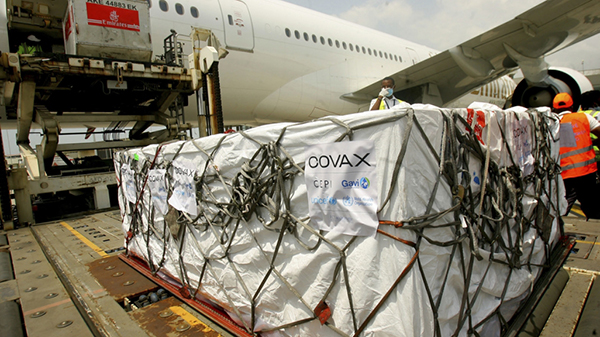
And that's why the COVAX mechanism is rushing to make deliveries, to avoid patent infringements during the vaccine acquisition and distribution process. Behind all the discussion about the urgency of purchasing vaccines and doses, and about their biosafety, there has been no attempt to re-examine whether the vaccine is a public good or not. It's important to remember that COVAX is a WHO mechanism associated with the GAVI alliance, the global vaccine fund, which is 60% financed and coordinated by the pharmaceutical industry itself, and CEPI, another organization created around 2016 within the World Economic Forum in Davos, primarily for coordination, in which foundations like the Bill & Melinda Gates Foundation and pharmaceutical industry funds also participate.
Within COVAX itself, there are countries that pay for vaccine doses, like Argentina and most of the region. Postponing the debate also means that more vaccine doses will continue to be sold, right?
If this discussion were to take place in June—at the next meeting of the WTO General Council—and a resolution were reached, or if China were to make some of its vaccines available for production of equivalent doses, for example, that could be a largely ineffective decision for some countries that have purchased millions of doses, such as many in Latin America and the Caribbean. It's not the same for India or Asia, where it would be a strategic decision. But for us, June or July would be too late; it's already a bit late because most of our countries have contracts with the major pharmaceutical companies.
Even though there was pressure to change legislation in some countries to be able to establish those contracts, right?
Yes, that's an important point because of the precedent it sets. Unfortunately, our governments have adapted very quickly to the discourse of exceptionalism built on this logic of global health security, according to which certain issues justify taking exceptional measures and placing exceptions on civil and political rights. The problem is when this exceptionalism becomes the standard way of responding to epidemics or disasters, which we will continue to experience.
Is this exceptionalism something new that occurred during this pandemic?
No, these precedents are not new. They occurred with legislation regarding the actions of Western military forces in response to Ebola in Africa, for example. The problem is that all these precedents, which had been occurring in a fragmented way and were only known to researchers, decision-makers, and people involved in public or international health, have now all happened at once.
Is this similar to pharmaceutical speculation, which also has precedents in epidemics such as Ebola or H1N1 flu?
And yes. It's difficult to say in this context, but we must be careful not to only question the anti-vaccine movements without studying the medicalization and commodification strategy of the global pharmaceutical industry, which has created the idea of the magic pill, the belief that for every problem and pathology there is a drug that will solve it or a technological drug strategy, with all that this presupposes.
But with vaccines it's different…
Well, the strategy for commodifying and marketing vaccines was never about treating them as individual private goods, which is the case with pharmaceuticals, for example. The strategy is to make vaccines mandatory within national vaccination schedules, because the main buyers will always be governments, not individuals. That's why the industry has infiltrated GAVI and the WHO, because those are the major organizations that provide vaccines or discuss which ones can be mandatory or considered strategic for countries.
But vaccines have succeeded in eradicating diseases in many countries.
Yes, but we must distinguish between the 20th-century cycle of vaccines against infectious diseases, which had some historical effectiveness in the Latin American and Caribbean health context, and the 21st-century cycle of vaccine expansion and commercialization, which must be understood within the context of the expansion of these global private goods and the pharmaceutical market. In this, philanthrocapitalism has a very significant capacity for perpetuation.
What do you mean by philanthrocapitalism?
The concept of philanthrocapitalism was coined by an editor of The Economist, who described how international philanthropy also involves decision-making aimed at maximizing profit. Beyond the SARS-CoV-2 vaccine, when faced with immunization problems for certain diseases in the vaccination schedule of Mozambique or some other African country, for example, the Global Vaccine Fund (GAVI), in conjunction with the WHO, engages in discussions with the country's Minister of Health about improving vaccination coverage. GAVI then offers the vaccines, and an international cooperation agency appears, providing the funding. However, in some fine print, the country is required to sign an agreement stipulating that all of these vaccines will be purchased from a specific laboratory of their choosing.
Returning to vaccines, those for SARS-CoV-2 in particular have generated doubts or fears even in people who advocate vaccination against other diseases
SARS-CoV-2 is a new strain of previous SARS viruses. Mutations then appeared, and the accumulation of mutations creates variants like those in Britain, Brazil, and South Africa. Obviously, this raises questions about the effectiveness of vaccines: how many will be effective in the long term and how long immunity to this SARS and its variants will last. Another question these vaccines raise relates to pharmacovigilance—that is, monitoring for potential adverse effects when administered to the general population, since this is the first time a vaccine has been researched and developed in record time. A third question is whether this immunogenicity has an expiration date—that is, whether they lose effectiveness against possible variants or whether they could become a mandatory global vaccine. We have to think about it in market terms: flu vaccines require between 600 and 1000 million doses per year, while those for this SARS vaccine would jump to a scale of 3000 or 4000 billion per year.
What alternatives do you suggest to find a way out of this healthcare dependency?
There are no magic formulas; we must confront transitional processes. Faced with all these geopolitical, global economic, and colonizing adversities that the pharmaceutical-industrial complex has imposed on the global agenda, the main priority for the Latin American and Caribbean agenda is to rebuild public structures of autonomy and health sovereignty, primarily from academia, civil society, and states, by building or rebuilding a set of capacities and knowledge. In this strategy of building regional integration and coordination networks in health, the concept of health sovereignty implies maximizing policy decision-making capacity in adverse geopolitical contexts like those we face today. This capacity to maximize decision-making is regional; states will not achieve it on their own.
Vanina Lombardi
[+] Thinking about the pandemic
If you would like to receive more information about CLACSO's training programs:
[widget id=”custom_html-57″]
to our email lists.

