
UNILA: A Necessary University
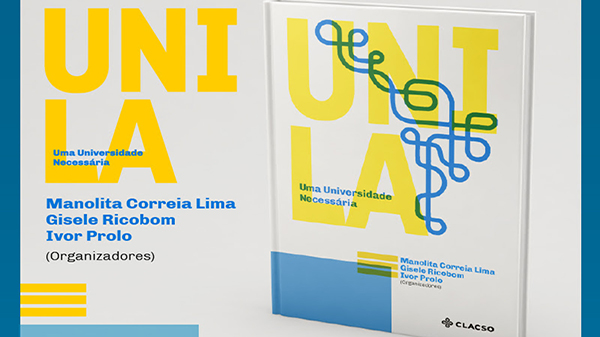
This book is a tribute to Universidade Latino-americana, an initiative committed to education as a right, accessible to all, free and democratic. During two debates produced in Mercosul Educacional, UNILA represents a desire to make possible the integration of two Latin American people, today.
It brings together seven chapters, authored by four authors, which nourish the interest of learning the breeding project and the process of implantation of a Brazilian public university – the Universidade Federal da Integração Latino-Americana (Unila). Despite being a young university, the uniqueness of its project and the enormous challenges faced, the implementation process is mobilized to the attention of academics willing to develop dissertations and theses whose topics address different questions, supported by different approaches, rather than in them. common interest in an institution that seeks to be an alternative to the hegemonic conception of universities in the West. The richness of the research carried out between 2012 and 2019, associated with the importance of publicizing the results achieved, justifies a collection in which the concern of the organizers consisted of offering the reader a table of reference revealing an institution that, despite two internal and external challenges, is not in the process of consolidation. The text corresponds to a document of a research project financed by CNPQ, whose purpose lies in investigating the contribution of the Unit to the regional integration process.
Organizers: Manolita Correia Lima, Gisele Ricobom and Ivor Prolo
Authors: Angela Maria Erazo Munoz, Eloiza Dal Pozzo Chibiaqui, Francisco Calvo del Olmo, Gonçalo Canto Moniz, Ivor Prolo, Larissa Rosevics, Manolita Correia, Lima Manuel Tavares, Margarete Schlatter, Maria Julieta Abba, Maurício Pedro Silva, Oscar Kenji Nihei, Simone da Costa Carvalho, Suélen de Pontes Alexandre.
FREE BOOK DOWNLOAD:
http://biblioteca.clacso.edu.ar/clacso/se/20200204035842/UNILA.pdf
UNILA: A NECESSARY UNIVERSITY
This book is a tribute to the Latin American University (UNILA), an initiative committed to education as a right, accessible to all, free, and democratic. Heir to the debates that took place within the Mercosur Education Forum, UNILA represents the will to make the integration of Latin Americans viable, an integration that is currently under threat.
This collection comprises seven chapters, authored by fourteen researchers, all interested in understanding the creation and implementation process of a Brazilian public university: the Federal University for Latin American Integration (UNILA). Although a young university, the unique nature of its project and the enormous challenges it faces have attracted the attention of academics willing to write dissertations and theses. These works delve into diverse topics, supported by different approaches, but share a common interest in an institution that aims to be an alternative to the hegemonic conception of a university in the West. The wealth of research conducted between 2012 and 2019, coupled with the importance of publishing the results, justifies this collection. The organizers' primary concern was to offer readers a framework that reveals an institution which, despite internal and external challenges, is in the process of consolidation. This text stems from a research project funded by the CNPQ, which aimed to investigate UNILA's contribution to the regional integration process.
Coordinators: Manolita Correia Lima, Gisele Ricobom and Ivor Prolo
Authors: Angela Maria Erazo Munoz, Eloiza Dal Pozzo Chibiaqui, Francisco Calvo del Olmo, Gonçalo Canto Moniz, Ivor Prolo, Larissa Rosevics, Manolita Correia, Lima Manuel Tavares, Margarete Schlatter, Maria Julieta Abba, Maurício Pedro Silva, Oscar Kenji Nihei, Simone da Costa Carvalho, Suélen de Pontes Alexandre.
FREE BOOK DOWNLOAD:
http://biblioteca.clacso.edu.ar/clacso/se/20200204035842/UNILA.pdf
If you would like to receive more information about CLACSO's training programs:
[widget id=”custom_html-57″]
to our email lists.

