
50 years after the coup in Chile
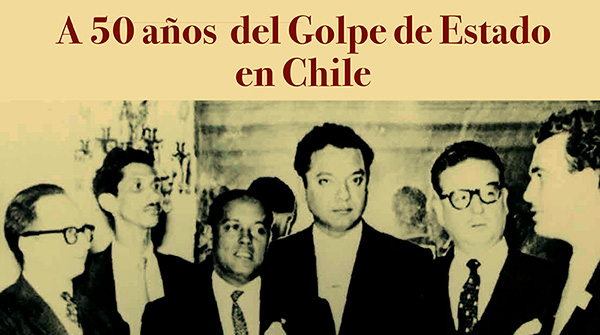
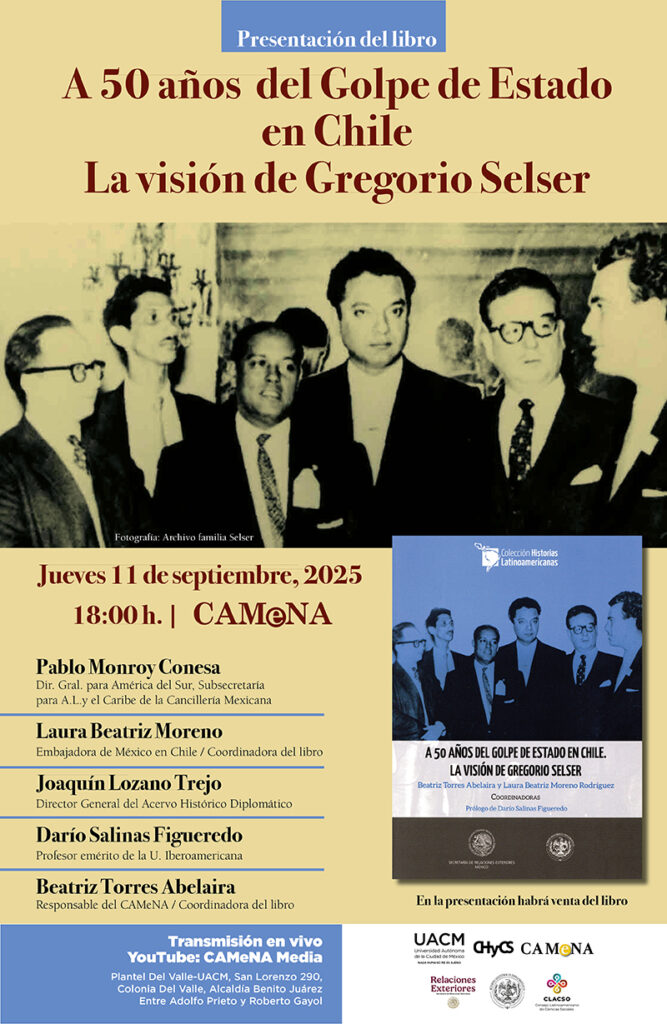
The Academic Center for the Memory of Our America (CAMeNA) of the Autonomous University of Mexico City (UACM), together with the Diplomatic Historical Archive of the Ministry of Foreign Affairs of Mexico, invite you to the presentation on September 11 of the book “ 50 Years After the Coup d'État in Chile. The Vision of Gregorio Selser ”
This publication brings together more than 50 articles written by the Argentine political essayist and journalist Gregorio Selser about the process of establishing the Popular Unity government in Chile, the military coup that overthrew President Salvador Allende, as well as the effects that the establishment of a civic-military dictatorship had at the local and continental level in that country.
The presentation will take place on Thursday, September 11th at 6:00 PM Mexico time (UTC-18) at CAMeNA (Del Valle campus of the UACM, San Lorenzo 290, Col. Del Valle, Benito Juárez Borough) and will include the participation of: Pablo Monroy Conesa , Director General for South America of the Undersecretariat for Latin America and the Caribbean of the Mexican Ministry of Foreign Affairs; Laura Beatriz Moreno , Ambassador of Mexico to Chile; Joaquín Lozano Trejo , Director General of the Diplomatic Historical Archive; Darío Salinas Figueredo , Professor Emeritus of the Ibero-American University and member of the CLACSO Network; and Beatriz Torres Abelaira , General Manager of CAMeNA, who coordinated the book along with Laura Moreno.
The presentation can be viewed through CAMeNA Media's YouTube channel.
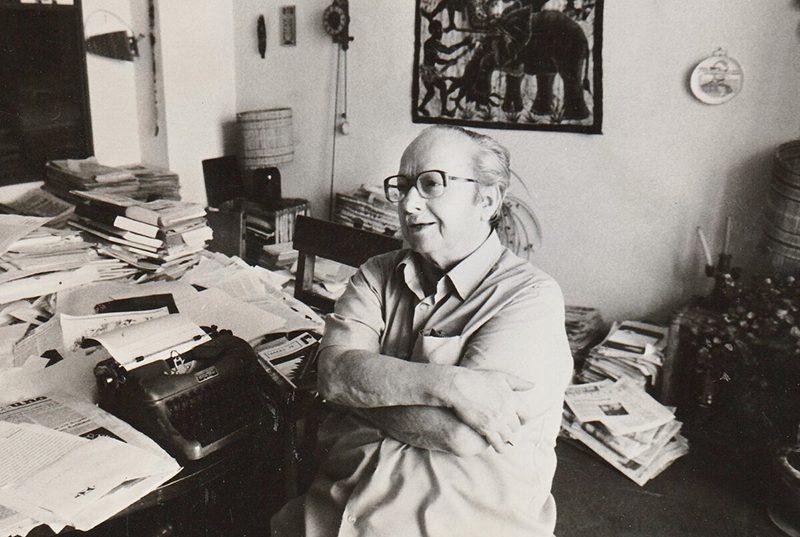
Gregorio Selser (1930-2009) was born in Argentina into a family of humble Jewish-Ukrainian immigrants. When he was just six months old, his mother died, and he was placed in an orphanage for Jewish children. He was arrested for the first time around 1938 at the age of eight for selling bonds on the street in support of the Spanish Republic during the Civil War. At the age of fifteen, he joined the Socialist Party, becoming closely associated with Alfredo L. Palacios (who would become the first socialist member of parliament in the Americas), serving as his private secretary for five years. He began his career in journalism during the rise of Peronism, writing film and theater reviews. He contributed to the party newspapers La Vanguardia and Acción Socialista, and to the student newspaper Gaceta Universitaria. For two decades, he worked as an editor for the Buenos Aires daily La Prensa. In the 1970s, he contributed to the magazine Crisis and the Cuadernos de Crisis series, worked as an international politics editor for the Buenos Aires daily El Cronista Comercial, and was a contributor to the newspaper La Opinión. During those years, he was heavily involved in teaching, serving as a tenured professor at the Higher School of Journalism and Communication Sciences of the National University of La Plata (1971-1974) and, in the latter year, as a visiting professor at the Faculty of Philosophy and Letters of the University of Buenos Aires. A few months after the military coup in his country, he was forced into exile in July 1976, first in Panama and then in Mexico, where he was very active as a journalist and historian until his death in 2009.
Some of his books include: Sandino, General of Free Men (1955); Diplomacy, the Stick, and Dollars in Latin America (1962); Alliance for Progress, the Ill-Born Alliance (1964); Argentina at Cost Price: The Frondizi Government (1965); Christopher Rockefeller's Four Trips with His "Report" to President Nixon (1971); From CECLA to MECLA, or Pan-American Carrot Diplomacy (1972); The Onganía Regime (1973); How Nixinger Destabilized Chile (1975); The Battle of Nicaragua (1980, in collaboration with Gabriel García Márquez and Ernesto Cardenal); Panama: Once Upon a Time There Was a Country Attached to a Canal (1989).
If you would like to receive more information about CLACSO's training programs:
[widget id=”custom_html-57″]
to our email lists.

