
In Peru, they intend to censor the actions of NGOs.

The civil society organizations in Peru, associated with the Latin American Council of Social Sciences (CLACSO), hereby declare their position regarding the current political situation, which has led to an institutional and democratic crisis that seeks to weaken and censor the work of Non-Governmental Organizations (NGOs) in the country. In this regard, we state the following:
1. On November 29, two weeks before the end of the legislative session, the Peruvian Congress scheduled a plenary debate on the bill seeking to amend the Law on the Oversight of Non-Governmental Organizations (NGOs) and social organizations that receive funding from international cooperation. The date and time for the debate are now expected to be set.
Previously, on June 5, the Foreign Relations Committee, chaired by the Fujimori faction, had approved the bill. The legal initiative came from the same congressman who, in December 2023, introduced a bill seeking to restrict the free exercise of journalism.
2. This is a serious matter that threatens the quality of democracy, which has significantly deteriorated in the country, because it invents a “problem” to promote forms of criminalization and outlawing of Peruvian NGOs and social organizations.
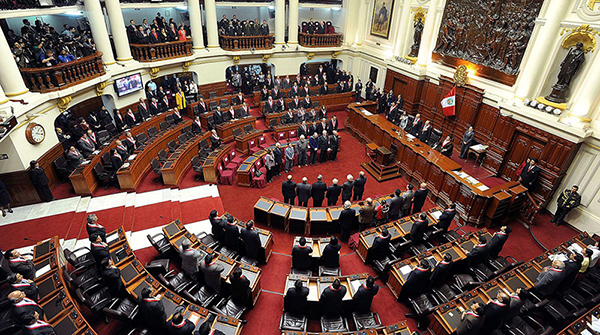
Uncomfortable because of its complete illegitimacy, practically bordering on illegality, the Congress of the Republic will debate a bill that transfers the blame for its pathetic situation to others – NGOs and social organizations.
3. Among other matters and obligations, which have been regulated for some time, the intention is to grant the Peruvian Agency for International Cooperation (APCI) the authority to create an "updated registry of all organizations and entities that carry out political activism with direct or indirect funding from International Technical Cooperation." This would then allow, through administrative decisions by low-level officials, the process of proscribing social organizations and NGOs to be triggered. They conveniently ignore the fact that NGOs and other social organizations not only report their activities to APCI and the country's tax and labor authorities, but are also part of the anti-money laundering system, with their respective compliance officers, coordinated by the Financial Intelligence Unit (UIF).
4. The real objective is to persecute, criminalize, and outlaw civil society organizations that have spoken out against the policies and actions promoted by the current regime—that is, the authoritarian coalition within Congress that supports the government of Dina Boluarte—and that have remained steadfast in their defense of human rights. They are not seeking to improve the channels for making the use of international cooperation resources more efficient and transparent. Furthermore, according to official figures, 73% of development cooperation is managed by the Peruvian state, and only 27% is managed by NGOs and social organizations.
5. The undeniable anti-democratic leanings of the majority of members of the Congress of the Republic are shared by those who are part of the Executive Branch. We alert the democrats of Latin America to the rapid and profound deterioration of Peruvian democracy, under a spectacle of empty procedures leading to states of emergency. This is not an unprecedented situation: what we see today is similar to what was experienced during the Fujimori authoritarian regime of the 90s and is similar to the situation in other countries of the region.
Lima, December 9, 2024
Bartolomé de las Casas Center.
Center for the Promotion and Defense of Sexual and Reproductive Rights. Promsex.
DESCO University of Sciences and Humanities Research Institute. Center for Development Studies and Promotion.
National University of Trujillo. Peruvian Center for Social Studies
CISEPA. Pontifical Catholic University
Postgraduate Unit. Faculty of Social Sciences
National University of San Marcos.
Department of Sociology. Pedro Ruiz Gallo National University.
If you would like to receive more information about CLACSO's training programs:
[widget id=”custom_html-57″]
to our email lists.

